
A fintech trading platform in us-east-1 needs multi-second RPO, under 30-second RTO, and sub-100ms local reads in eu-west-1 for an Aurora MySQL cluster without application rewrites or manual binlog replication. Failover must promote the remote region quickly. Which scaling solution provides highly available global reads and fast regional failover?
Select an answer to reveal the explanation.
Short Explanation
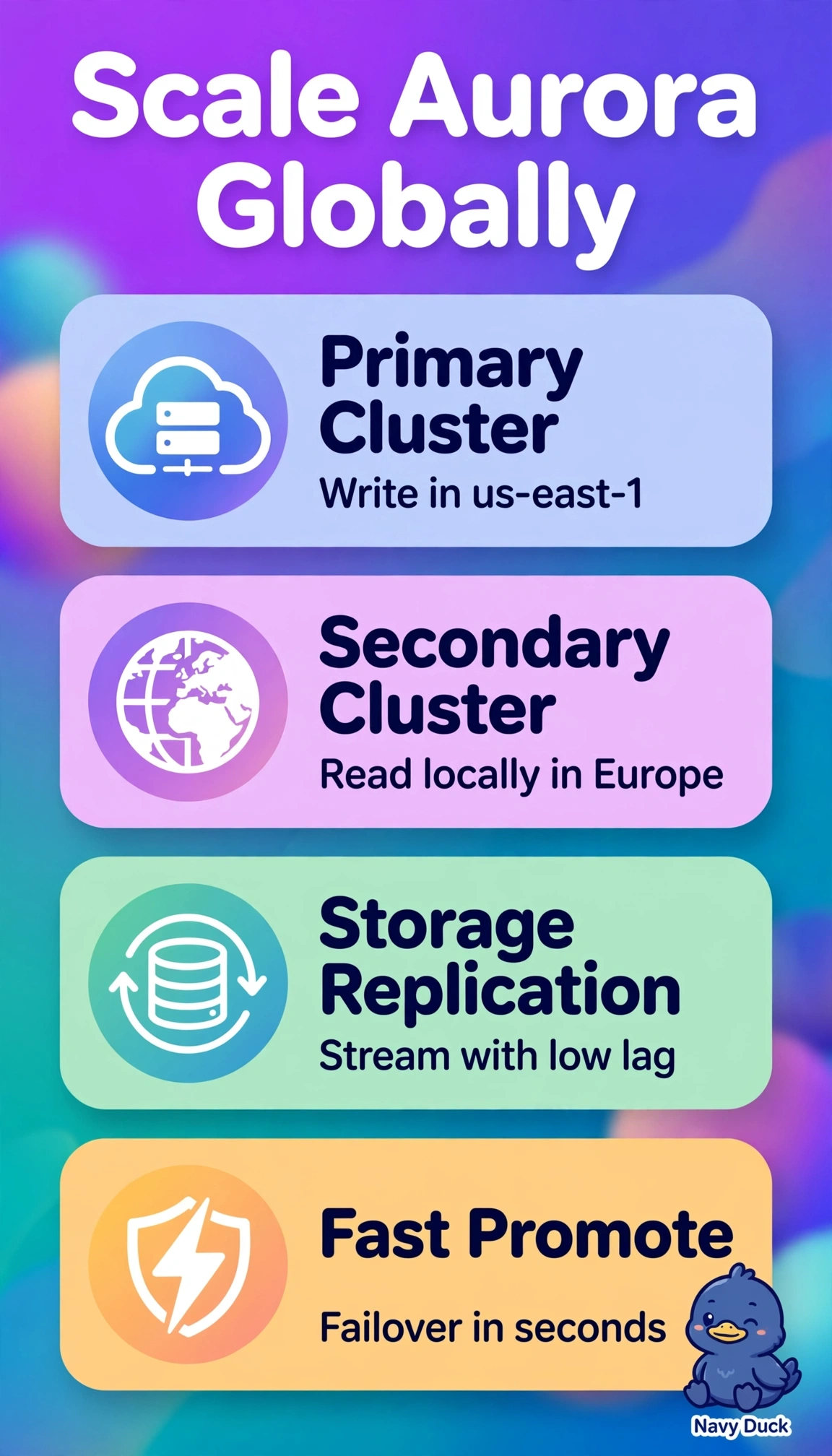
You'll love how your traders in Europe get lightning-fast reads without waiting on slow copies, since changes flow like a live sports ticker. With Aurora Global Database, you can promote eu-west-1 to primary in seconds when failover hits.
Full Explanation
Aurora Global Database uses storage-based replication to a secondary cluster in another region with typical sub-second lag, serving low-latency local reads and enabling fast disaster recovery promotion with low RPO and RTO without application changes. Cross-region read replicas based on snapshot copy and binlog lag significantly and require manual promotion with higher RPO and operational steps. DynamoDB global tables require a different data model and application rewrite and cannot serve MySQL protocol queries even with DAX. RDS MySQL Multi-AZ provides zonal high availability, not low-lag global reads, and traditional cross-region replicas have higher replication lag and slower failover. Exam caveat: choose Global Database for Aurora low-lag global reads plus regional failover versus Multi-AZ for zonal resilience. Practical check: confirm secondary region lag metrics and test planned failover for write forwarding behavior.