
A logistics firm hosts a self-managed PostgreSQL fleet and containerized dispatch services on VMs that drain operations staff. It must migrate to AWS with minimal code changes, gain automated backups and failover, and run containers without managing servers or clusters. Which replatforming combination reduces overhead while preserving compatibility?
Select an answer to reveal the explanation.
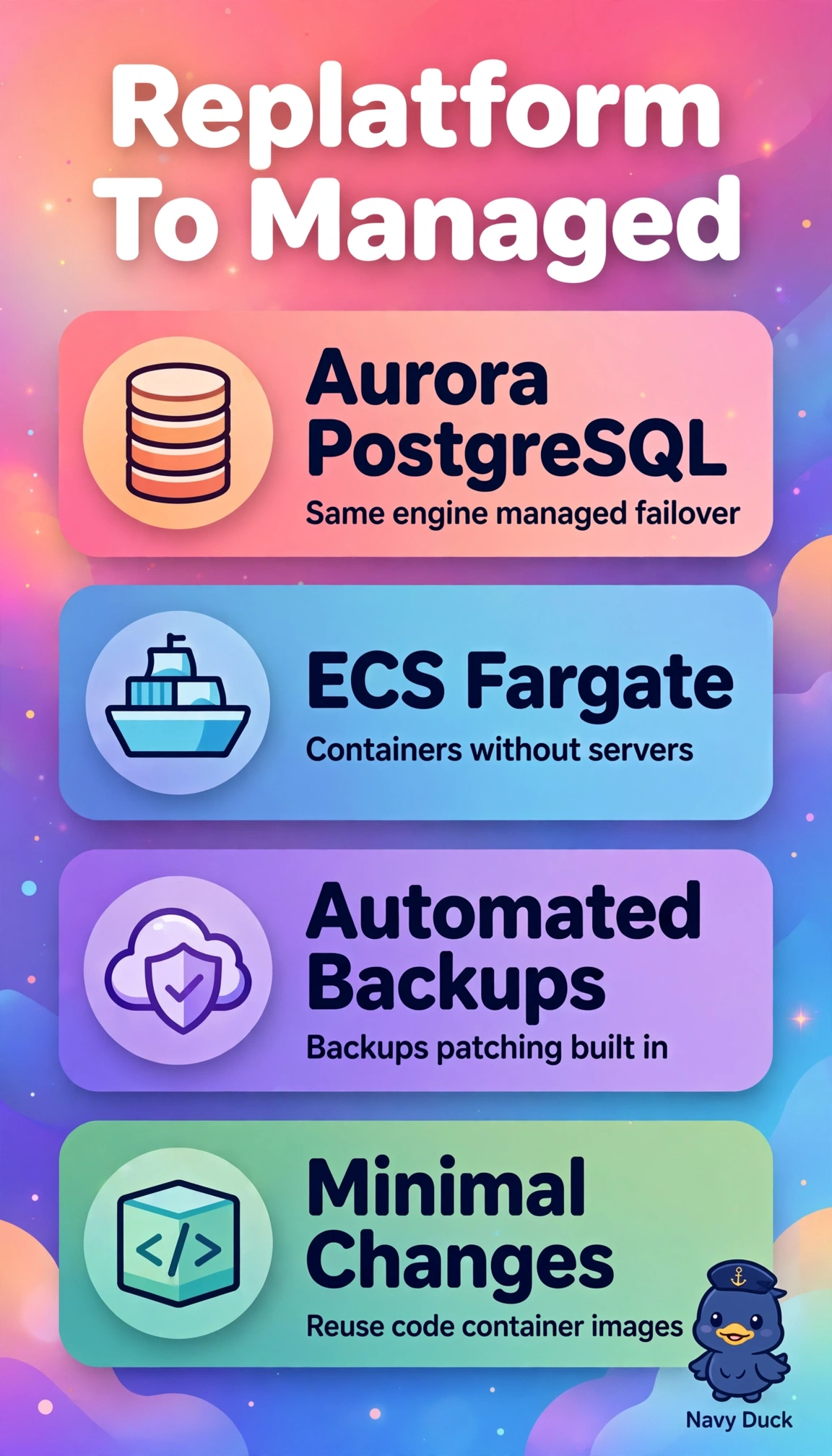
Short Explanation
You want less babysitting, not a rewrite. Aurora handles backups and failover automatically while Fargate runs containers serverless, giving you managed replatforming without new code. Your team finally escapes patching nights.
Full Explanation
Replatforming to Amazon Aurora PostgreSQL preserves PostgreSQL compatibility with minimal changes while adding automated backups, patching, Multi-AZ failover, and read scaling as a managed service. Amazon ECS on Fargate runs existing containers without EC2 cluster management, reducing operational overhead for dispatch services. Keeping PostgreSQL on EC2 retains management burden and EKS with nodes still requires cluster operations, failing the overhead goal. DynamoDB requires data model rewrite and Lambda requires application refactor, which are refactor, not replatform. Redshift is an analytics warehouse unsuitable for transactional dispatch, and EC2 Auto Scaling retains server management. Exam caveat: replatform equals lift to managed same-engine services, refactor equals architecture change. Practical check: validate extensions compatibility on Aurora and define Fargate task sizing for dispatch workloads.