
A video rendering farm with 300 EC2 workers runs nightly batch jobs for 8 hours with predictable CPU load, plus occasional daytime spikes for urgent client previews that must start immediately and can be interrupted. Finance demands the lowest cost for the predictable nightly baseline. What purchase mix is optimal?
Select an answer to reveal the explanation.
Short Explanation
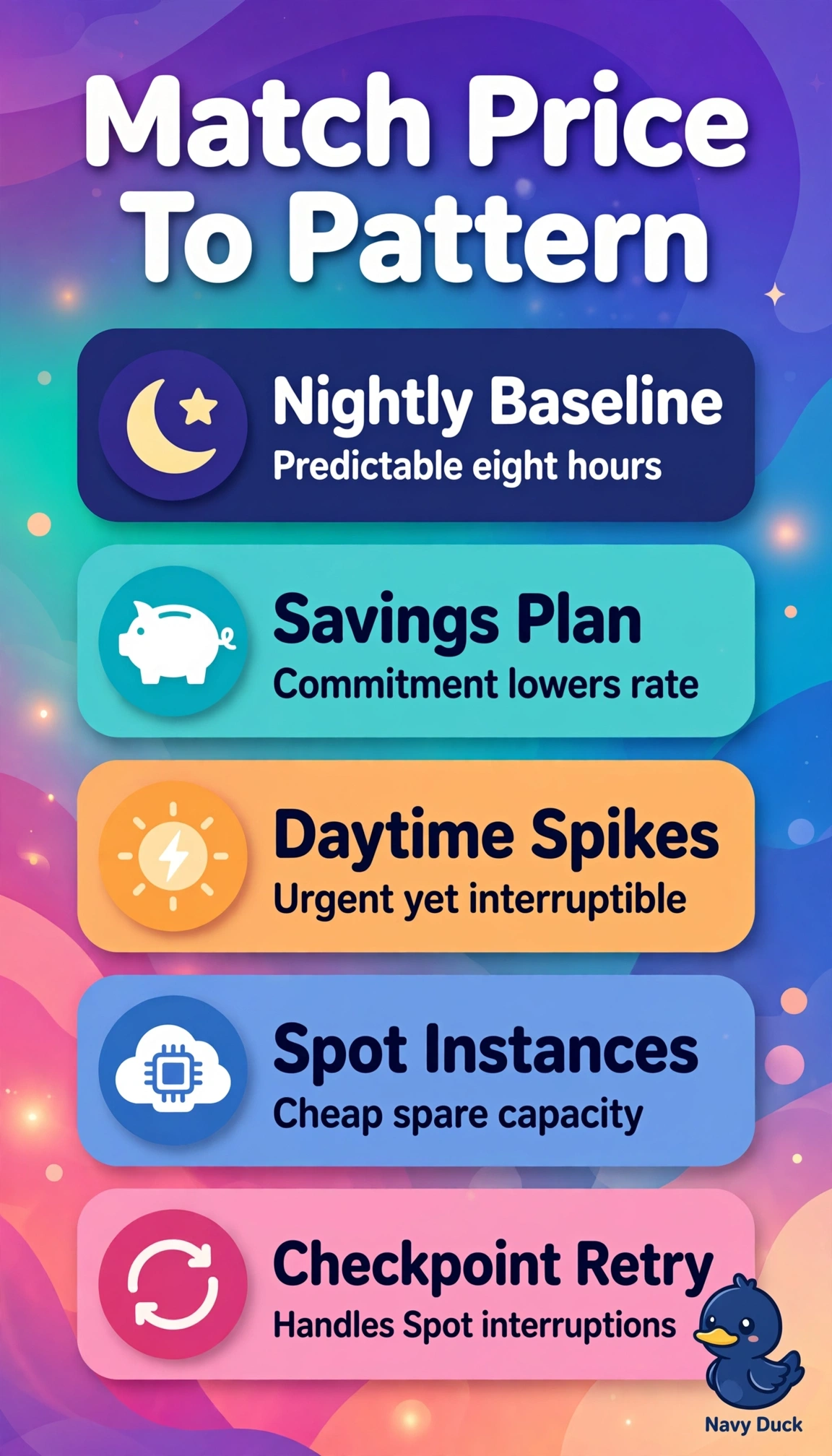
Why pay full price for a predictable commute? You lock discounts for the nightly baseline with commitment pricing and grab cheap spare capacity for flexible previews. That split keeps steady work covered and spikes inexpensive.
Full Explanation
Savings Plans provide commitment-based discounts for steady-state compute where usage hours are predictable, perfectly matching the eight-hour nightly baseline, while Spot Instances offer deep discounts for interruptible, time-flexible preview jobs that can tolerate reclamation because rendering tasks can checkpoint and retry. This combination minimizes cost; note that Savings Plans are a billing discount and do not reserve capacity, so size the hourly commitment to the baseline usage you will actually consume. Running everything On-Demand pays the highest rate and ignores predictable usage that qualifies for discounts. Dedicated Hosts add hardware isolation costs for compliance needs not stated here and would massively overpay for batch rendering. Buying Convertible Reserved Instances for spiky capacity inverts the model by committing to the least predictable portion while leaving the predictable baseline at full price. For the exam, match steady usage to commitments and flexible fault-tolerant work to Spot, and in practice analyze Cost Explorer usage hours before choosing Savings Plan terms.