
A SaaS company runs steady-state web APIs on EC2 24/7, nightly batch jobs for 4 hours that tolerate interruption, and spiky dev environments used a few hours weekly. Finance wants lowest cost without changing architecture and with minimal commitment risk. Which purchase mix best matches these usage patterns?
Select an answer to reveal the explanation.
Short Explanation
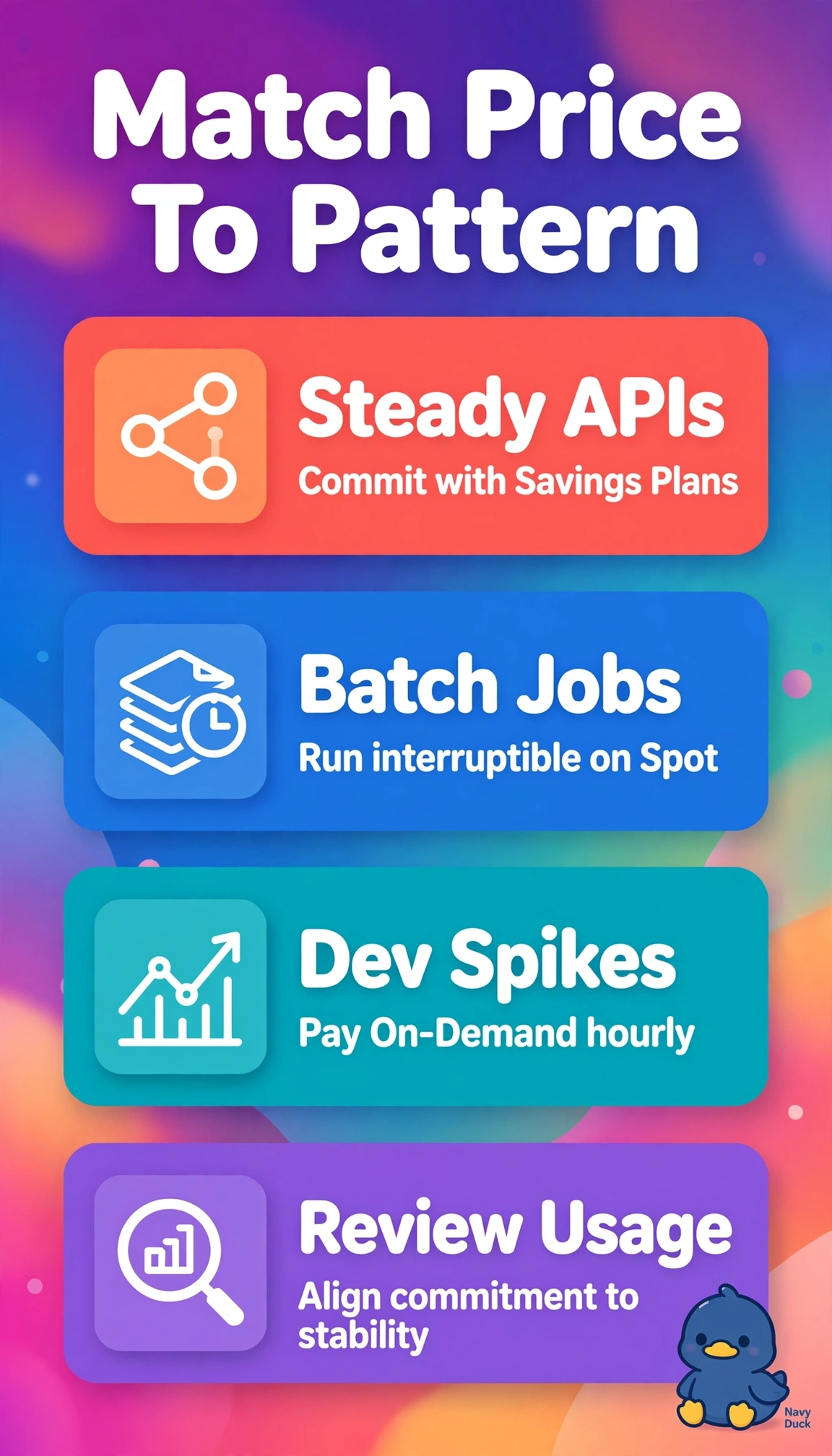
Steady bills deserve discounts, wobbly jobs deserve cheap spare capacity. You'll match commitment to predictability using Savings Plans for the always-on core and let Spot absorb interruptions. On-Demand stays perfect for those short-lived dev bursts.
Full Explanation
Compute Savings Plans discount steady 24/7 API usage with flexible commitment across instance types while preserving architecture, minimizing commitment risk compared to rigid reservations. Spot Instances suit fault-tolerant 4-hour batch work because interruption is acceptable and pricing is deeply discounted, and On-Demand fits irregular dev hours with no commitment. Using On-Demand for baseload wastes steady-state discount, Dedicated Hosts add cost for compliance needs not stated, and Reserved Instances for dev overcommits sporadic use. Reversing Spot to baseload risks interruption for production APIs while putting Savings Plans on tiny dev spend yields little benefit. Reserving everything overprovisions commitment and Spot blocks are not a current flexible model. Exam caveat: map steady to commitments, interruptible to Spot, and variable to On-Demand. Practical check: analyze Cost Explorer usage stability and confirm batch jobs checkpoint for Spot interruptions.