
Transit FAQ quality dropped immediately after a prompt edit. How should the team troubleshoot the regression most effectively?
Select an answer to reveal the explanation.
Short Explanation
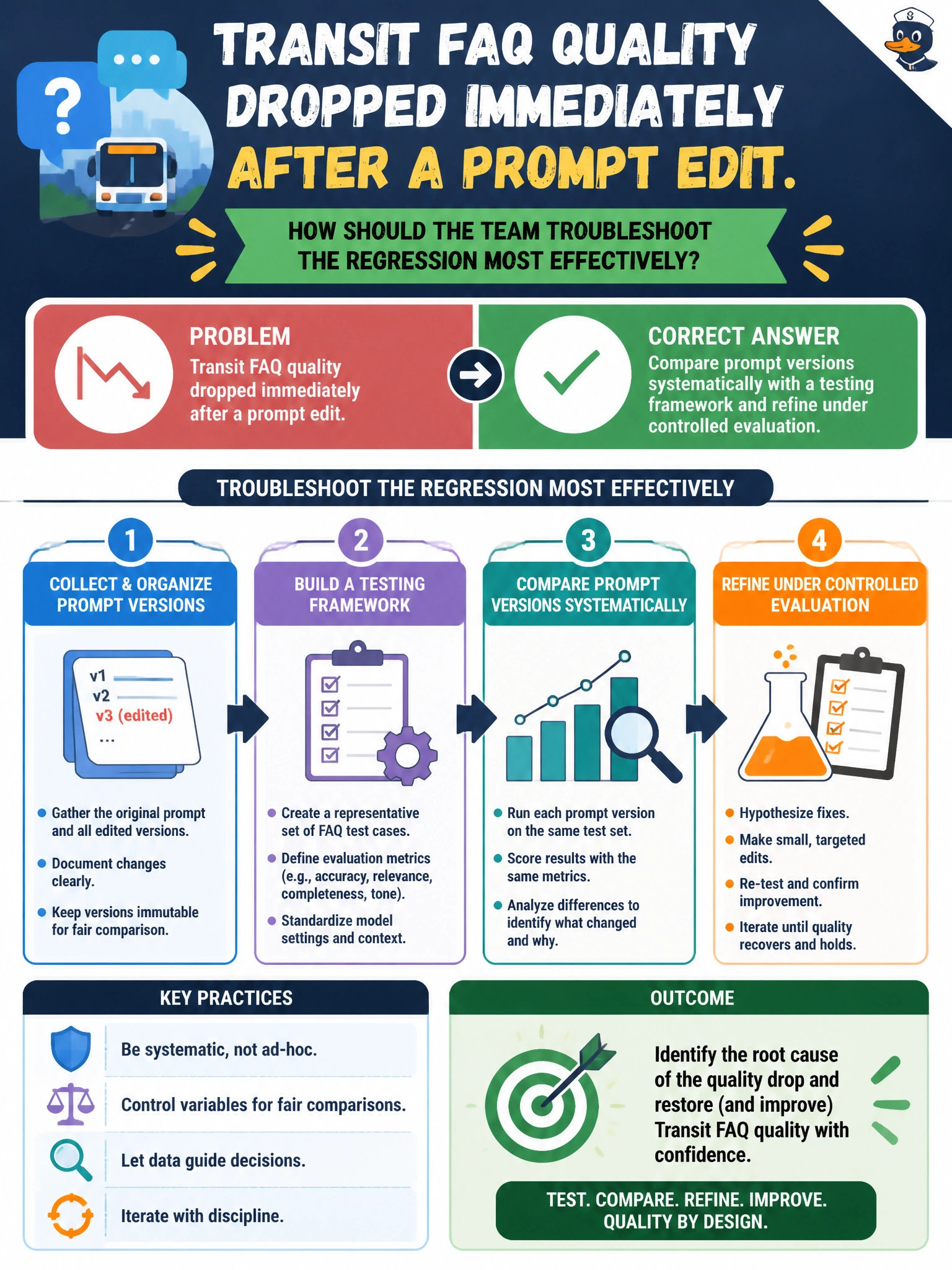
If the FAQ got worse the moment someone tweaked the prompt, put the old and new wording side by side. Version comparison plus a real test set beats another hopeful midnight edit.
Full Explanation
Comparing prompt versions systematically with a testing framework and refining under controlled evaluation is how the team should most effectively troubleshoot transit FAQ quality that dropped immediately after a prompt edit. Temporal correlation with a prompt change makes version comparison the primary diagnostic: run the same evaluation set on prior and current prompts, isolate which instructions caused regressions, and iterate under controlled tests rather than hopeful edits. Systematic comparison restores quality with evidence. Randomly rewriting the prompt daily with no version history fails by concept: uncontrolled churn without history prevents root-cause learning. Blaming the vector store without comparing prompts, then shipping another untested edit fails by concept—it skips the obvious change window and risks compounding damage. Accepting the quality drop as unavoidable for all prompt changes fails by concept: prompt regressions are often reversible with disciplined evaluation. Exam caveat: quality drops right after prompt edits point to controlled prompt-version comparison, not random rewrites, untested blame-shifting, or fatalism. Operational check: version-control every prompt, maintain a transit FAQ evaluation set, A/B or side-by-side score old vs new prompts, promote only improvements, and require evaluation results in the change ticket before production prompt updates.