
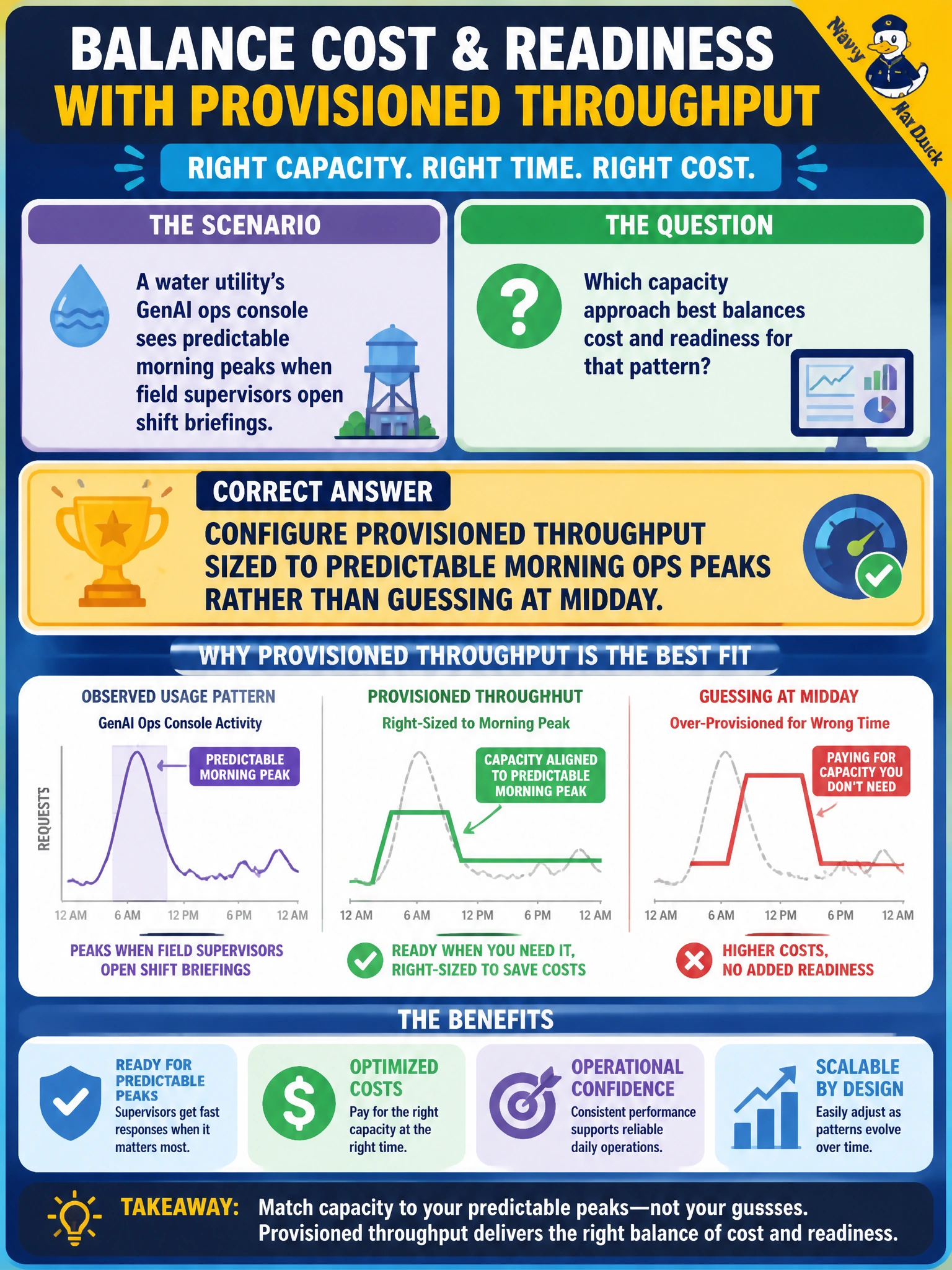
A water utility’s GenAI ops console sees predictable morning peaks when field supervisors open shift briefings. Which capacity approach best balances cost and readiness for that pattern?
Select an answer to reveal the explanation.
Short Explanation
Morning shift briefings are as predictable as rush-hour buses. Provisioned throughput sized to those peaks keeps the water ops GenAI ready without paying for a full stadium all night.
Full Explanation
Water-utility GenAI ops consoles often see predictable morning peaks when field supervisors open shift briefings. Capacity planning that configures provisioned throughput sized to those known peaks balances readiness and cost: enough reserved capacity to avoid throttling during the rush, without paying for maximum reservation through idle overnight hours. Predictable civic demand patterns are exactly when provisioned throughput beats pure on-demand surprise.
Relying only on unpredictable on-demand spikes with no capacity planning for known peaks invites morning throttling when supervisors most need briefings. Purchasing maximum provisioned capacity for 24 hours when nights are idle wastes budget on unused reservation. Turning the console offline every morning so peak demand never occurs avoids the load by denying the operational need—not an efficiency strategy.
Exam caveat: Match provisioned throughput to known demand curves; all-day max provisioning and peak shutdowns are wrong extremes. Operational check: chart morning invocation and token peaks for two weeks, size provisioned throughput to p95 of that window, retain on-demand headroom for incidents, and review weekly for drift when new briefing features ship.