
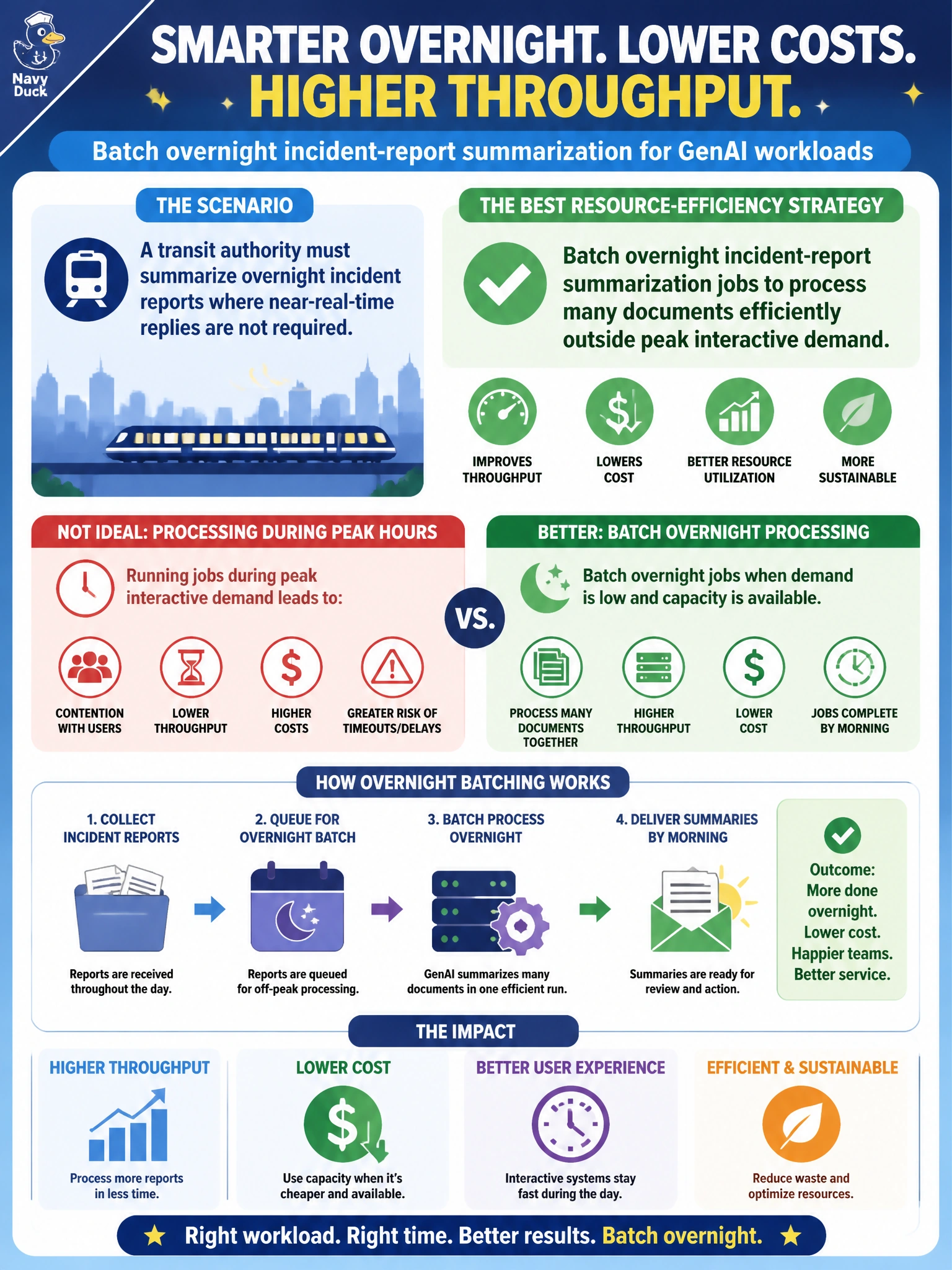
A transit authority must summarize overnight incident reports where near-real-time replies are not required. Which resource-efficiency strategy best improves throughput and cost for that GenAI workload?
Select an answer to reveal the explanation.
Short Explanation
Nightly incident digests are more like a bakery’s overnight bake than a live ticket window. Batch the summarization job so you pack the oven instead of firing it once per report at rush hour.
Full Explanation
Overnight transit incident-report summarization is deferred work: near-real-time replies are not required, so interactive per-email foundation-model calls are the wrong cost and throughput pattern. Batching many documents into efficient jobs outside peak interactive demand amortizes invocation overhead, improves packing of capacity, and avoids competing with daytime rider-facing chat for the same Bedrock quotas. Batch windows also make retries, dead-letter handling, and cost forecasting more predictable for municipal ops.
Invoking the FM interactively for each report as soon as an operator opens email ties cost and latency to human browsing patterns and fights for interactive capacity. Paying for continuous provisioned capacity all day for a nightly job over-reserves expensive readiness during idle hours. Summarizing each report three times with different models before discarding two outputs triples spend without matching any latency or quality requirement stated in the stem.
Exam caveat: Non-interactive GenAI workloads on the exam map to batch processing; provisioned-all-day and redundant multi-model runs are inefficiency traps. Operational check: schedule the batch after last overnight ingest, set concurrency limits appropriate to Bedrock quotas, compare cost versus interactive baseline, and verify summaries land before morning operations briefings.