
A water utility needs ongoing detection when FM outputs violate published communication policy, plus a path to fix them. Which governance pattern fits?
Select an answer to reveal the explanation.
Short Explanation
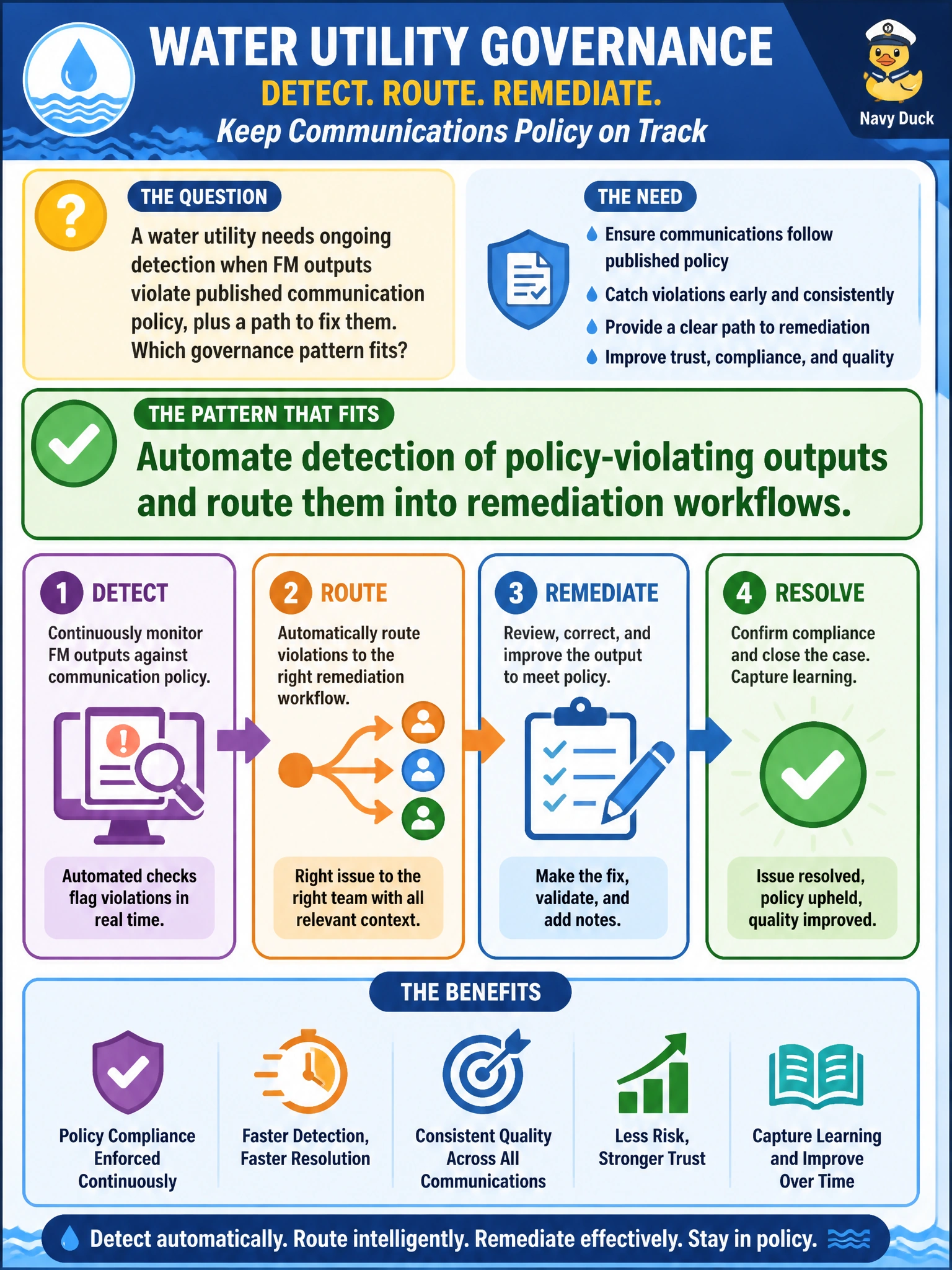
Policy violations should trip a sensor and open a work order—not wait for a viral screenshot. Automate detection, then route bad outputs into remediation so water advisories stay on-policy.
Full Explanation
Automating detection of policy-violating outputs and routing them into remediation workflows is the governance pattern that fits a water utility needing ongoing detection when FM outputs violate published communication policy, plus a path to fix them. Detectors (classifiers, guardrails, policy rules) score or flag advisory and customer-facing text; violations open quarantine, rewrite, human-review, or rollback tickets instead of waiting for public embarrassment. Continuous detect-and-remediate keeps water communications aligned with published policy after release, not only at demo time.
Waiting for residents to screenshot violations on social media as the only signal is purely reactive and guarantees some residents see noncompliant content first. Disabling automated checks because they might slow advisory publishing prioritizes speed over policy compliance during exactly the moments advisories matter most. Deleting monitoring dashboards after each successful quarterly demo removes ongoing detection between demos and breaks continuous governance.
Exam caveat: misuse/policy-violation governance pairs automated monitoring with remediation pathways. Detection without a fix path, or social-media-only discovery, is incomplete.
Operational check: configure detectors for the water utility’s communication policy (tone, prohibited claims, required disclaimers), route positives into a remediation queue with owners and SLAs, measure time-to-remediate, and verify dashboards remain active between quarterly reviews.