
A transit authority wants every generated rider notice to show which standard operating procedure supplied the guidance. Which governance practice enables that systematic attribution?
Select an answer to reveal the explanation.
Short Explanation
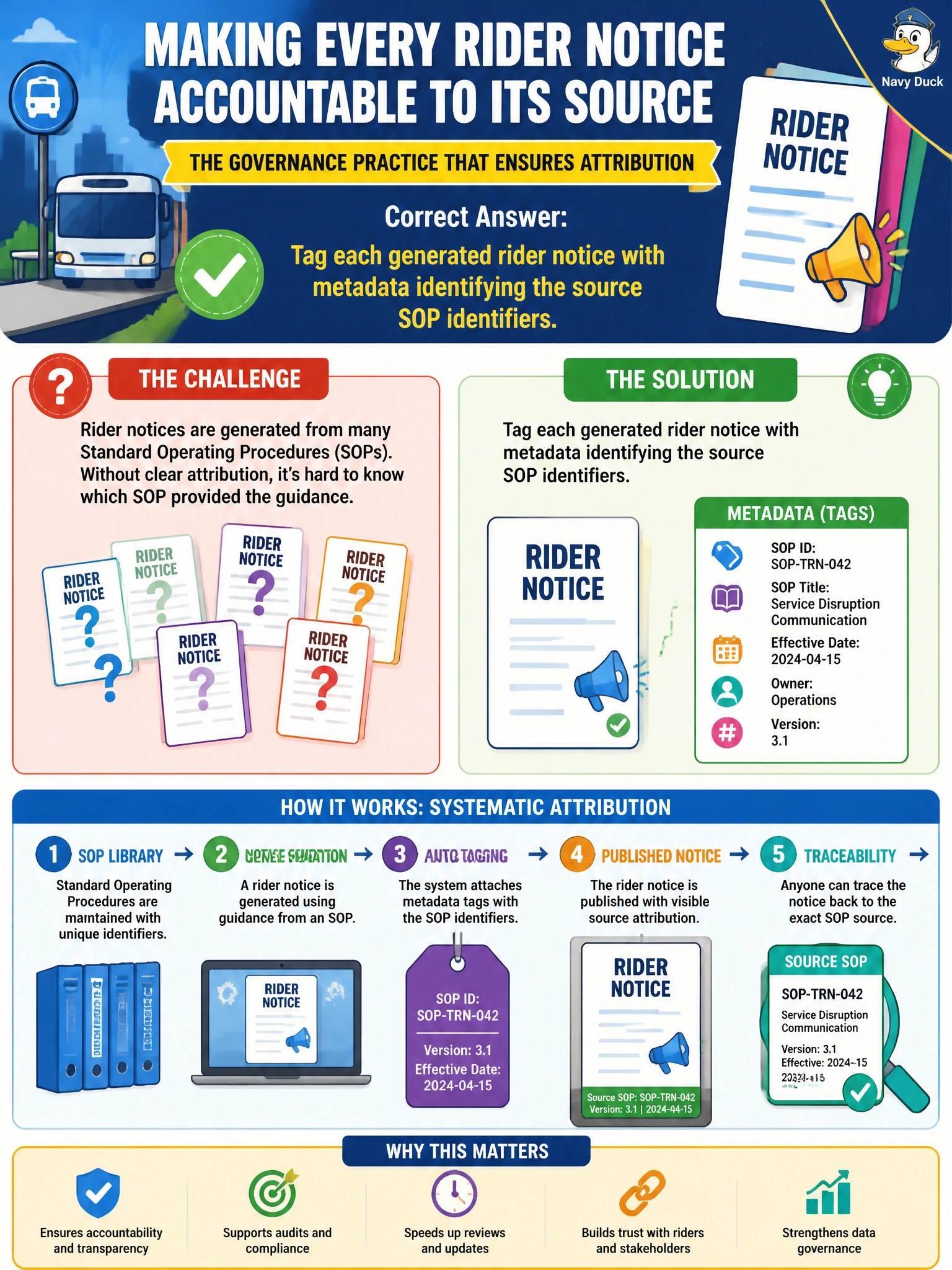
Think of SOP tags like citing the rulebook page on a delay notice. When every generated rider message carries those identifiers, you can see which procedure backed the wording and support oversight with attribution.
Full Explanation
Tagging each generated rider notice with metadata identifying the source SOP identifiers enables systematic attribution. When the FM drafts a delay, detour, or safety notice from retrieved SOPs, the application should attach structured metadata—such as SOP IDs, titles, and retrieval scores—to the outbound notice record, and preferably include a short resident-visible or staff-visible attribution where policy allows. Ops and oversight can then verify which procedures informed each notice and remediate when the wrong SOP was retrieved. Omitting sources to make notices shorter on mobile screens trades away attribution for cosmetic brevity and blocks systematic review. Using a plausible SOP number when retrieval does not clearly identify a source fabricates provenance; false citations mislead operators and auditors, so stating uncertainty is safer. Collapsing all SOPs into one unlabeled blob in the vector store destroys document boundaries, preventing retrieval from returning identifiable procedure sources to tag. Exam caveat: governance for generated content depends on preserving source identity through retrieval and attaching it to outputs; do not confuse a shorter user experience with dropping required metadata. Practical check: generate sample notices in a lower environment, confirm each record includes SOP ID metadata matching retrieved chunks, flag or fail closed on unlabeled content, and audit a week of production notices for missing or invented SOP tags.