
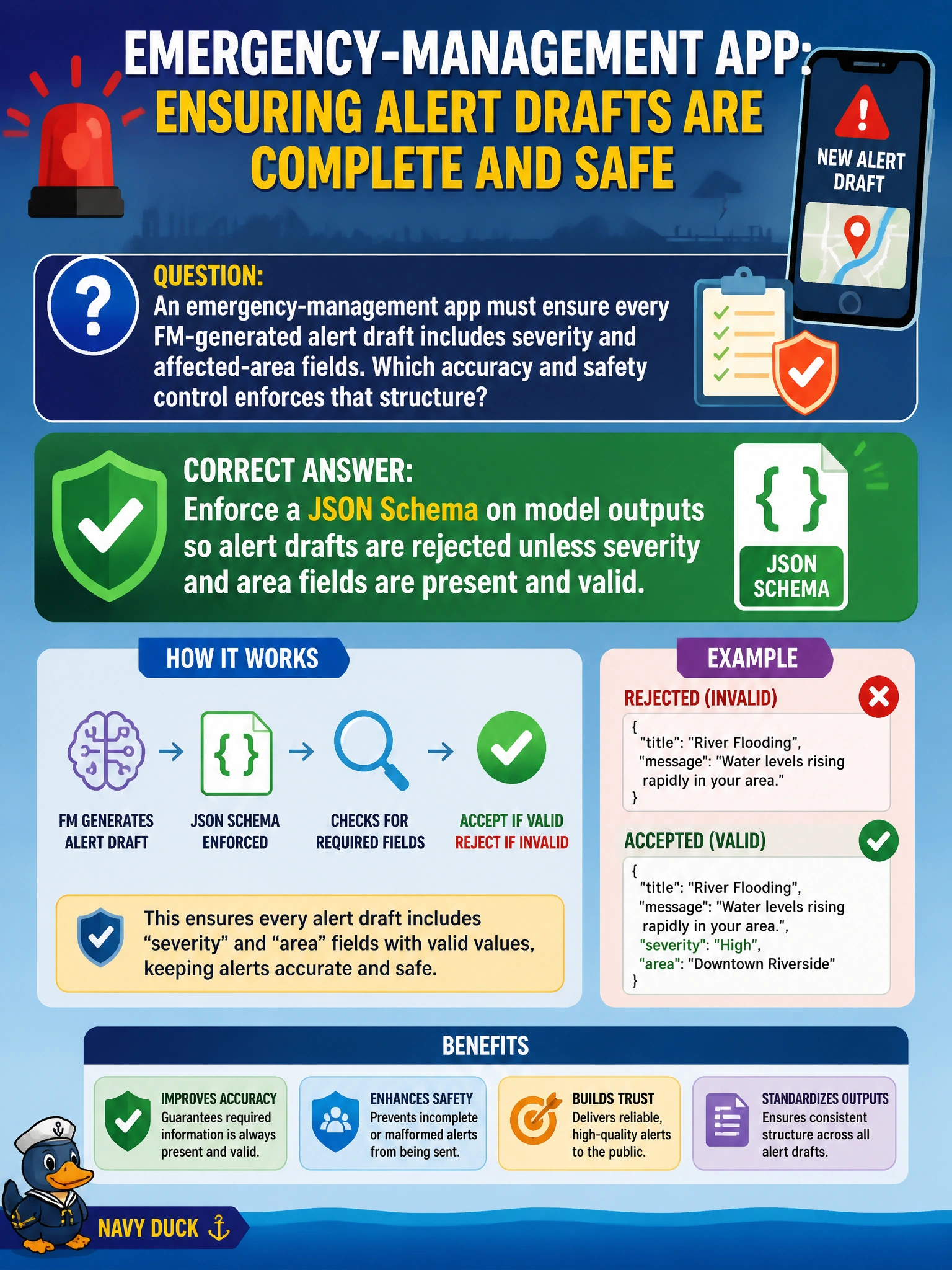
An emergency-management app must ensure every FM-generated alert draft includes severity and affected-area fields. Which accuracy and safety control enforces that structure?
Select an answer to reveal the explanation.
Short Explanation
You need severity and affected area in every alert, not just polished prose. JSON Schema validation rejects drafts that lack either required field before they can be published.
Full Explanation
An emergency-management app must ensure FM-generated alerts contain severity and affected-area fields. Enforcing a JSON Schema rejects drafts unless both fields are present and valid, making structured-output validation an accuracy and safety control. Incomplete alerts can be dangerous in civic emergency communications, so they must fail closed before reaching publication channels. Accepting free-form prose with missing severity and no geographic scope fails because responders and residents cannot act reliably on incomplete warnings. Allowing the model to omit required fields when token limits are approached fails because resource pressure must not remove mandatory safety information; the system should fail, retry with tighter prompts, or escalate. Allowing drafts to post publicly before staff correct missing fields also fails: later review cannot prevent the initial release of an incomplete alert. Exam caveat: schema validation checks structure and types, not whether emergency details are factually correct; pair it with grounding in authoritative incident data and human approval for public release where doctrine requires it. Version schemas with the alert product, and ensure converters do not silently insert misleading placeholder values. Practical check: test drafts missing either field and confirm validation rejects them, test valid drafts and confirm they pass, and verify an invalid payload cannot be published; document human approval for high-severity alerts.