
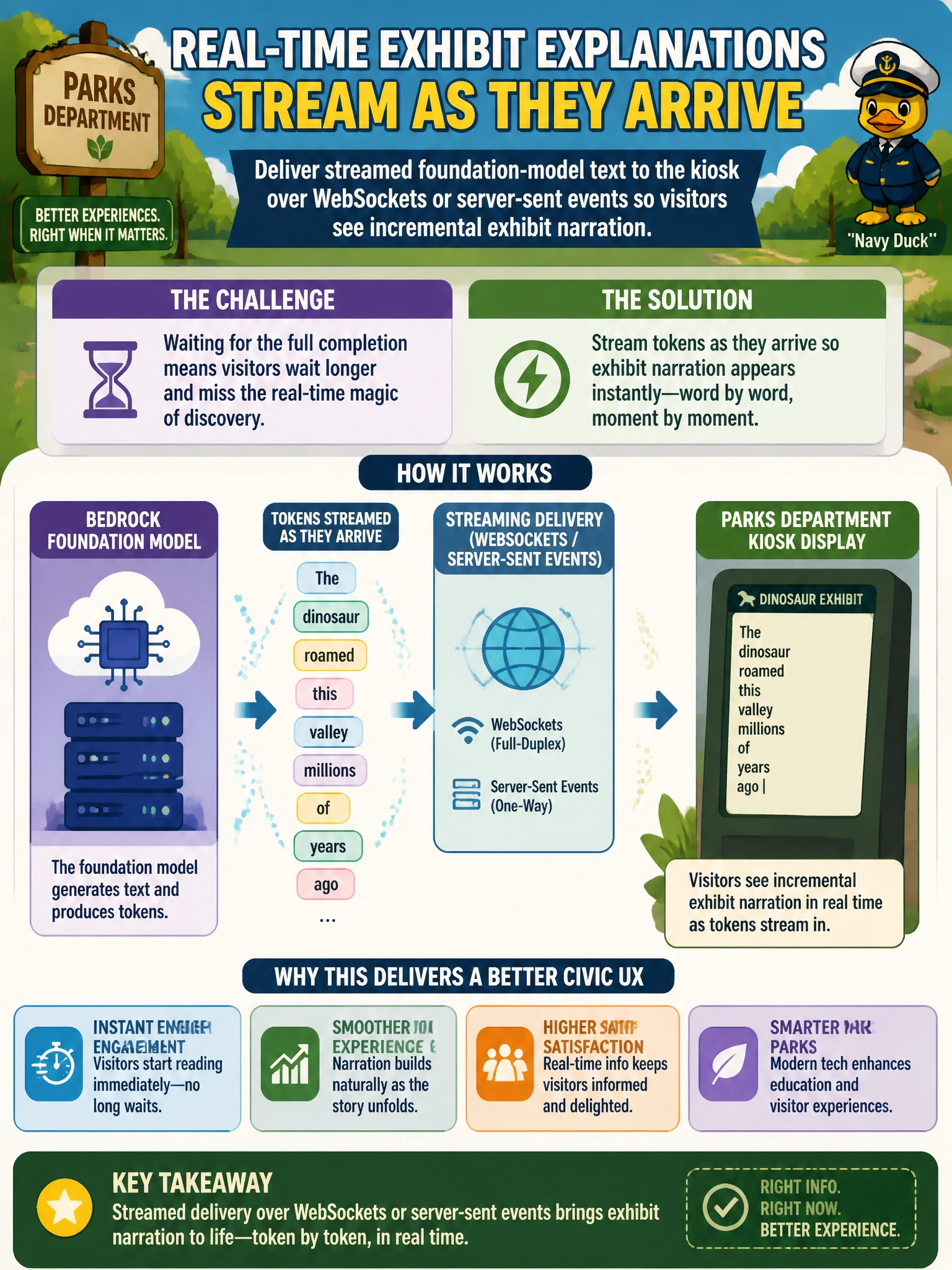
A parks department kiosk should display exhibit explanations as tokens arrive from Bedrock rather than waiting for the full completion. Which delivery mechanism fits that real-time civic UX?
Select an answer to reveal the explanation.
Short Explanation
Museum kiosks feel snappy when words show up as they are generated—like a tour guide talking, not mailing you a pamphlet later. WebSockets or SSE carry that streamed Bedrock text live to the screen.
Full Explanation
Parks department exhibit kiosks need low perceived latency: visitors should see narration as tokens arrive rather than waiting for a full Bedrock completion. The correct delivery mechanism is streaming foundation-model text to the kiosk over WebSockets or server-sent events (SSE). Those transports push incremental tokens from the municipal backend to the UI so exhibit explanations appear progressively, matching real-time civic UX expectations without requiring visitors to wait for a batch job.
Buffering every completion overnight in S3 Glacier and refreshing weekly fails by concept: cold archival storage and weekly refresh destroy interactivity for walk-up kiosk users. Requiring a PDF download before any on-screen text appears adds friction and still is not token streaming. Replacing streaming with a nightly SMS blast to every park member addresses neither kiosk display nor incremental token delivery and misuses a broadcast channel for an interactive exhibit flow.
Exam caveat: streaming improves perceived latency but does not remove the need for content filters, rate limits, and a secure backend that holds Bedrock credentials; the kiosk browser should consume the stream from a city-controlled endpoint, not hold FM keys. Partial streams must handle disconnects and cancellation cleanly so a dropped socket does not leave misleading half-answers presented as final policy.
Operational check: from a parks kiosk client, invoke a long exhibit prompt and verify tokens render incrementally over WebSocket or SSE; kill the connection mid-stream and confirm the UI shows a recoverable state; compare time-to-first-token against a buffered full-completion baseline to document the UX gain for accessibility and visitor flow.