
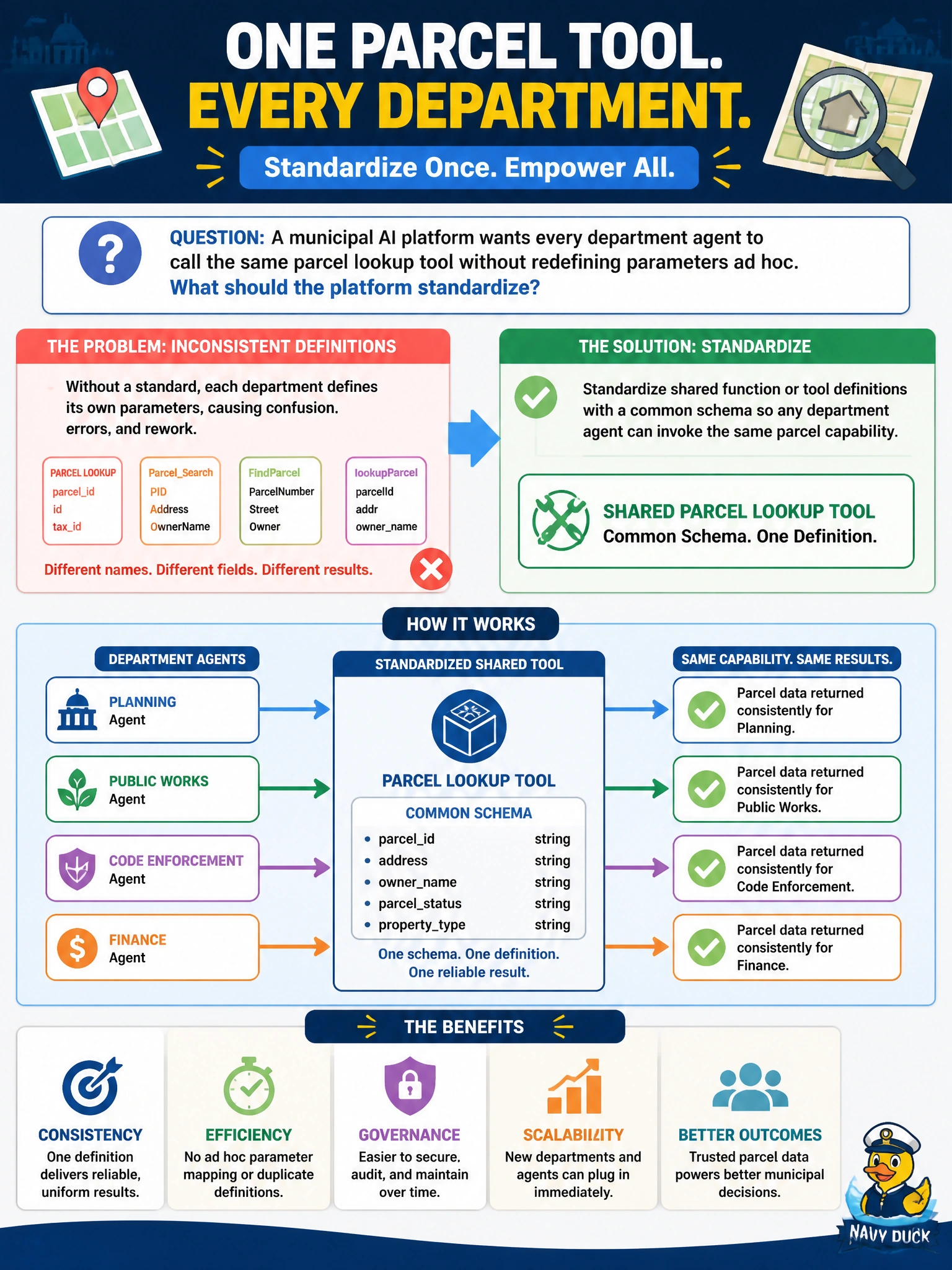
A municipal AI platform wants every department agent to call the same parcel lookup tool without redefining parameters ad hoc. What should the platform standardize?
Select an answer to reveal the explanation.
Short Explanation
City GIS already has one parcel ID format—agents should share one tool contract too. Publish a common function definition so permitting, assessor, and 311 agents call the same parcel tool. Weekly forks and tribal dialects recreate integration chaos.
Full Explanation
Municipal AI platforms that want every department agent to call the same parcel lookup tool without ad hoc parameter dialects should standardize shared function or tool definitions with a common schema. One machine-readable contract—parcel ID format, required fields, error codes—lets permitting, assessor, and 311 agents invoke the same capability consistently and reduces integration drift across the city. Unique undocumented parameter dialects per department recreate the fragmentation the platform seeks to avoid and break cross-department orchestration. Hard-coded parcel tool clones forked weekly by each team guarantee skew, duplicate bugs, and incompatible IDs. Verbal descriptions of parcel fields with no machine-readable schema cannot be validated by agents or API gateways. Exam caveat: “same tool without redefining parameters ad hoc” points to shared schemas and function definitions—not departmental forks or verbal specs. Operational check: publish the parcel tool schema in a central registry, require agents to bind to the published definition version, reject calls that violate the schema, deprecate forks by routing all departments through the shared MCP or function endpoint, and version the schema with change notes for integrators.