
City legal requires every retrieved ordinance chunk to show authorship and adoption date for accountability in GenAI answers. What vector-store design satisfies that requirement?
Select an answer to reveal the explanation.
Short Explanation
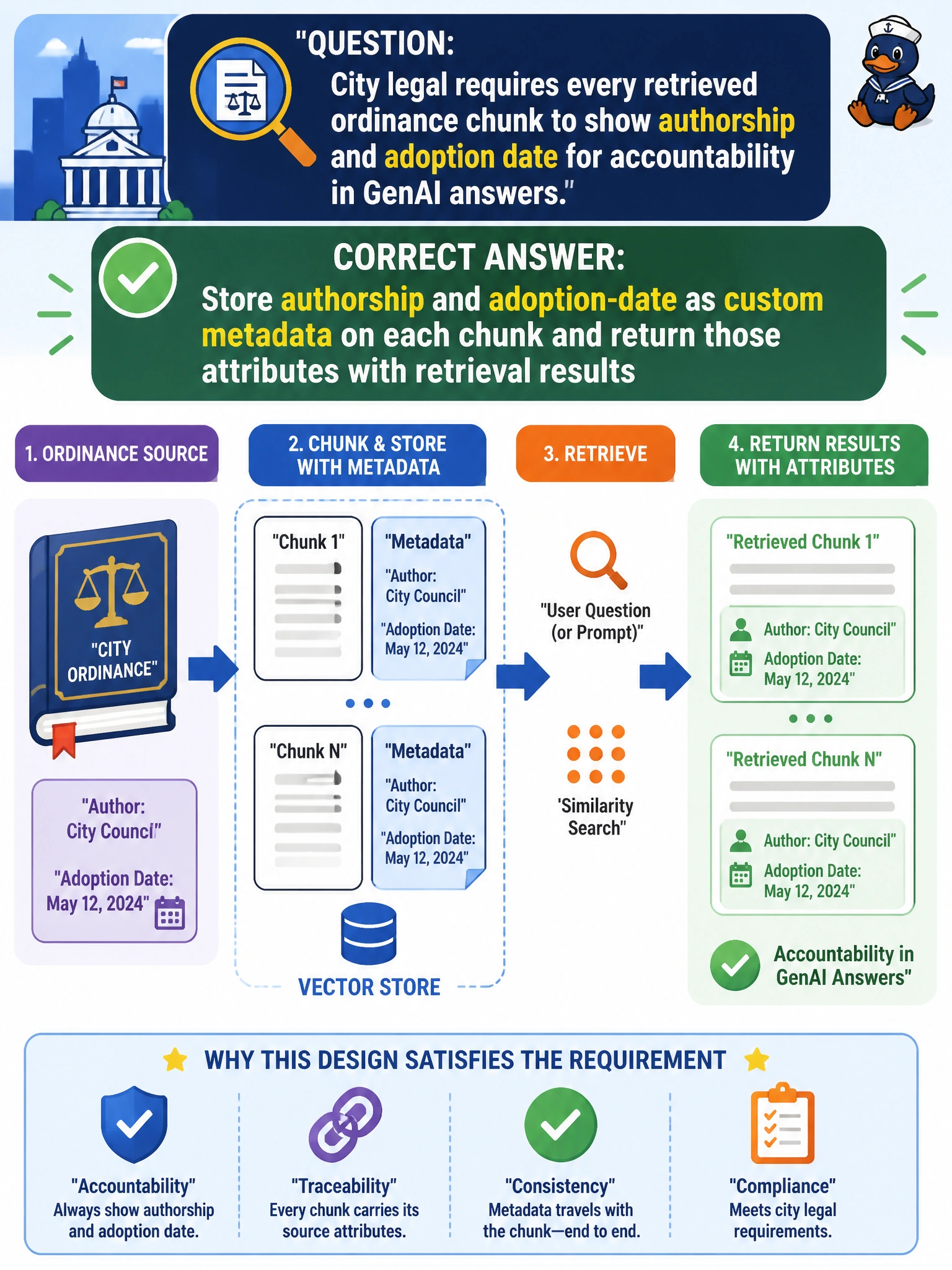
Ordinances need a byline and a date stamp — same as a signed memo. Put authorship and adoption date on every chunk’s metadata so answers can show who passed what, and when.
Full Explanation
City legal accountability for GenAI answers about ordinances requires provenance on retrieved chunks. Storing authorship and adoption date as custom metadata on each chunk and returning those attributes with retrieval results lets the assistant cite who sponsored or authored the language and when it was adopted. That vector-store design turns retrieval into an accountable evidence pack for clerks and counsel, not just anonymous similar text. Without returned metadata, even a correct paraphrase cannot satisfy ordinance accountability reviews.
Stripping legal metadata before embedding so the FM cannot cite sources fails the accountability requirement by design and leaves answers uncitable. Allowing the FM to fabricate sponsor names when metadata is absent fails ethics and legal review—fabrication is not provenance and can misstate legislative history. Indexing only ordinance titles while omitting body text and dates fails both answer quality and the date/authorship mandate, because titles alone rarely carry adoption context or operative rules.
Exam caveat: Metadata returned with retrieval is how GenAI systems support citation and governance requirements in civic legal contexts; embedding quality alone does not create an audit trail.
Operational check: require authorship and adoption-date fields at ingest, reject chunks missing them, render citations in the UI or answer footer, reconcile metadata monthly against the official ordinance register, and sample production answers to confirm citations match the retrieved chunk attributes rather than model invention.