
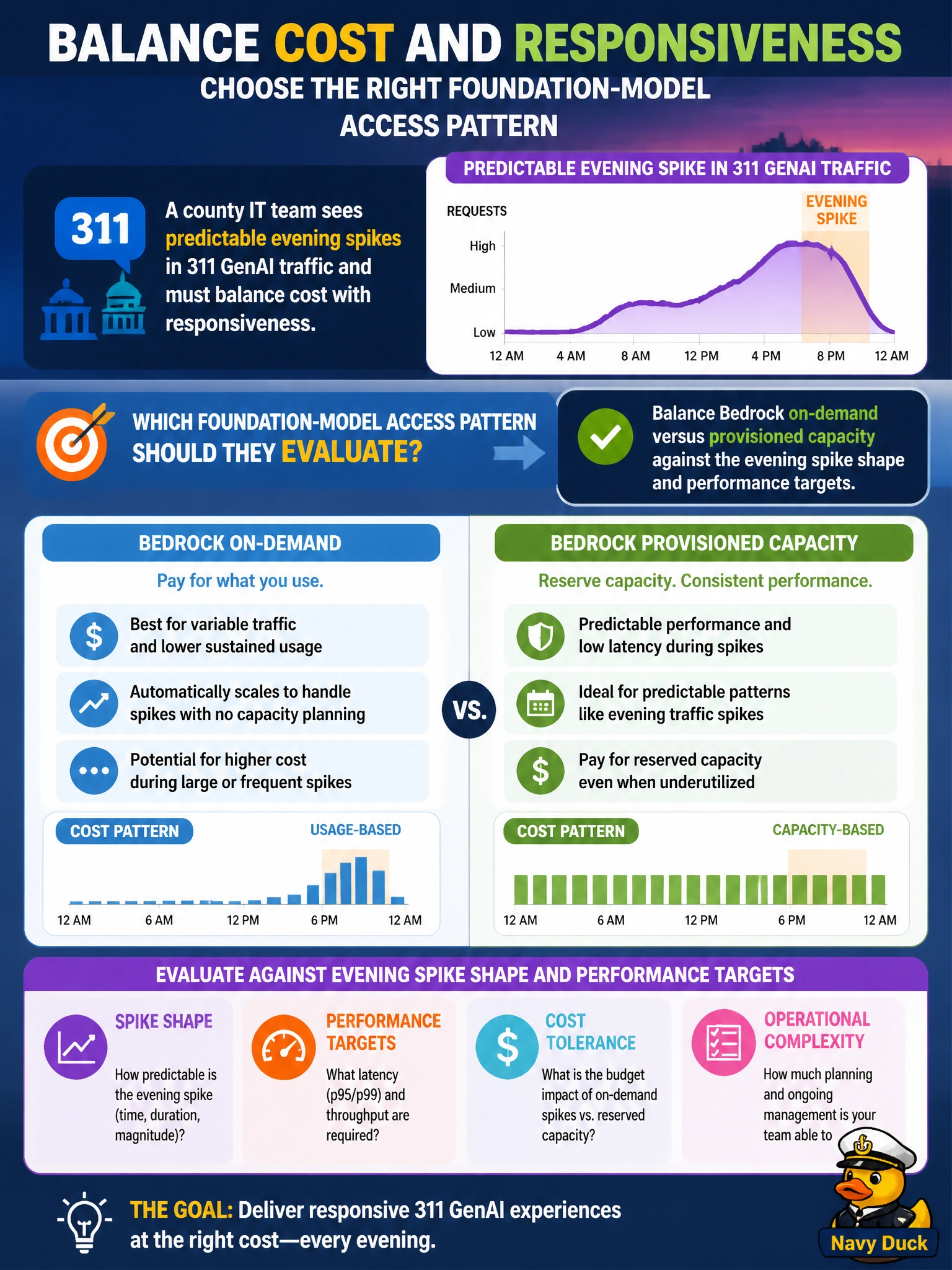
A county IT team sees predictable evening spikes in 311 GenAI traffic and must balance cost with responsiveness. Which foundation-model access pattern should they evaluate?
Select an answer to reveal the explanation.
Short Explanation
Evening 311 rushes are like rush-hour buses—you plan capacity for the known surge. Compare Bedrock on-demand and provisioned capacity with the spike shape and performance targets, so you can meet responsiveness goals without paying peak rates all day.
Full Explanation
With predictable evening spikes in 311 GenAI traffic, you should compare Bedrock on-demand and provisioned capacity against the spike shape and performance targets. On-demand favors flexibility and pay-per-use for uneven loads; provisioned throughput favors predictable latency when concurrency is known and sustained. Model cost and throttling risk for the evening demand rather than paying peak rates around the clock without measuring traffic. Provisioning the highest-capacity tier all day without analysis ignores the data needed to right-size spending. Turning the assistant off every evening may eliminate spikes, but it abandons the resident channel when demand is highest. Routing evening traffic to an unmonitored personal API key breaks governance, budgeting, and operational ownership. Exam caveat: foundation-model access questions contrast on-demand with provisioned throughput in light of traffic patterns and service-level targets, so choose based on analysis, not fear or thrift alone. Practical check: chart evening 311 concurrency and latency, estimate on-demand and provisioned costs for that shape, pilot the selected pattern with alarms for throttling and latency, and revisit it after a few weeks of metrics.