
An insurer is reviewing its portfolio of AI initiatives at a quarterly steering committee. Select the TWO initiatives below that should be prioritized to SCALE, based on the descriptions given. (Select TWO.)
Select all correct answers, then click Submit.
Short Explanation
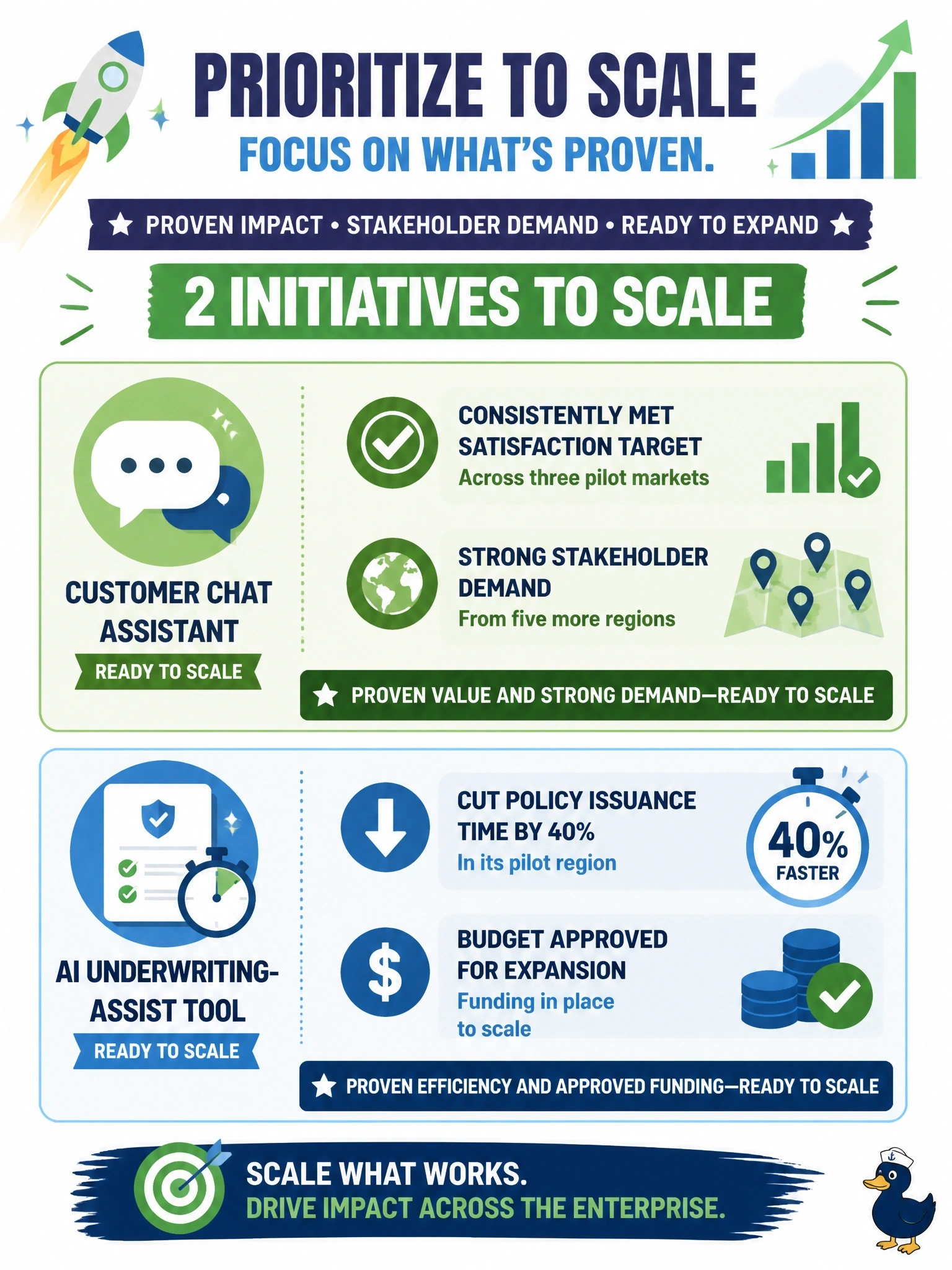
You scale an initiative once it's proven itself and you've got the resources to grow it, like a pilot that hit its satisfaction target across three markets with regions already asking for it, or a tool that's demonstrably cut issuance time 40% and already has budget approved. A declining trend nobody's diagnosed, or a project with no recent review, needs your attention before it earns more funding.
Full Explanation
The customer chat assistant that consistently met its satisfaction target across three pilot markets with stakeholder demand from five more regions, and the AI underwriting-assist tool that cut policy issuance time by 40% with budget approved for expansion, both show measured success against a target along with available budget or documented demand for expansion, the two conditions that justify scaling. The claims-fraud model with accuracy declining every month and no diagnosed cause shows a worsening, undiagnosed trend, which calls for a pause to investigate, not scaling. The pricing model pilot still in its first month with no results reported yet has nothing to base a scale decision on. The document-search tool whose sponsoring executive left with no usage review in over a year has gone unreviewed and lost its sponsor, a sign it needs reassessment before any decision, not expansion. The general principle: scale decisions require demonstrated, measured success plus the resources or demand to expand; initiatives lacking either evidence or backing should be paused or reviewed, not scaled.