
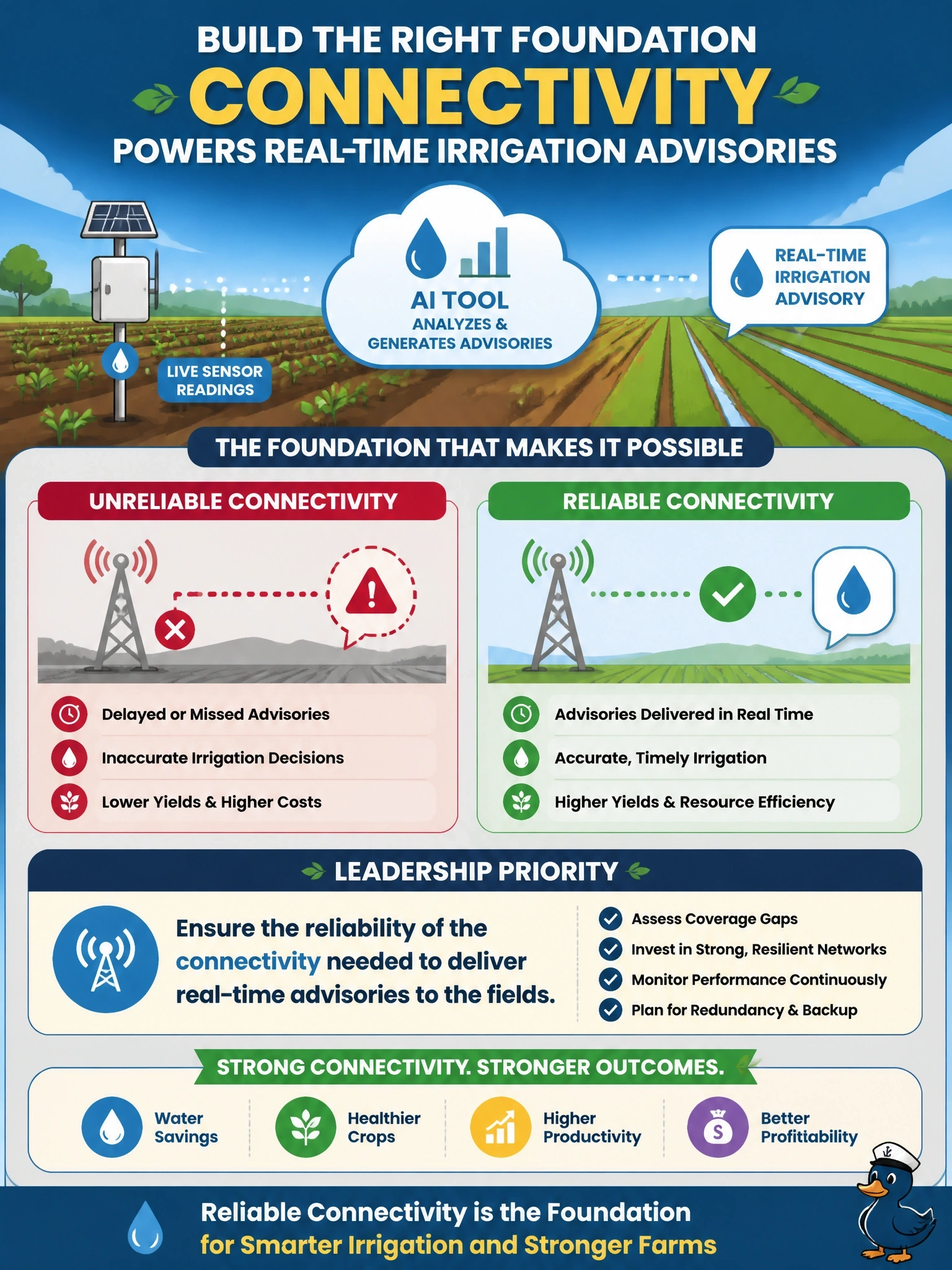
An agribusiness wants to deploy an AI tool that sends real-time irrigation advisories to field workers based on live sensor readings, but many of its fields are in areas with unreliable internet connectivity. What is the most important foundational gap for leadership to address before scaling this initiative?
Select an answer to reveal the explanation.
Short Explanation
Think about it like this: a real-time advisory tool is only as good as the pipe carrying it, and if that pipe keeps dropping out in the field, nothing downstream matters yet. Before you scale anything, you've got to close the connectivity gap — otherwise those live sensor readings never make it to the worker who needs them.
Full Explanation
Leadership should address the reliability of the connectivity carrying advisories to the fields, because a real-time tool is only as useful as the network that delivers its output, and the stem specifically flags unreliable internet access as the obstacle in the way. The number of crop varieties grown across the fields is a business fact about the operation, but it has no bearing on whether a live advisory can actually reach a worker standing in a field with a weak signal. The size of an internal marketing budget is a downstream adoption and communications concern — it only matters once the tool can reliably function in the first place, and no amount of promotion fixes a dropped connection. The average tenure of field workers might shape how training is designed, but it does nothing to close the specific technical gap preventing advisories from arriving at all. Before scaling investment, leadership needs an infrastructure assessment: what's the actual coverage across the affected fields, does it support the data volume and latency the tool requires, and is there a fallback for dead zones? The operational check: pull connectivity maps or run field tests before committing further budget — if advisories can't reliably reach the point of use, no other improvement matters yet.