
A last-mile delivery startup wants to pilot an AI tool that optimizes delivery routes. Leadership is deciding whether to build the necessary technology foundation in-house or use a consumption-based AI service so the company pays only for what it uses during the pilot. Which factor should most influence this decision?
Select an answer to reveal the explanation.
Short Explanation
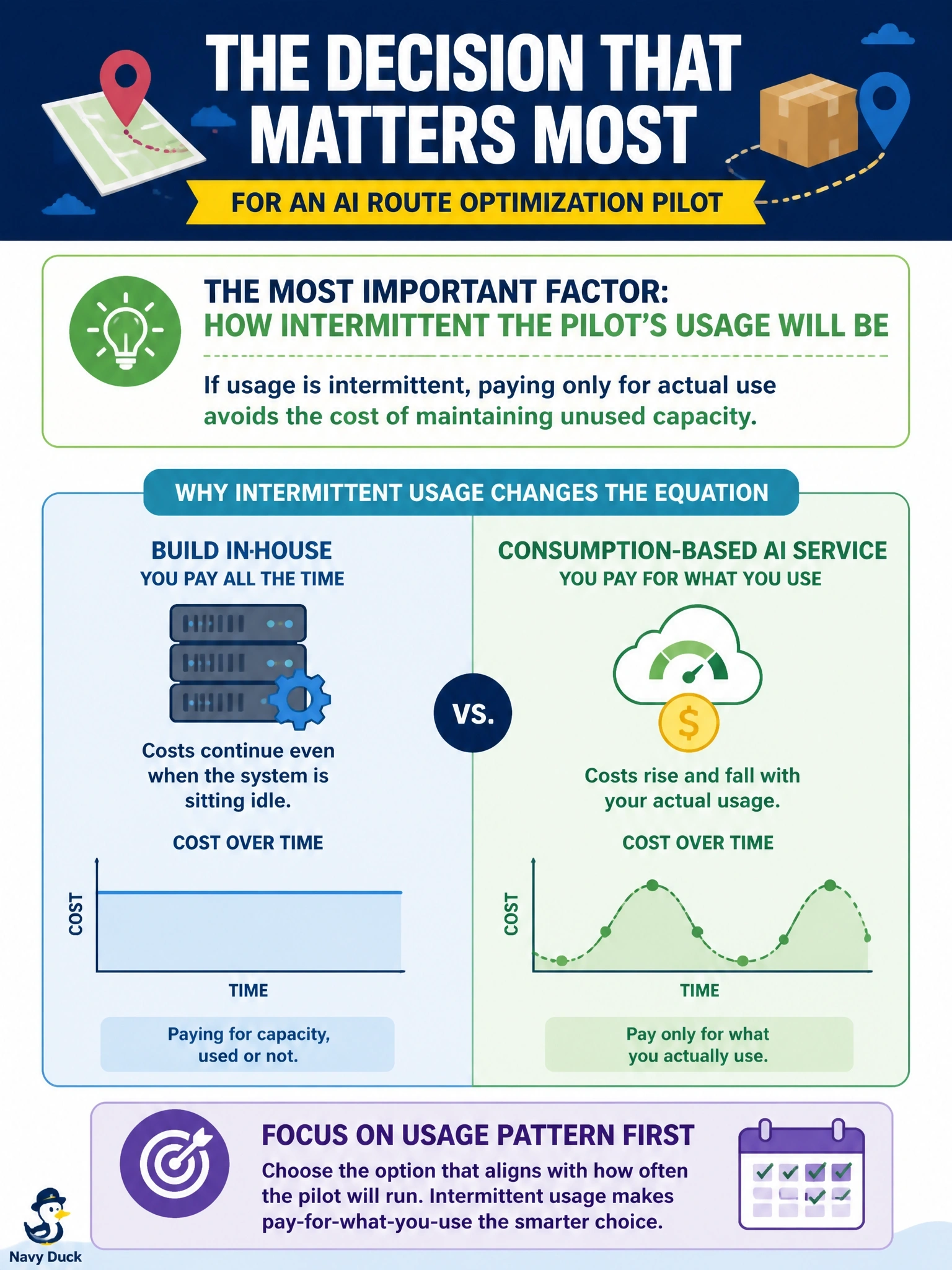
Think of it like renting a car for the weekend instead of buying one outright — if you'll only use it now and then, why pay to own and maintain it? That's the logic behind consumption-based pricing: when a pilot's usage is intermittent, paying only for what you use beats carrying the cost of capacity that sits idle between runs.
Full Explanation
The decision should be driven by the pilot's expected usage pattern — if usage will be intermittent, paying only for actual consumption avoids the cost of maintaining capacity that sits idle between pilot runs. The founder-preference option substitutes personal preference for a business-driven assessment of the pilot's actual infrastructure needs, which is not a sound basis for the decision. The cheaper-in-general option overgeneralizes by treating consumption-based pricing as universally cheaper, when in reality its value depends entirely on usage patterns — steady, heavy usage can make a different pricing structure more cost-effective. The competitor-behavior option looks at what competitors have chosen, which may be informative context but is secondary to understanding the startup's own expected usage economics for this specific pilot. The principle: infrastructure and pricing-model decisions should be grounded in the initiative's actual expected usage pattern, weighing consumption-based costs against the cost of maintaining dedicated capacity, rather than preference, generalization, or competitor behavior.