
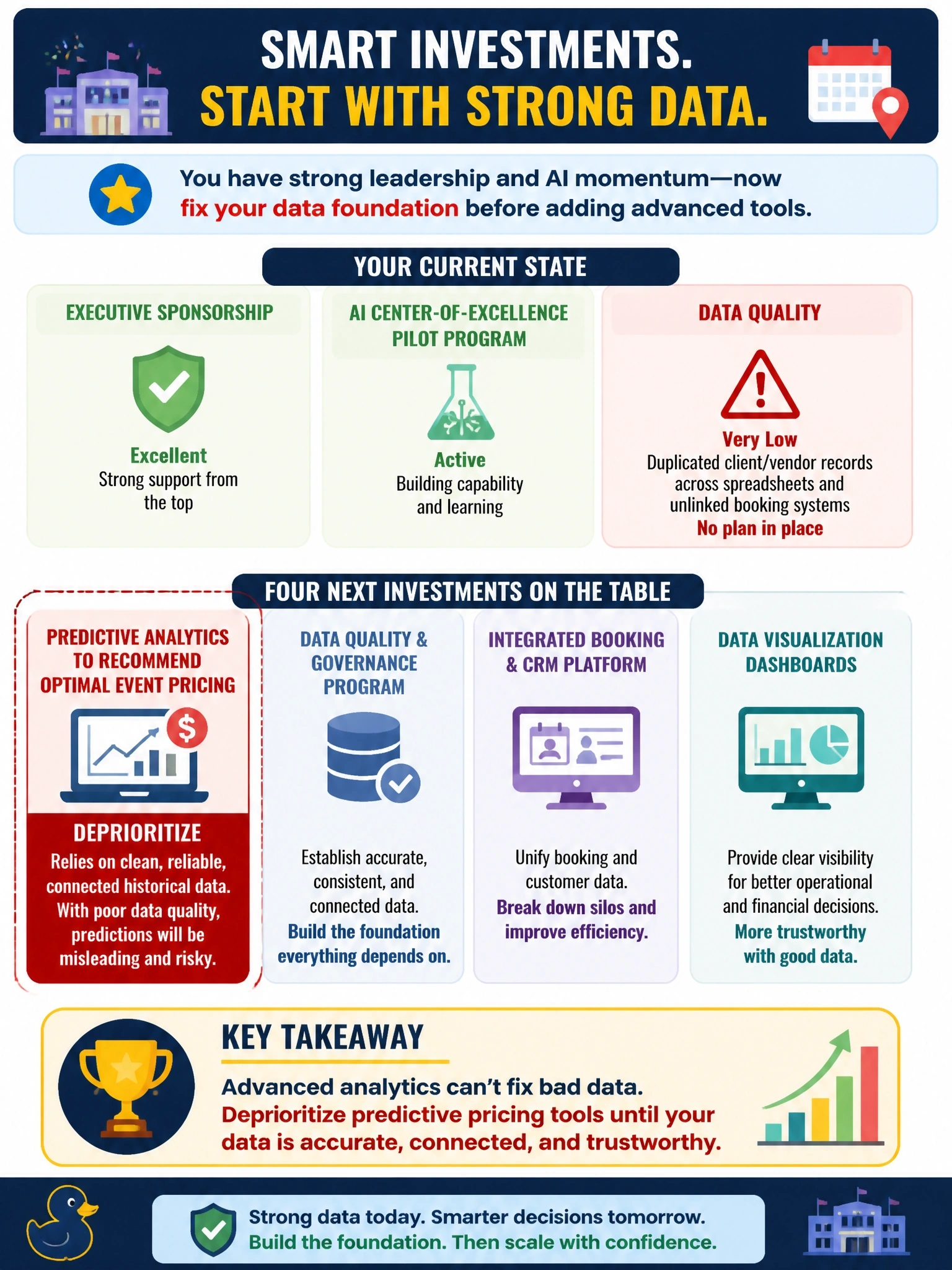
An event-venue group's maturity assessment shows excellent executive sponsorship and an active AI center-of-excellence pilot program, but very low data quality: client and vendor records are duplicated across spreadsheets and unlinked booking systems, with no plan to address it. Leadership is weighing four possible next investments. Which of these should the group deprioritize until the data problem is addressed?
Select an answer to reveal the explanation.
Short Explanation
Building on a cracked foundation, a fancy pricing model layered on top of duplicated, mismatched booking records just gives you confident-sounding wrong answers. Fix the data first — with a steward, a plan, and a quick survey — before spending on anything that depends on it being trustworthy.
Full Explanation
A predictive pricing model trained on duplicated, unlinked booking records will produce unreliable recommendations no matter how sophisticated the algorithm is, so this is the investment to deprioritize until the data foundation is fixed. The other three options all build toward fixing that foundation and should move forward now, not later. A part-time data steward role creates the ownership the consolidation effort currently lacks, someone accountable for driving the cleanup, which is exactly what this maturity level calls for. A cross-functional working group builds the actual plan for merging the booking systems, turning the vague goal of consolidation into a concrete roadmap with buy-in from the teams who own the data. A short internal survey is a low-cost diagnostic step that identifies which sources most need consolidation before heavier investment begins, so it advances understanding rather than delaying it. The operating principle: when an assessment reveals poor data quality, deprioritize investments that depend on that data being reliable, and prioritize the low-cost steps that build the missing data foundation first, even when sponsorship for the more advanced initiative is strong.