
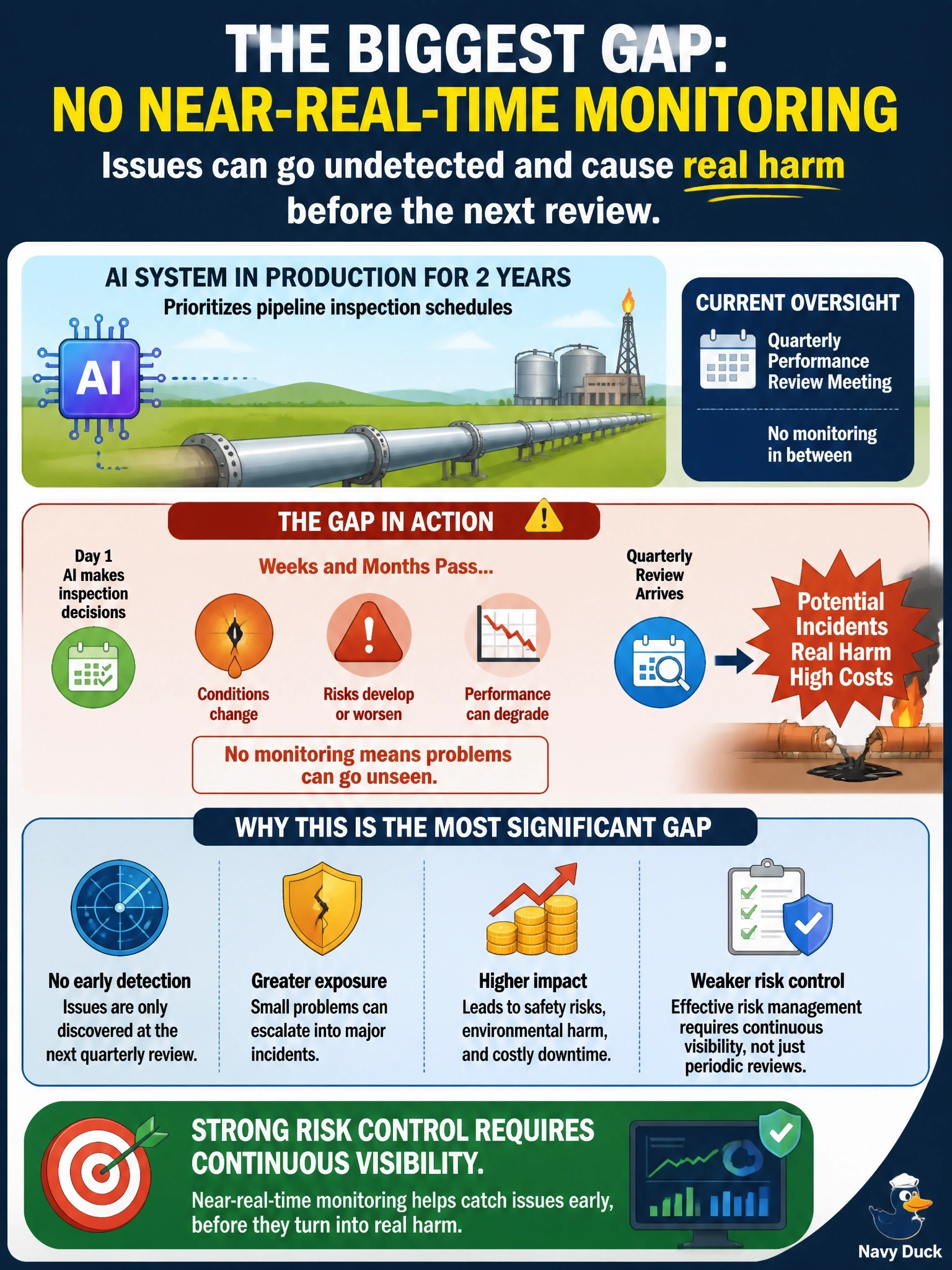
An oil and gas company's AI system prioritizes pipeline inspection schedules and has been in production for two years. Its only oversight mechanism is a quarterly performance review meeting; there is no monitoring in between. What is the most significant gap in this company's risk control approach?
Select an answer to reveal the explanation.
Short Explanation
A quarterly checkup is fine for your routine physical, but not if you're having chest pains right now — the gap between checkups is where real damage happens. For a system steering pipeline inspections, months of silence between reviews is exactly the window where a developing problem can turn into real harm before anyone notices.
Full Explanation
Flagging the lack of near-real-time monitoring correctly identifies the gap: for a system that influences physical infrastructure inspections, a quarterly-only check means a developing problem could go unnoticed for months, during which real harm could occur. Calling quarterly reviews too frequent gets the direction backward; the problem is that reviews are too infrequent, not too frequent. Replacing the review meeting with automated retraining jumps to a technical fix that is out of scope for a business governance decision and does not address the actual gap, which is the absence of monitoring between reviews rather than a need to change the model itself. Halting AI use until quarterly reviews are eliminated is an overcorrection: it treats an oversight gap as a reason to stop the program entirely rather than strengthening the existing control, which is disproportionate to the issue described. The general principle: the appropriate frequency of monitoring should match the potential speed and severity of harm a system could cause, and infrequent reviews create exposure windows that need to be closed with more continuous oversight.