
A state agency is planning a multi-year rollout of an AI system to help determine eligibility for public benefits. Leadership initially planned to define data governance and human-oversight roles only in the final deployment phase, once functionality is complete. A CAF-aligned transformation advisor recommends defining governance structures earlier. At which point should governance-by-design practices ideally begin?
Select an answer to reveal the explanation.
Short Explanation
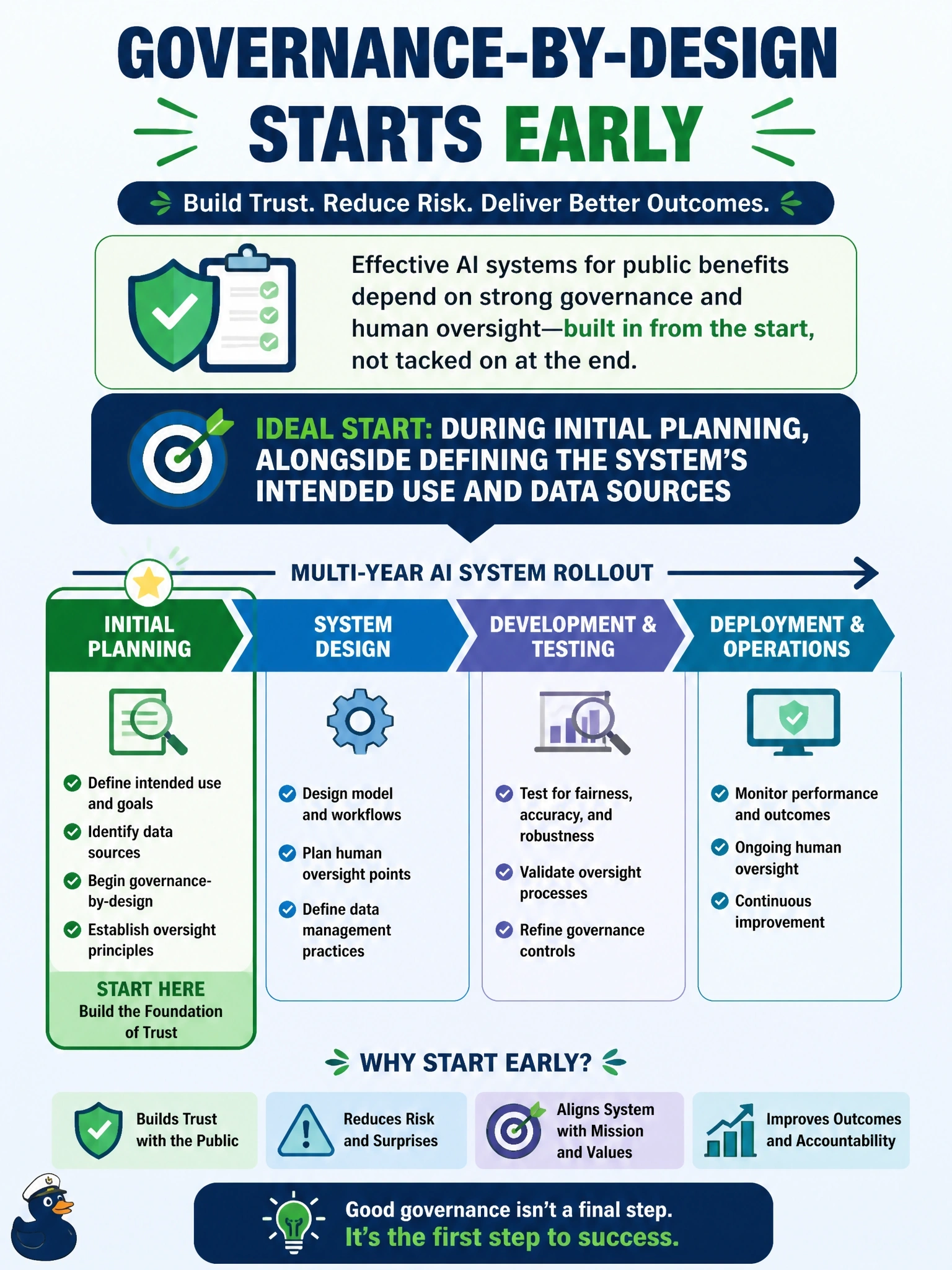
You draw up blueprints before you pour concrete, not after the walls are up, and governance works the same way. Defining data governance and human-oversight roles during initial planning, right alongside deciding what the system is even for, means those requirements shape the build instead of getting bolted on later.
Full Explanation
Defining data governance and human-oversight roles alongside the system's intended use at the start of planning ensures those requirements shape the design, rather than being bolted onto a system already built around different assumptions — that's the core idea behind governance by design. Waiting until the deployment phase, once functionality is finalized, means key architectural and process decisions have already been locked in, making any governance gaps costly to fix. Deferring governance until after the first year of production leaves the system operating on benefits-eligibility decisions, a high-stakes area, without defined oversight roles for that entire period. Making governance reactive, triggered only by a compliance incident or public complaint, is the opposite of the proactive intent behind governance by design and leaves the agency exposed until something has already gone wrong. Operational check: before a multi-year AI rollout begins, confirm that data-governance and human-oversight roles are documented alongside the system's intended use and data sources — if that documentation doesn't exist yet, planning hasn't actually started on solid footing, no matter how far development has progressed.