
A regional grocery retailer wants to explore an AI-enabled business model transformation. Which question should leadership ask first to identify a viable opportunity?
Select an answer to reveal the explanation.
Short Explanation
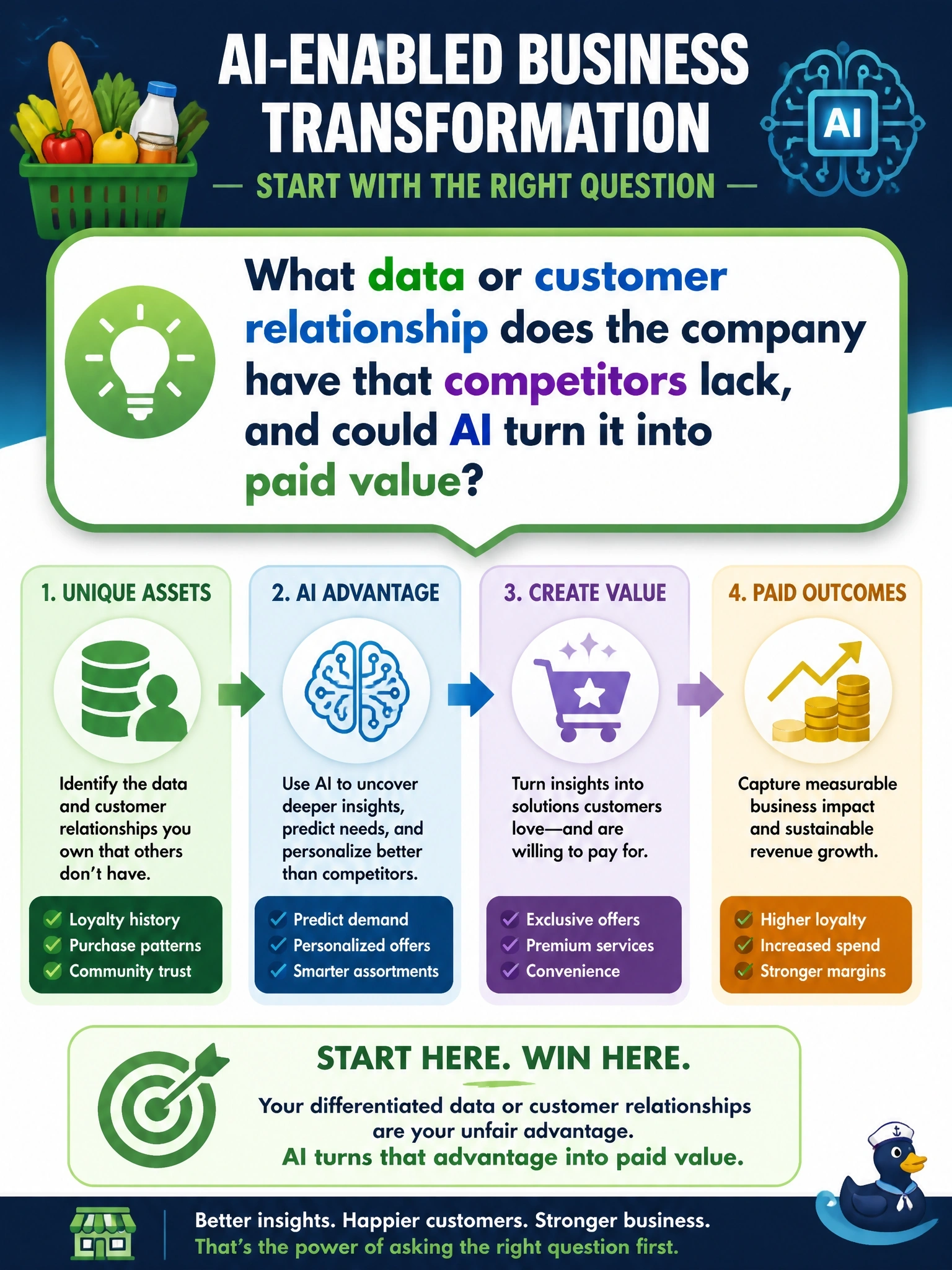
Before chasing any AI tactic, ask what your company actually has that nobody else does. Whether AI could turn that unique data or customer relationship into paid value is the question that points toward a real opportunity, instead of just picking a shiny tool.
Full Explanation
Identifying a business model transformation opportunity starts with an honest inventory of the company's unique assets, because transformation depends on turning something the company already has — data, relationships, reputation — into new value. Asking what data or customer relationship the company holds that competitors lack, and whether AI could turn it into paid value, does exactly that: it forces leadership to start from a real, defensible asset. Comparing vendor pricing for a general-purpose business intelligence tool is a procurement question that's premature, since it assumes a tactic before the company has even identified what it wants to build. Counting how many data scientists competitors have hired is a weak proxy for opportunity; it reveals nothing about this company's own assets or where its advantage lies. Asking how quickly a basic chatbot could be deployed jumps straight to a specific tactic without first confirming that tactic serves a real transformation opportunity. The principle: transformation starts from an asset-and-opportunity assessment, not from vendor comparisons, competitor headcounts, or a favorite tool picked in advance. As a practical check, leadership should be able to name the specific proprietary data or relationship before ever discussing which AI tool or vendor to use.