
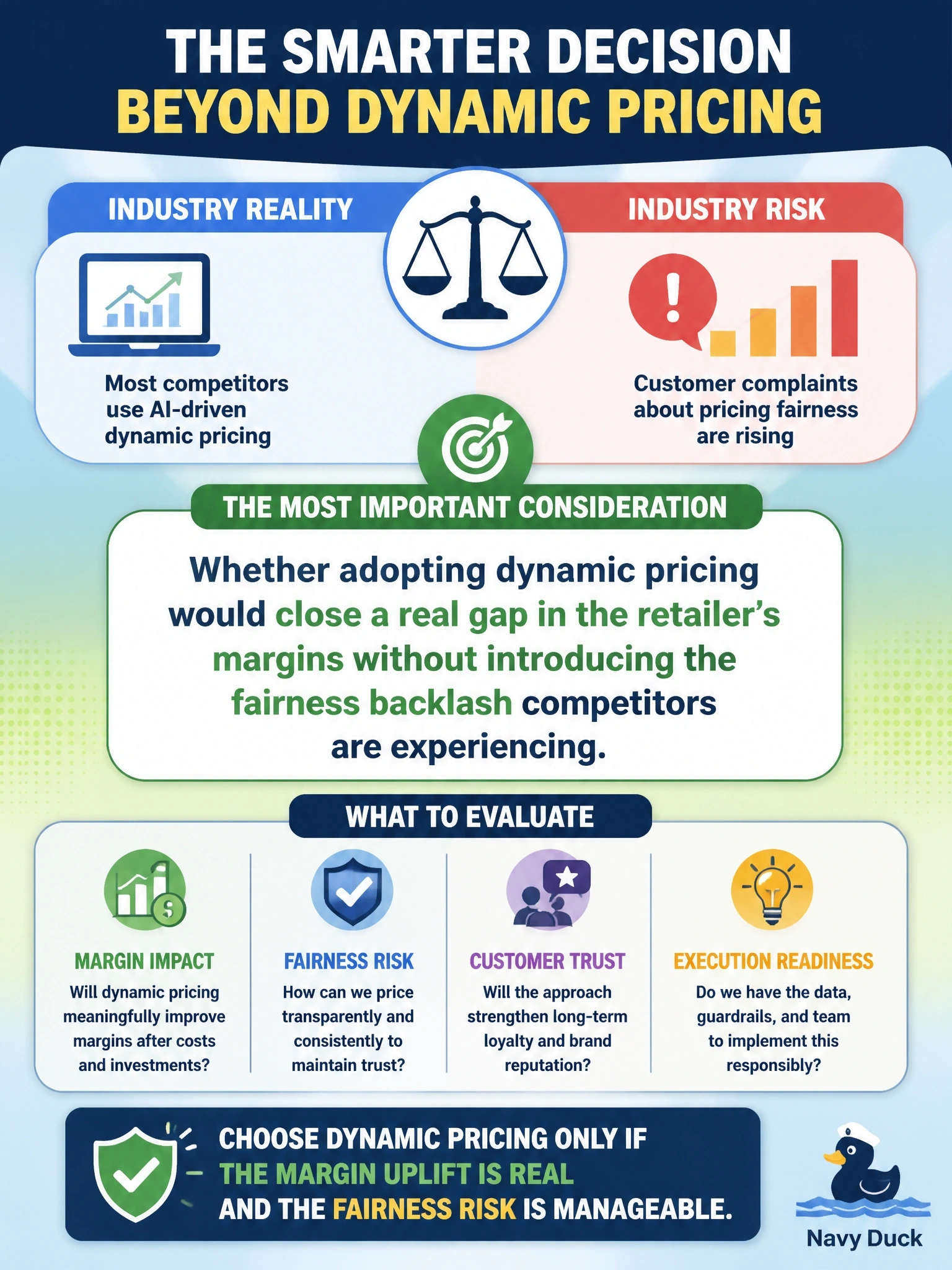
An online retailer's leadership is assessing the competitive landscape and finds that most direct competitors have adopted AI-driven dynamic pricing, but customer complaints about pricing fairness have also risen industry-wide. What is the most important consideration for the retailer before deciding to adopt the same approach?
Select an answer to reveal the explanation.
Short Explanation
Think of it like deciding whether to copy a rival's diet plan — you'd want to know if it actually works for you and what side effects came with it, not just that everyone's doing it. Weighing the margin gain against the fairness backlash competitors are already facing is what makes this a real decision instead of a trend chase.
Full Explanation
Whether adopting dynamic pricing would close a real gap in the retailer's margins without triggering the same fairness backlash competitors are experiencing weighs both sides of the decision — the upside competitors are capturing and the reputational risk they're already absorbing — which is exactly what a sound strategic call requires. Whether industry analysts have named dynamic pricing a top trend to watch substitutes trend-following for analysis; being named a trend says nothing about whether the practice is safe or advantageous for this specific retailer. Whether the retailer can roll out dynamic pricing before its single slowest competitor reduces the decision to a race, which ignores whether the move is even sound for this business in the first place. Whether dynamic pricing is technically feasible given current point-of-sale and checkout infrastructure is a real question eventually, but it's an implementation detail — not the strategic factor that should decide whether to pursue the move at all. The principle: assess competitor moves by weighing both the benefit and the risk they reveal, not by racing to match adoption or by citing industry buzz as justification. A practical check: model the margin gain against a realistic complaint-and-churn cost — if the backlash risk outweighs the margin gain, the fairness problem needs solving first.