
A regional real estate brokerage notices that a national competitor now uses an AI assistant to answer buyer questions about listings around the clock, while the brokerage's agents only respond during business hours. Leadership wants to know whether this represents a real competitive threat before reacting. What should they evaluate first?
Select an answer to reveal the explanation.
Short Explanation
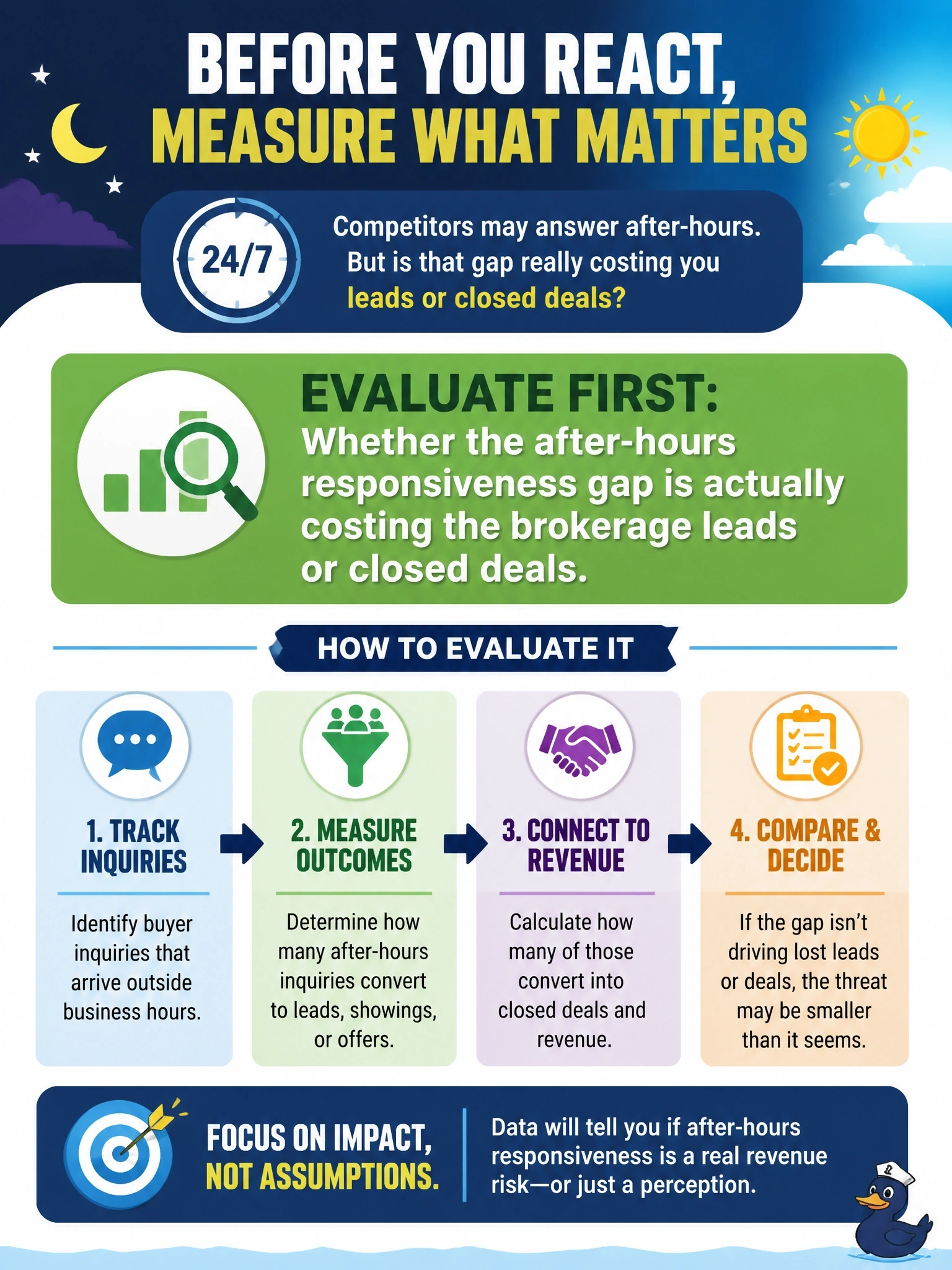
Noticing a competitor keeps their store open later only matters if customers are actually walking out your door because of it. The real question is whether that after-hours gap is costing you real leads or deals, not how the competitor built their tool.
Full Explanation
A competitor's capability only matters if it's moving a metric this brokerage actually cares about, so the right first move is to check whether the after-hours responsiveness gap is costing real leads or closed deals — that's the business impact test. Whether the competitor's AI assistant runs on a large or small underlying model is a technical detail the brokerage can't verify and, by itself, says nothing about whether buyers are actually being lost overnight. How much the competitor spent building its assistant is a financial detail about their internal choices, not evidence of whether this brokerage's business is being hurt. How many other brokerages in unrelated regions have adopted similar tools is scope creep — adoption trends somewhere else say nothing about this brokerage's local buyer behavior. The underlying principle: competitive assessment starts with the business outcome at risk, not with imitating a competitor's technical or financial decisions or counting adoption elsewhere. A practical check: pull the lead and deal data for after-hours inquiries specifically — if it shows real loss, the gap is worth closing; if not, it's a feature to watch, not an emergency.