
A logistics company is two weeks into a route-optimization AI pilot. Which observation is the strongest early leading indicator that the pilot is likely to succeed at scale?
Select an answer to reveal the explanation.
Short Explanation
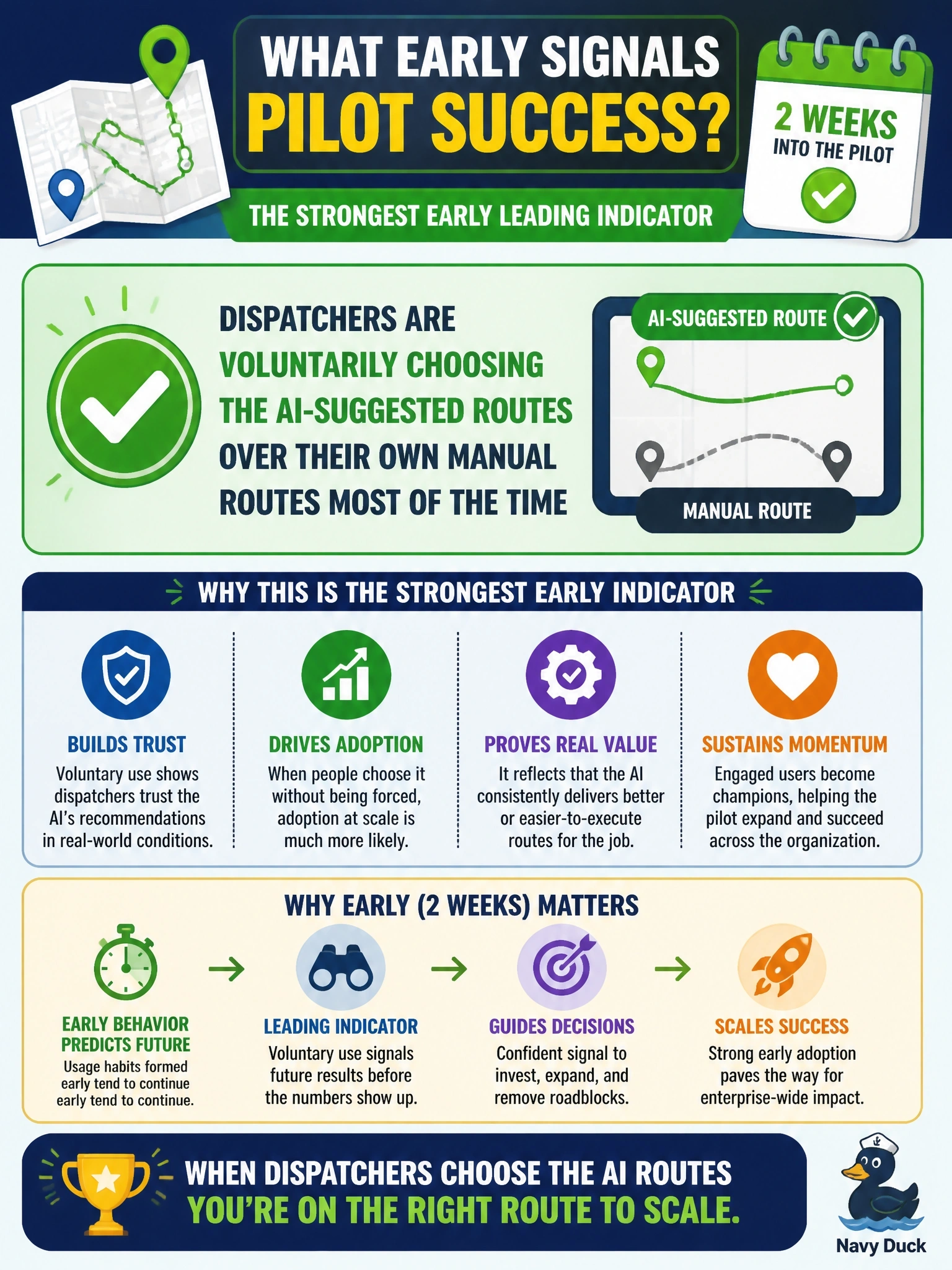
Two weeks isn't enough time for fuel savings to show up, but you can already watch what dispatchers choose to do. When they keep picking the AI's routes over their own on purpose, that voluntary adoption is telling you the tool is working before the numbers ever catch up.
Full Explanation
Voluntary adoption by dispatchers early in the pilot is a strong leading indicator because sustained use signals that the people closest to the work find the AI's output genuinely better than their own judgment, which strongly predicts long-term success if scaled. The distractor citing full-year fuel savings is a lagging indicator that can't be measured after only two weeks and reflects results, not an early predictive signal. The distractor citing new dispatcher hires is a staffing metric unrelated to whether the AI tool itself is working well. The distractor citing market share is influenced by industry-wide competitive dynamics far beyond this one pilot and is too distant a measure to serve as an early signal. The general principle: strong leading indicators are typically behavioral signals from the people using the tool, observable well before financial results are available, and they tend to predict those later financial results.