
A bank is three weeks into a pilot of an AI fraud-detection assistant that flags suspicious transactions for analyst review. Which of the following is a leading indicator of the pilot's eventual success?
Select an answer to reveal the explanation.
Short Explanation
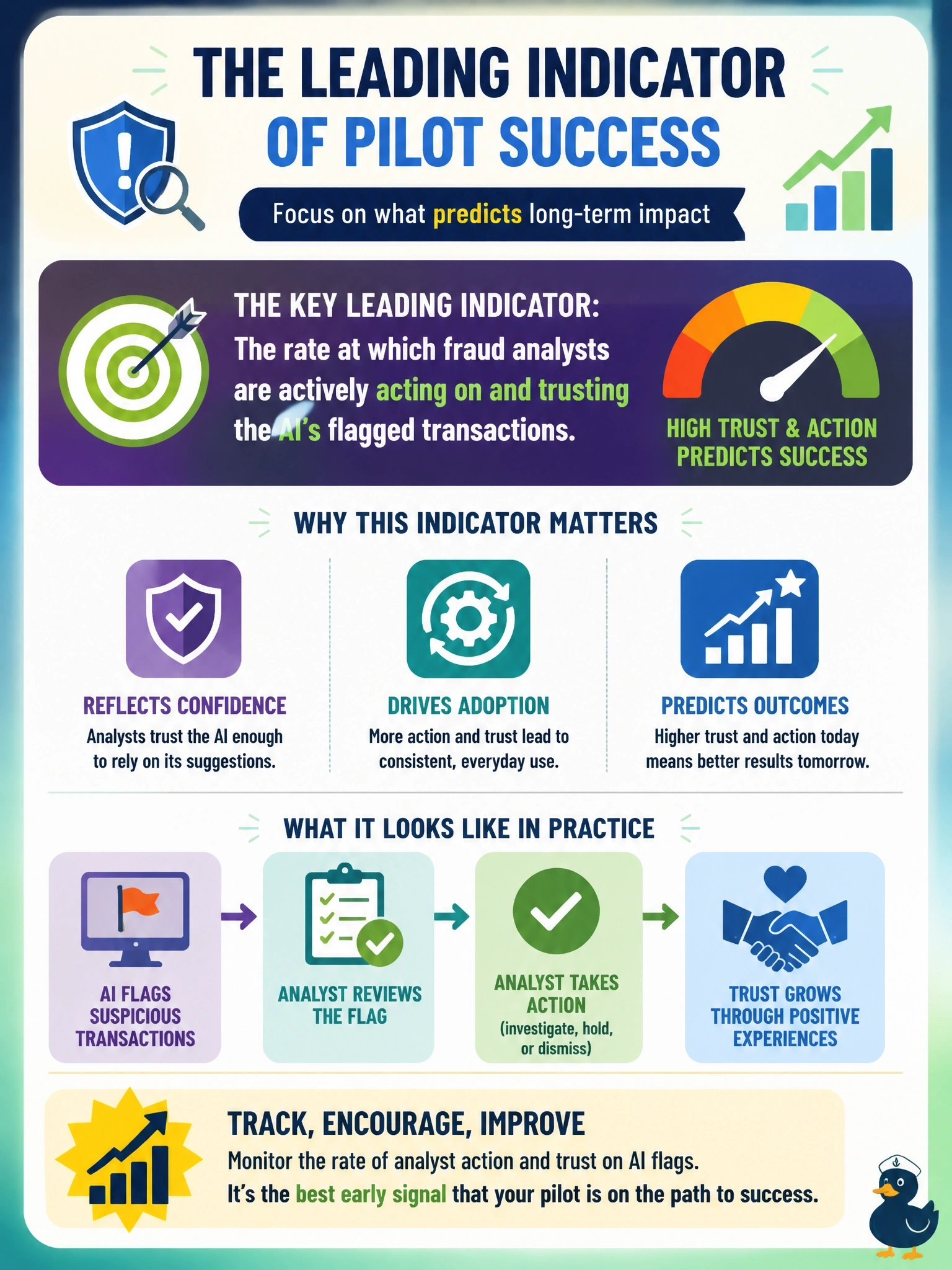
Three weeks in, you can't yet see fraud losses avoided — that data takes a year to show up. What you can see is whether analysts actually trust and act on the flags, and that early adoption signal is what tells you where this pilot is headed.
Full Explanation
Analyst adoption and trust in the AI's flagged transactions is a leading indicator because it can be observed early in the pilot and strongly predicts whether the tool will ultimately deliver value; low trust or low usage early on typically foreshadows a disappointing outcome regardless of the model's technical accuracy. The distractor citing full-year fraud losses avoided is a lagging indicator, only knowable after a full year and too late to inform course correction during the pilot. The distractor citing annual audit results is a backward-looking compliance measure tied to the whole bank's operations, not an early signal specific to this pilot. The distractor citing customer base growth is driven by many unrelated business factors and isn't tied closely enough to this specific tool to serve as a meaningful indicator. The general principle: leading indicators are observable early and predict future outcomes, while lagging indicators confirm results only after enough time has passed to measure them directly.