
A wealth management firm gives advisors an AI tool that drafts portfolio recommendations for client review. The firm's leadership is confident the tool saves advisors time but is unsure how to capture its effect on client relationships. Which KPI best captures an intangible benefit of this tool?
Select an answer to reveal the explanation.
Short Explanation
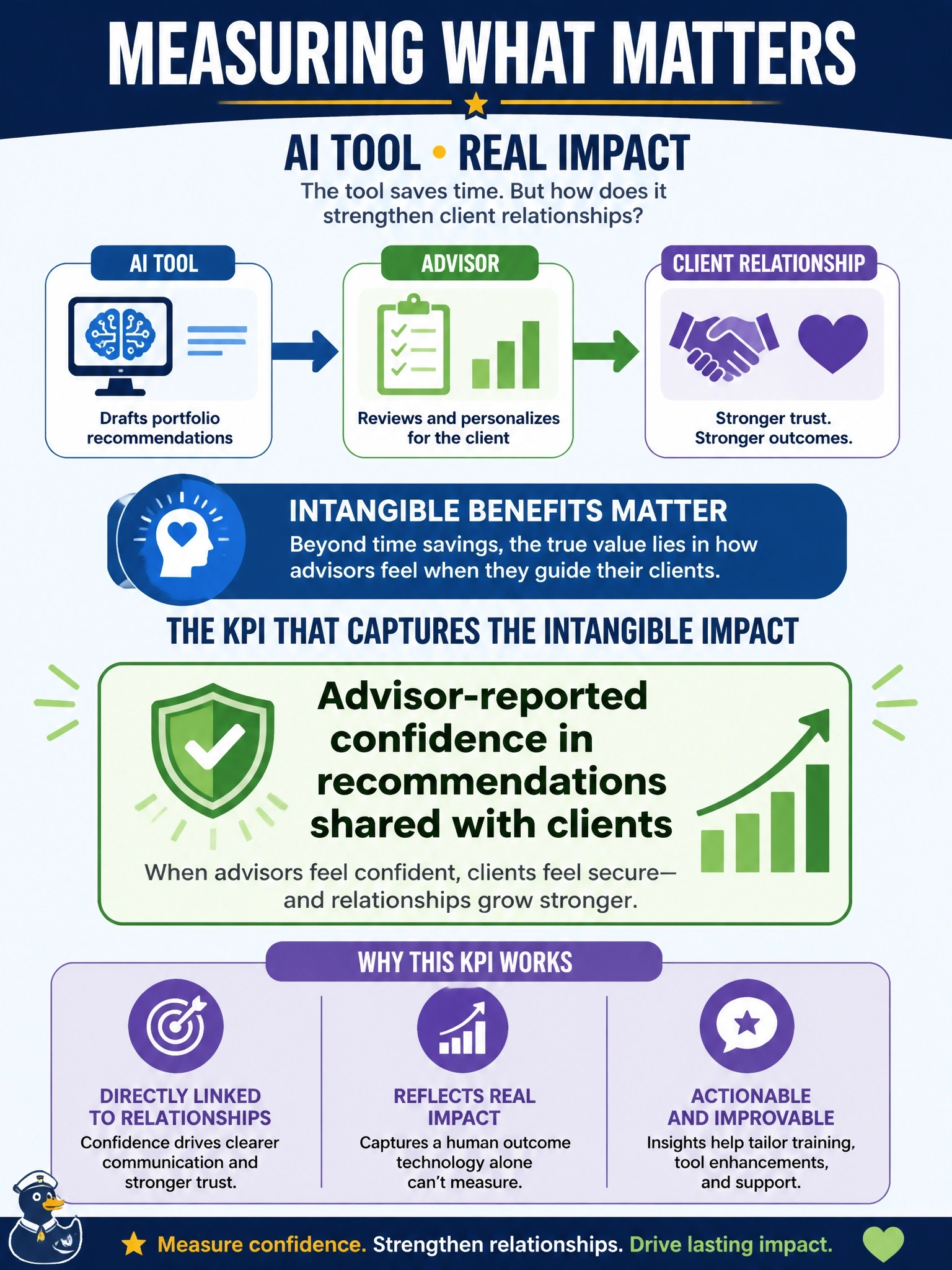
Think of it like this: you can count hours saved or dollars spent, but you can't put a ruler on trust. That's what makes this an intangible benefit — it's the advisor's own sense that the AI's output is solid enough to put in front of a client. You capture it by asking, not by pulling it from a spreadsheet.
Full Explanation
Advisor-reported confidence works because it captures something you can't extract from a ledger: how much an advisor trusts the AI's draft before putting it in front of a client. That's a perception, not a count, which is exactly the definition of an intangible benefit — it shapes the relationship even though it never shows up on an invoice. Average hours spent drafting recommendations is the mirror-image metric: real, countable, tied directly to a clock, so it's a tangible efficiency gain rather than an intangible one — useful, but it answers a different question. Number of client accounts managed per advisor is a capacity figure that can move for reasons that have nothing to do with this tool, like a new hire joining the team or a book of business getting reassigned, so it doesn't isolate the tool's effect at all. Total assets under management is even further removed: it's a firm-wide financial figure driven by markets, client behavior, and sales activity well beyond anything an AI drafting assistant touches. The operational check: if a KPI can be pulled straight from accounting or a headcount report, it's tangible; if it requires asking a human how they feel about the outcome, it's intangible, and a mature measurement plan needs both kinds working together.