
An automotive manufacturer deploys an AI-based visual inspection system on its assembly line to flag potential defects for human reviewers. Plant leadership asks the program owner to define the single most important KPI for the pilot's first quarter. Which KPI best reflects the initiative's core purpose?
Select an answer to reveal the explanation.
Short Explanation
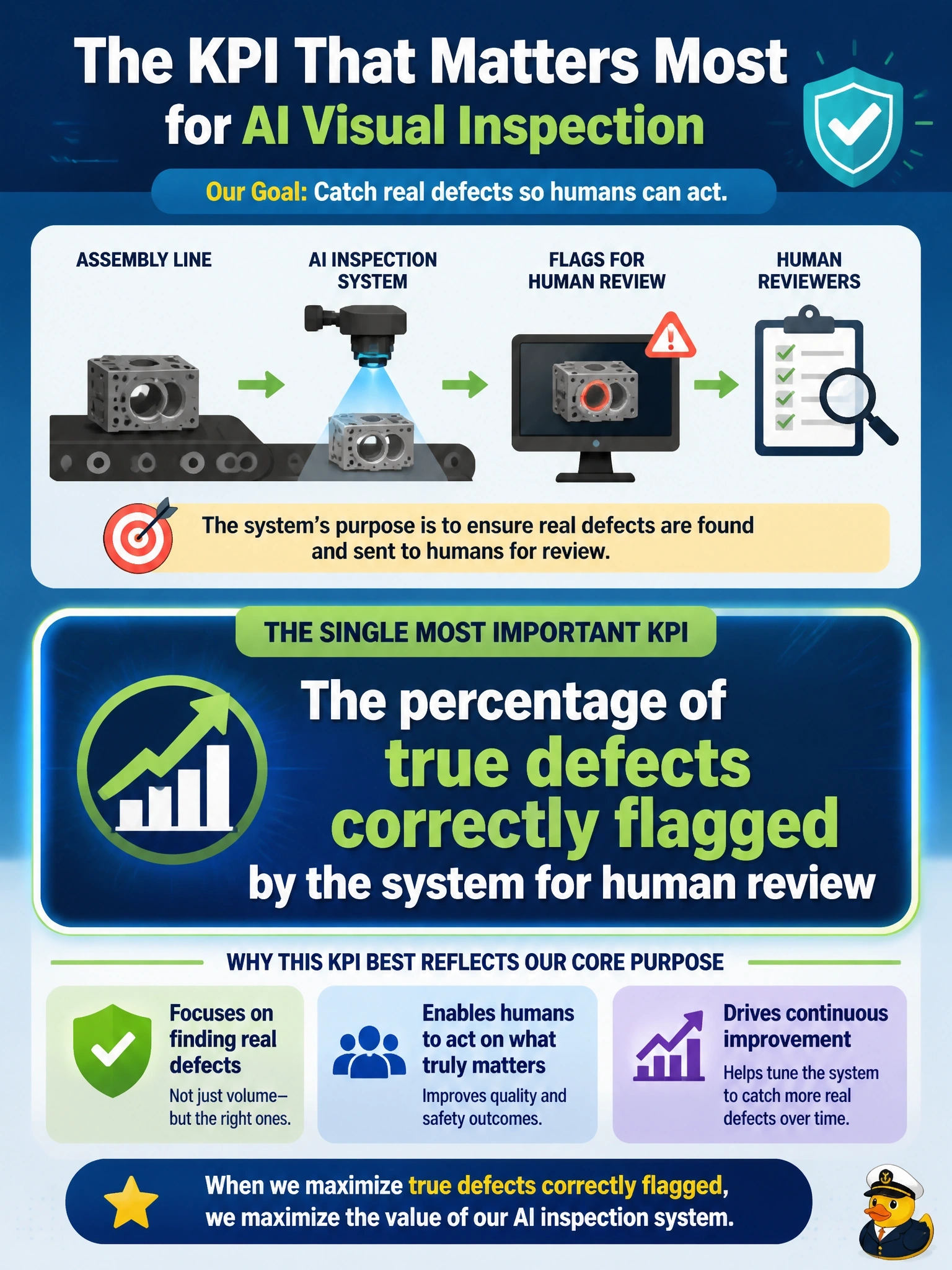
This system doesn't exist to stay busy — it exists to catch real defects before they roll off your line. A KPI measuring how many true defects it actually flags for review ties straight back to that purpose — volume, spend, and training all support the mission, but none of them measure core value the way this one does.
Full Explanation
The percentage of true defects correctly flagged for human review is the right KPI because it directly measures whether the system is doing the one thing it was deployed to do: catch real quality problems before they leave the plant. That figure can only go up if the system is genuinely distinguishing defective parts from good ones, which is the exact outcome the pilot exists to prove. The number of images processed per shift is an activity metric; it shows the system is running and keeping pace with the line, but a system can process huge volumes while still missing most real defects, so throughput alone can look strong even as the initiative fails at its actual job. Total dollar spend for the quarter is a cost figure that belongs in an ROI conversation later, once there's a value number to compare it against, but spend by itself says nothing about whether any value was delivered. The count of employees who completed AI awareness training measures workforce readiness and supports adoption, which matters operationally, but training completions don't tell leadership whether the inspection system is actually catching defects on the line. None of those three ties back to the stated purpose the way flagging accuracy does. As an operational check: when asked for the single most important KPI, trace the metric back to the sentence describing why the system was built, and pick the one that moves in lockstep with that purpose.