
A non-profit that currently processes donation records manually wants to transition to an AI-based system that automatically categorizes and reconciles donations. Before making this transition, what should the non-profit assess first?
Select an answer to reveal the explanation.
Short Explanation
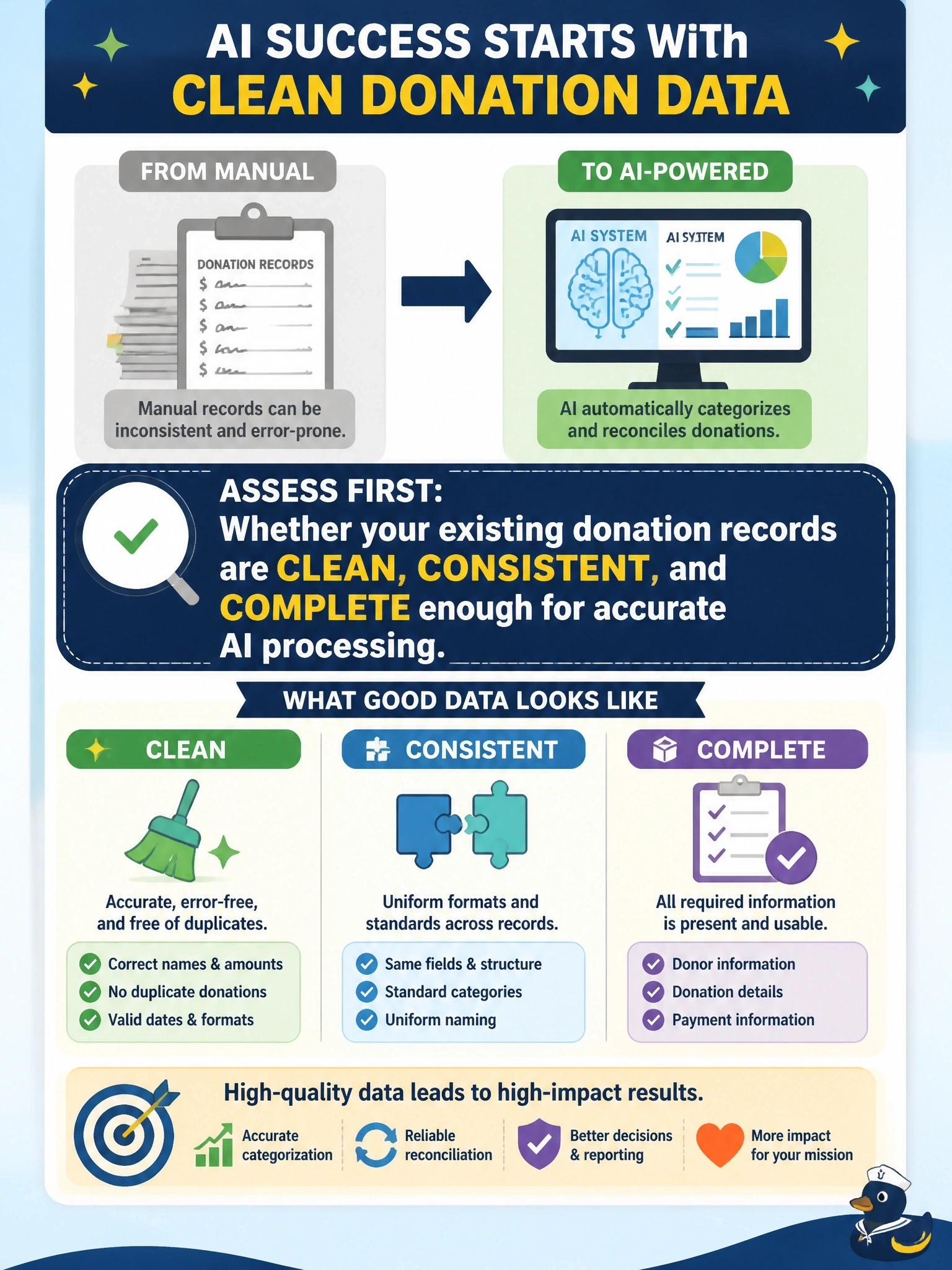
Garbage in, garbage out, you've heard it before, and it's exactly why this matters here. An AI system can only categorize and reconcile donations as well as the records you feed it, so messy or incomplete history becomes messy, incomplete automation. Check your data readiness first, because that's the ceiling on everything downstream.
Full Explanation
Categorization and reconciliation are pattern-recognition tasks performed against historical records, so the quality of those records sets the ceiling on how accurate the AI system's output can ever be. If donation records are inconsistent, duplicated, or missing fields, the new system inherits every one of those problems and produces unreliable categorization no matter how capable the underlying model is; that's why assessing data readiness has to happen before anything else. Whether competing non-profits already run a similar system says nothing about whether this organization's own records are usable, and following a peer's lead doesn't fix bad data. Matching a dashboard to preferred brand colors is a cosmetic display choice that has no effect on whether donations get reconciled correctly. A favorable mention in an industry newsletter is a reputational signal about the vendor, not a fact about this non-profit's own records, and it doesn't reduce the risk of feeding inconsistent data into a new system. None of those three factors touch the actual mechanism that determines success here, which is data quality flowing into the model. As an operational check: before any manual process moves to AI-based automation, audit a sample of the existing records for completeness and consistency, and treat cleanup as a prerequisite, not an afterthought.