
A specialty chemical manufacturer is considering an AI model to recommend real-time adjustments to a highly volatile reaction process, where an incorrect adjustment could create a safety hazard. The company has limited historical sensor data from this specific process line, no established safety-validation framework for automated recommendations, and a small technical team already stretched managing existing safety systems. Which factor most strongly argues against pursuing this AI initiative right now?
Select an answer to reveal the explanation.
Short Explanation
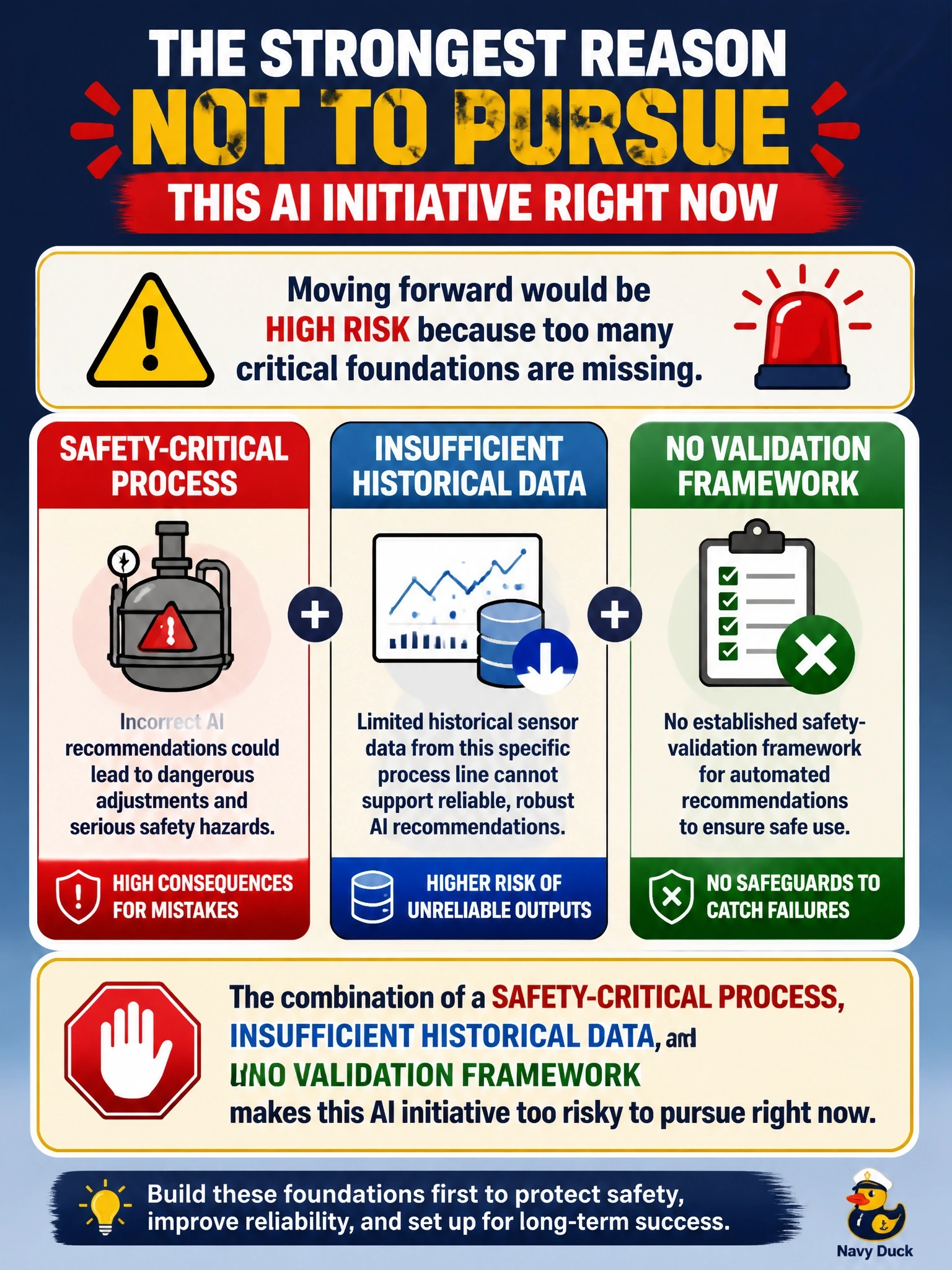
Think of it like letting a trainee pilot fly solo with no flight hours logged and no instructor sign-off. Any one gap might be survivable, but stack a safety-critical process, thin historical data, and no way to validate the model's recommendations, and you've got a genuine hazard. That combination, not any single factor alone, is what should stop this initiative right now.
Full Explanation
What argues most strongly against moving forward is the way three separate weaknesses stack on top of each other: the process being automated is safety-critical, meaning a wrong recommendation could cause real harm; the historical sensor data available for this specific line is limited, meaning any model trained on it would be working from a thin and possibly unrepresentative sample; and there's no established framework to validate an automated recommendation before it gets acted on. Any single one of those might be manageable on its own, but together they describe a system that could confidently suggest an unsafe adjustment with nothing in place to catch the error before it happens. A vendor potentially raising its subscription price next year is a budgeting question for later, not a reason tied to whether the system is safe to deploy today. A technical team needing to learn a new software interface is a normal onboarding friction that any new tool introduces, and it doesn't bear on the underlying safety and data-readiness problem at all. The fact that some competitors haven't yet adopted AI for process adjustments says nothing about whether this specific deployment is ready, since competitive timing isn't a safety or validation criterion. The operational check to apply here: before automating any safety-critical recommendation, confirm there's enough representative historical data to trust the model's outputs and a validation process to catch bad recommendations before they reach the physical process. Until both exist, hold off regardless of competitive pressure.