
An international humanitarian aid non-profit needs an AI translation tool to support field workers communicating with local communities in over twenty languages, several of which have limited digital text resources. No off-the-shelf translation product reliably covers all twenty languages, and the non-profit lacks the linguistic AI expertise to build a solution alone. A specialized language-AI vendor has offered to co-develop a custom multilingual tool with the non-profit's field teams providing local language data. Which approach best fits this situation?
Select an answer to reveal the explanation.
Short Explanation
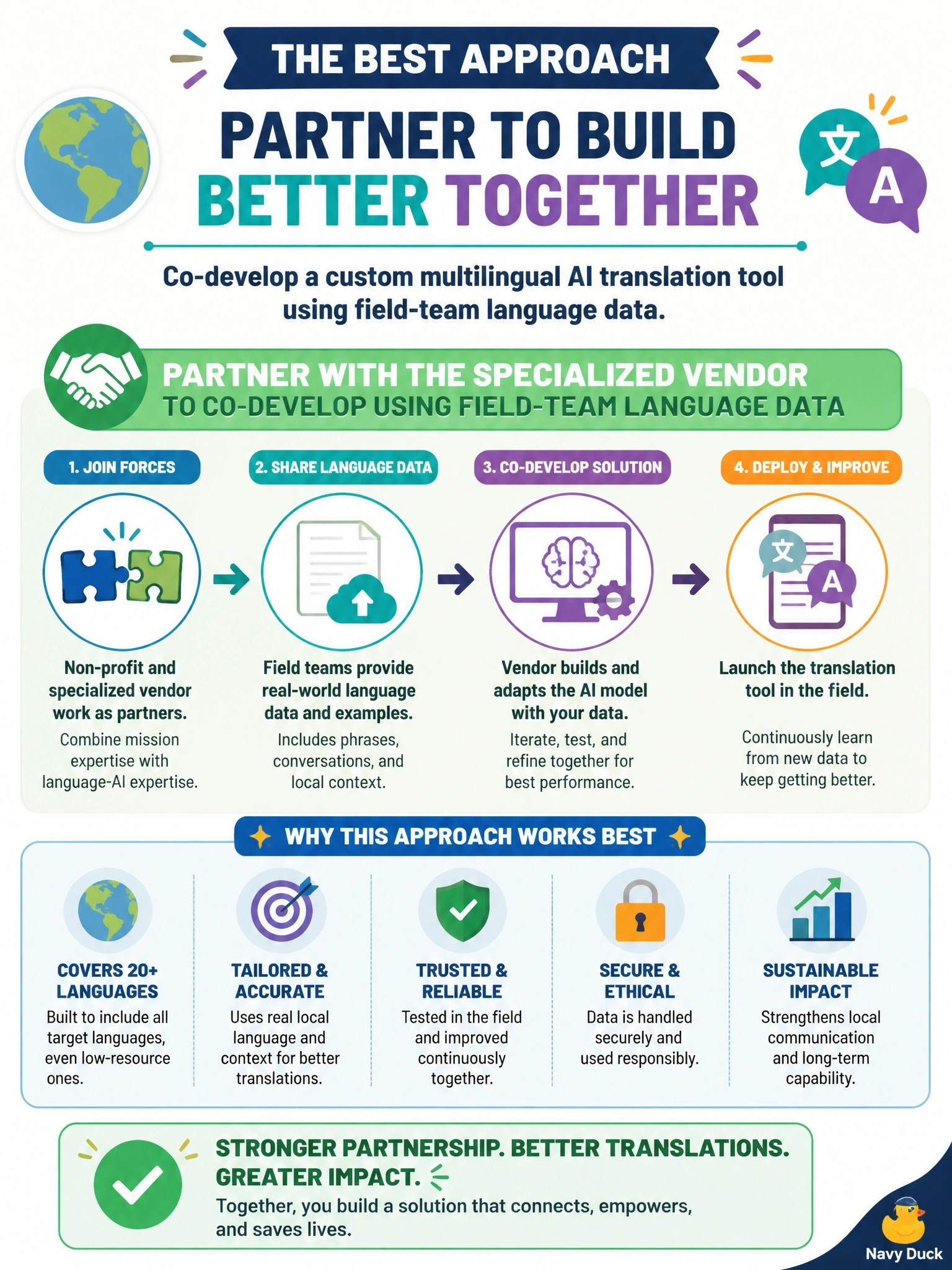
Nobody in this picture has the whole answer alone: the vendor knows the AI, but your field teams hold the actual language data for twenty-plus local dialects. That's a partnership by definition — each side brings something the other is missing, and only together do they cover ground neither could reach solo.
Full Explanation
The correct answer matches the scenario precisely: there's a real capability gap in the market since no off-the-shelf tool covers all twenty languages, the non-profit itself lacks linguistic AI expertise, and a specialized vendor is offering to co-develop using field-team language data the non-profit uniquely holds. That combination, a market gap plus complementary assets on both sides, is the classic partnering situation. Building the tool entirely in-house is ruled out by the stated lack of linguistic AI expertise; attempting it alone would mean learning specialized skills from scratch under real field pressure. Buying the closest available off-the-shelf product means settling for a tool that doesn't reliably cover several of the required languages, leaving field workers unable to communicate in some communities they serve. Postponing indefinitely until a fully covering product appears assumes a market solution will eventually materialize, but nothing in the scenario supports that, and it leaves an urgent communication need unmet in the meantime. The operational check for partnering: look for a two-way exchange, does the organization hold something the vendor needs, and does the vendor hold something the organization needs, with neither able to deliver the full solution alone.