
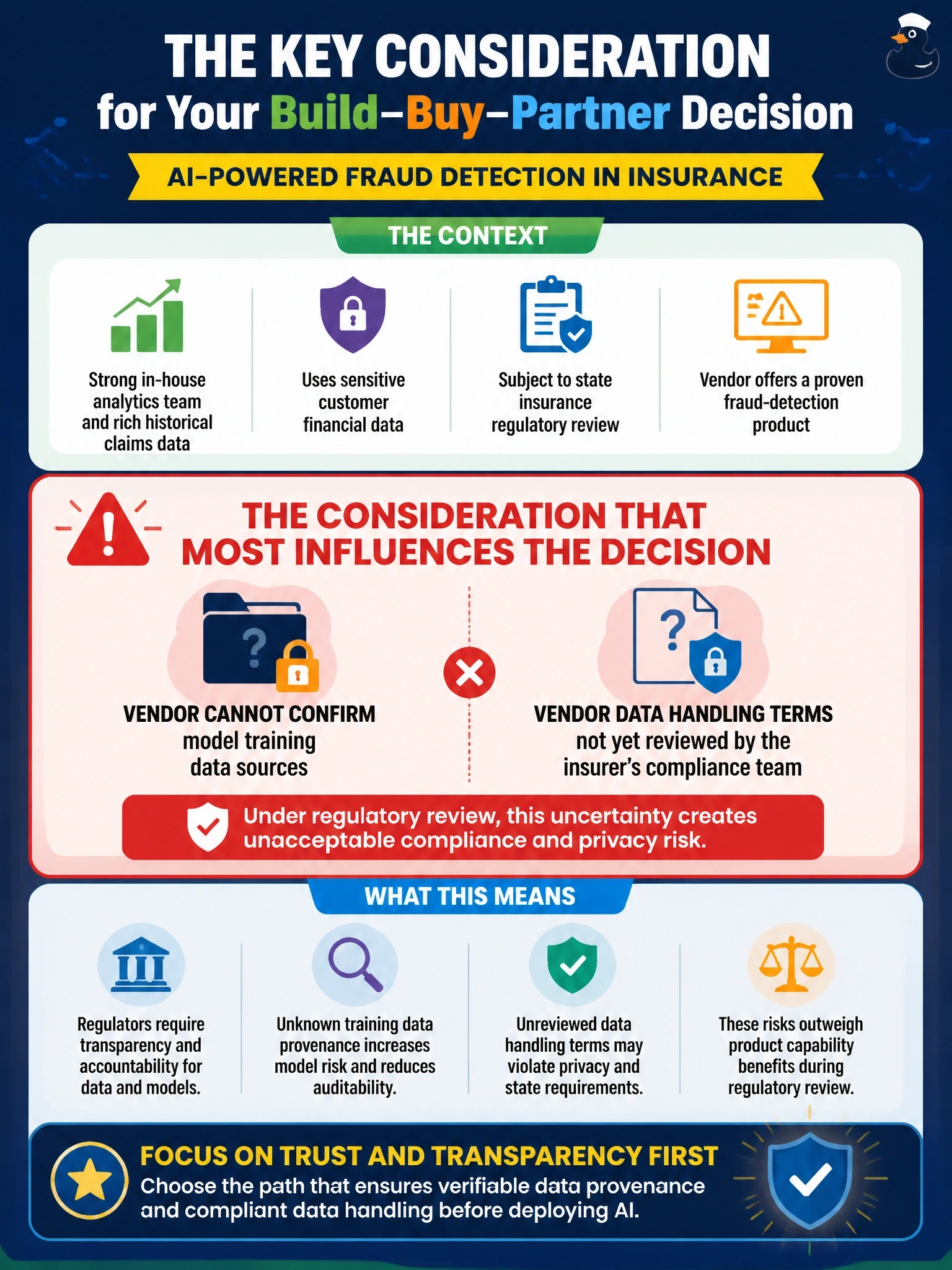
A regional insurer wants to launch an AI-powered fraud-detection capability for claims. It has a strong in-house analytics team and rich historical claims data, but the use case touches sensitive customer financial data and is subject to state insurance regulatory review. A vendor offers a proven fraud-detection product, but its data handling terms have not yet been reviewed by the insurer's compliance team, and the vendor cannot confirm the model's training data sources. Which consideration should most influence the build-buy-partner decision here?
Select an answer to reveal the explanation.
Short Explanation
A proven algorithm doesn't matter at all if your compliance team can't sign off on where the training data came from — that's a regulatory blocker, and blockers outrank convenience every time in a regulated industry. Until the vendor can prove its data handling and training sources pass review, nothing else about the deal is worth weighing.
Full Explanation
The correct answer is decisive because it's the one factor that can stop the whole initiative outright: the vendor cannot confirm where its training data came from or how customer financial data is handled, and this use case is subject to state insurance regulatory review. An unresolved compliance gap like that isn't just a downside to weigh against upsides, it's a potential dealbreaker regardless of how good the product otherwise is. The insurer's rich historical claims data is a genuine asset, but it would support either building or buying equally well, so it doesn't tip the decision one way or the other. The strong in-house analytics team is a real capability that leans slightly toward building, but a capability advantage doesn't override an unresolved legal risk. The vendor's market reputation for a proven product speaks to quality and track record, which matters, but reputation is meaningless if the deal can't legally close. The operational test for any build-buy-partner call in a regulated space: resolve compliance and data-provenance questions first, because until they clear, capability fit and vendor pedigree are secondary and the deal simply cannot proceed.