
To reduce shadow AI risk, an energy company's leadership wants to give employees a clear, simple way to know which AI tools they may use. What should they implement?
Select an answer to reveal the explanation.
Short Explanation
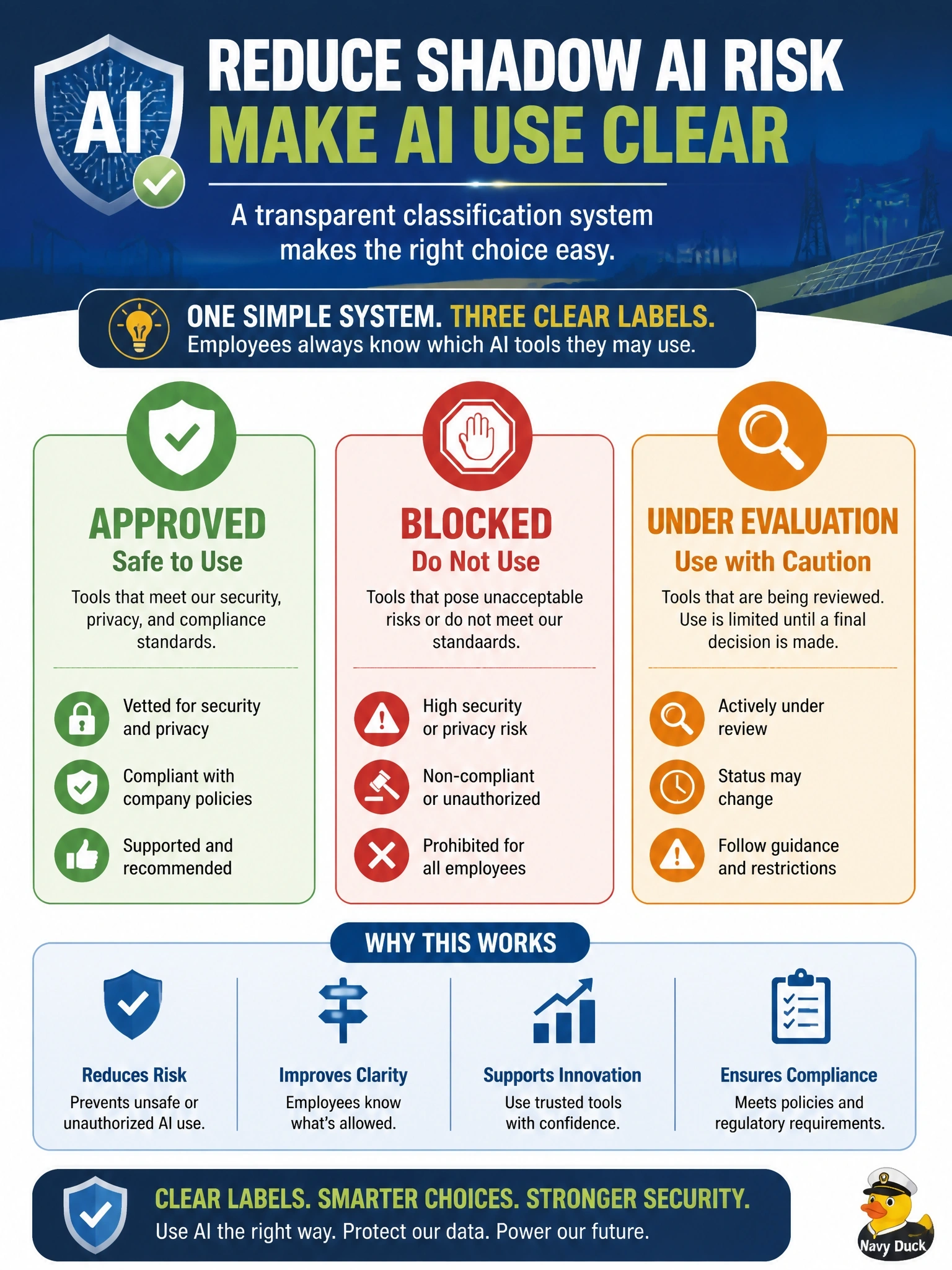
Employees shouldn't have to guess which tools are safe to open — give them a stoplight instead of a maze. A classification system that labels each tool approved, blocked, or under evaluation gives you a clear, live answer instead of an outdated survey or a free-for-all, and that clarity up front is what actually closes the shadow-AI gap.
Full Explanation
A transparent classification system works because it answers the question employees actually have in the moment, before they open a tool, not after: is this one approved, blocked, or still under evaluation? That real-time clarity is what closes the visibility gap that lets shadow AI take hold in the first place. An annual survey only looks backward, it captures what employees already used months ago, which does nothing to guide the next decision someone makes today. A blanket ban tends to backfire in practice, because without a sanctioned alternative on offer, employees under deadline pressure keep using unapproved tools quietly, just further underground, which increases shadow AI risk rather than reducing it. Letting each department decide independently with no central tracking recreates the exact fragmented, ungoverned landscape that produces shadow AI in the first place, just distributed across departments instead of individuals. Operationally, check whether a new tool request can be answered in seconds by consulting a single, current, company-wide list; if it can't, the classification system isn't doing its job yet.