
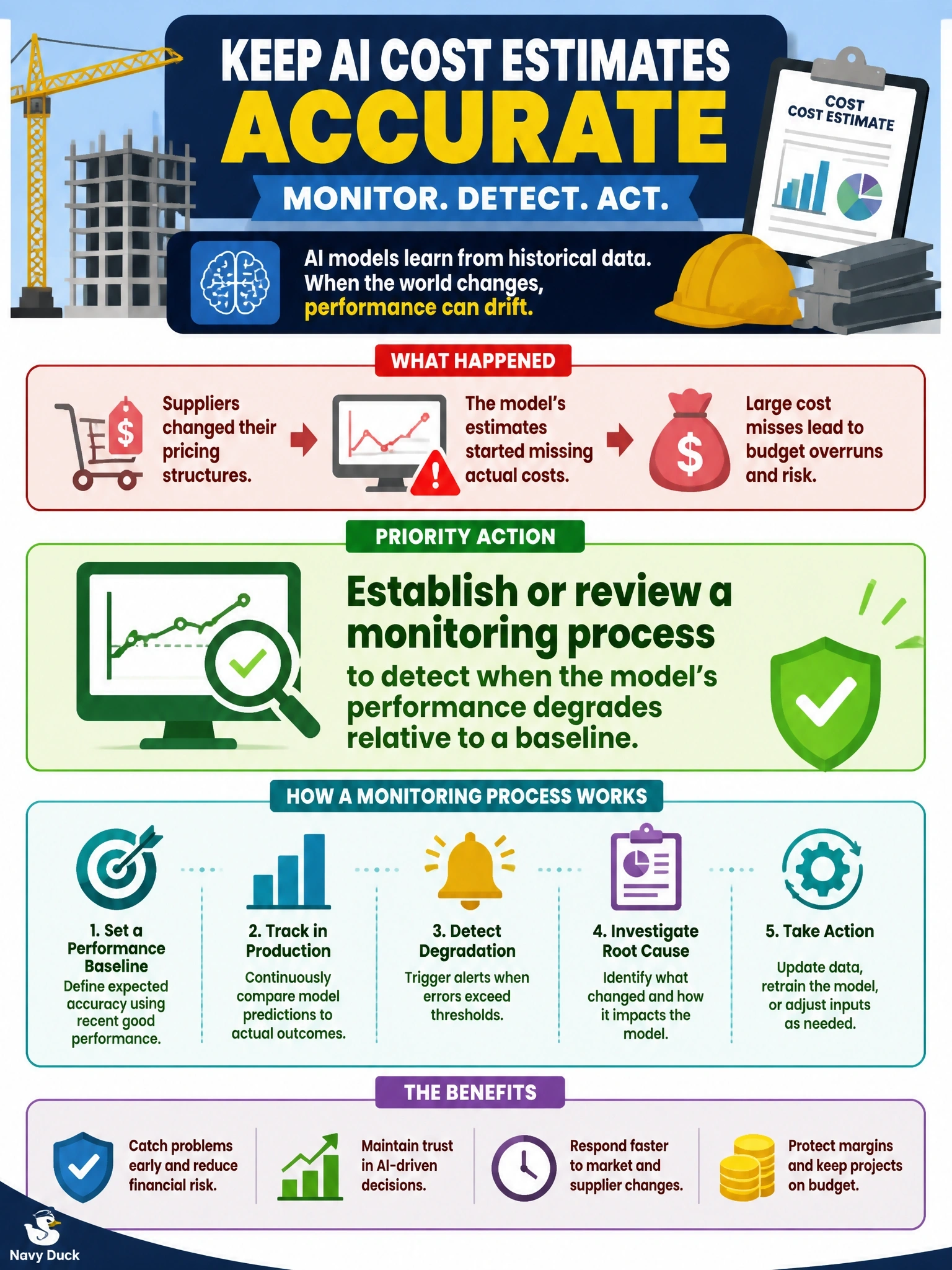
A construction firm uses an AI model to estimate project costs. After several major suppliers changed their pricing structures, the model's estimates began missing actual costs by a wide margin. What should leadership prioritize first?
Select an answer to reveal the explanation.
Short Explanation
Think of it like this: when your check-engine light comes on, you don't floor the gas and hope, you find out what changed. Supplier pricing shifted, so the world underneath your model moved, and the fix starts with monitoring that catches drift, not with panic or scrapping the tool. Build the feedback loop first; everything else follows from knowing when accuracy has slipped.
Full Explanation
The root cause is a change in market conditions the model was never updated to reflect, so the right first step is establishing or strengthening a monitoring process that compares current performance against a baseline and triggers a review or retraining when accuracy declines. The retrain-the-team option discards the model's value without fixing the underlying problem, leaving the company back where it started with a tool no one trusts or maintains. The budget-increase option treats the symptom, cost overruns, rather than the cause, and doesn't prevent the same inaccuracy from recurring on the next project. The permanent-replacement option is an overreaction; permanently abandoning the AI model forfeits an asset that can likely be restored to usefulness through monitoring and updates rather than through wholesale replacement. The general principle: when a model's performance degrades due to changing conditions, the appropriate response is to build or reinforce ongoing monitoring so that drift is detected and addressed proactively, not to abandon or work around the model.