
Following an audit of recurring shipping damage at an appliance distribution center, an improvement team has agreed on the broad objective of eliminating transit defects and now needs to systematically break that goal down into primary strategies, secondary methods, and specific floor-level tasks. Which quality tool is best suited for this step?
Select an answer to reveal the explanation.
Short Explanation
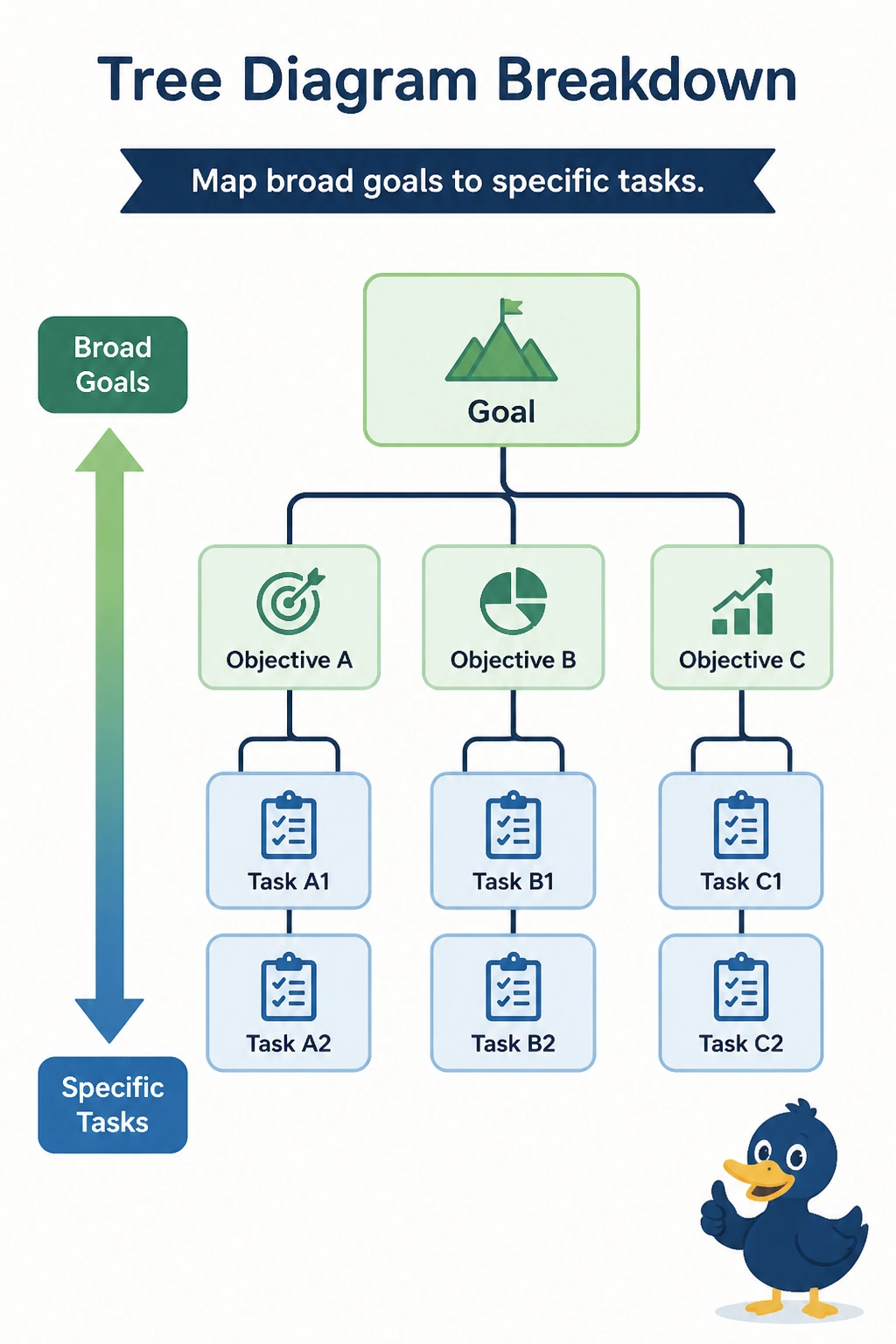
Think of a tree diagram as an organizational chart for your action plan: you start with the broad goal and branch outward into concrete, assignable tasks. An affinity diagram groups unstructured ideas into themes, while a tree diagram breaks an agreed goal down into steps.
Full Explanation
When your team knows the target outcome and needs to translate it into executable work, a tree diagram provides the right structure. It begins with the primary objective and branches through successive levels of strategies, secondary methods, and specific floor-level tasks, making the path from a broad goal to concrete action visible. An affinity diagram organizes scattered qualitative observations or brainstorming notes into broad themes; it helps structure ideas before a clear plan exists, rather than decomposing an agreed objective. A scatter diagram examines whether two continuous numerical variables move together, so it cannot lay out a multilevel action plan. A check sheet tallies defect frequencies during live dock-loading observations; it is a data-collection form, not a planning-decomposition tool. An exam caveat is to keep the tree focused on normal execution steps: contingency countermeasures are a different planning need. As a practical check, review every terminal branch and confirm it names a single accountable owner, a verifiable deliverable, and a target completion date. This ensures the diagram has progressed beyond broad strategies to work that can be assigned and checked.
Prefer to study offline? Printable PDF study book + test engine ($7.50, unofficial). These questions stay free here.