
Following a multi-site audit, a quality team needs to show leadership how twelve new regulatory requirements map to eight existing internal SOPs and which controls have weak or missing coverage across departments. Which quality tool is best suited for displaying these many-to-many relationships?
Select an answer to reveal the explanation.
Short Explanation
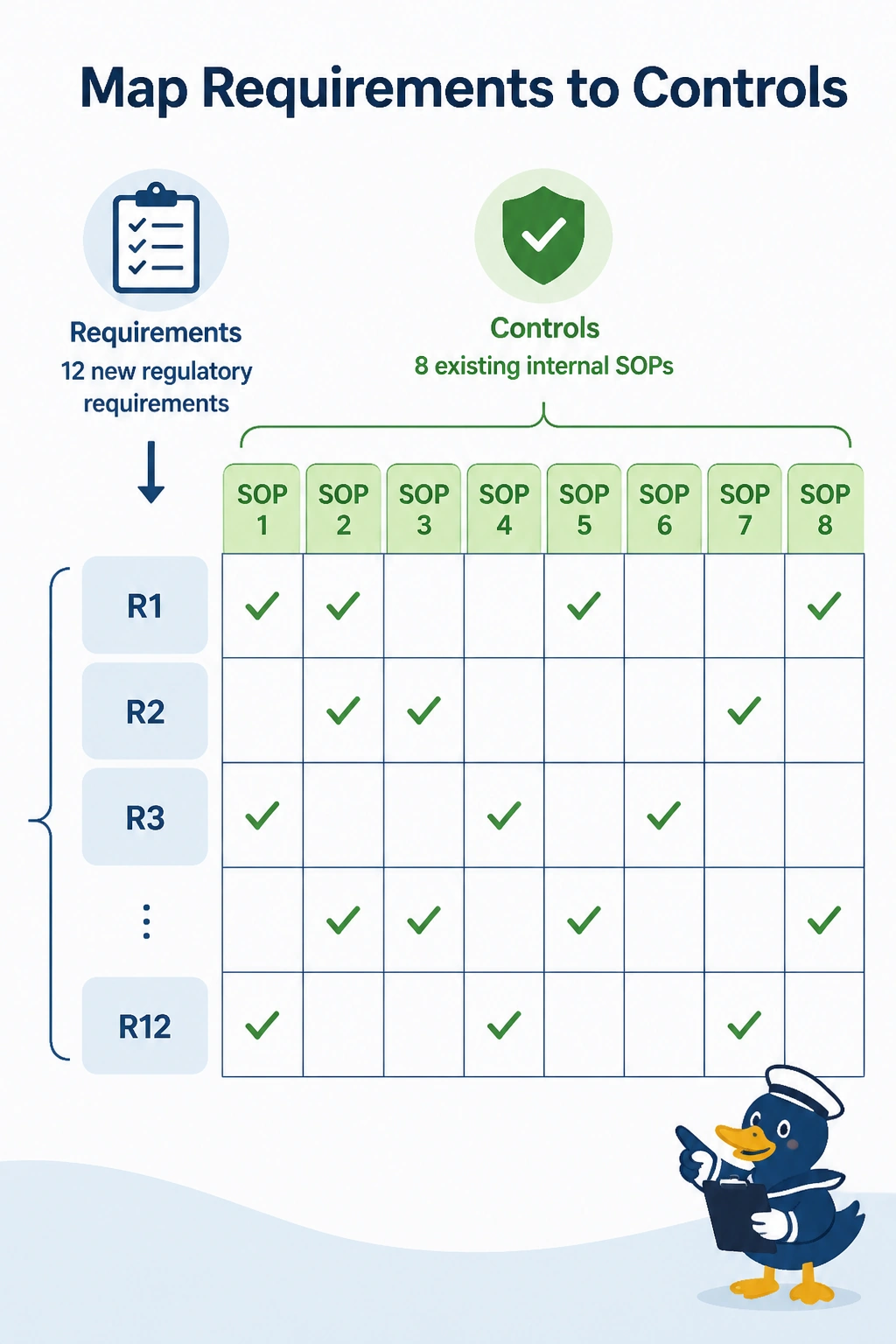
Imagine trying to match twelve guests to eight dinner tables on a single sheet of paper so empty seats jump right off the page. Whenever you need to cross-reference two sets of items and spot missing links, a matrix diagram is your tool. The trap is picking a numerical chart when the task is mapping qualitative relationships.
Full Explanation
To display how twelve requirements align with eight SOPs and expose coverage gaps, the team should build A matrix diagram linking requirements to controls. By placing requirements along one axis and SOPs along the other, the grid uses symbols at each intersection to show strong, weak, or missing relationships at a glance. A Pareto chart ranking requirements by defect count fails because Pareto charts prioritize categories by frequency or cost rather than mapping many-to-many structural links between documents. A scatter diagram plotting two continuous variables is wrong since it tests numerical correlation between paired measurements such as temperature and defect rate, not document coverage. A run chart tracking monthly compliance scores is also unsuitable because run charts display a single metric over chronological time rather than cross-referencing two distinct lists. Exam caveat: quality tool questions often contrast the seven basic numerical tools with the seven management and planning tools used for qualitative structure and gap analysis. As an operational check, confirm every row in the completed matrix shows at least one primary control owner and verify empty intersections for genuine compliance gaps.
Prefer to study offline? Printable PDF study book + test engine ($7.50, unofficial). These questions stay free here.