
A medical-technology company hires three experienced quality engineers from manufacturing roles and puts them through a classroom course on internal auditing. Before assigning them to lead audits independently, what should the audit program manager require to verify practical competence?
Select an answer to reveal the explanation.
Short Explanation
Knowing quality rules on paper does not mean you are ready to run a live interview or handle a defensive auditee, just like reading a flight manual does not qualify you to fly solo. Watch out for the trap of mistaking classroom knowledge or self-attestation for demonstrated fieldwork skill.
Full Explanation
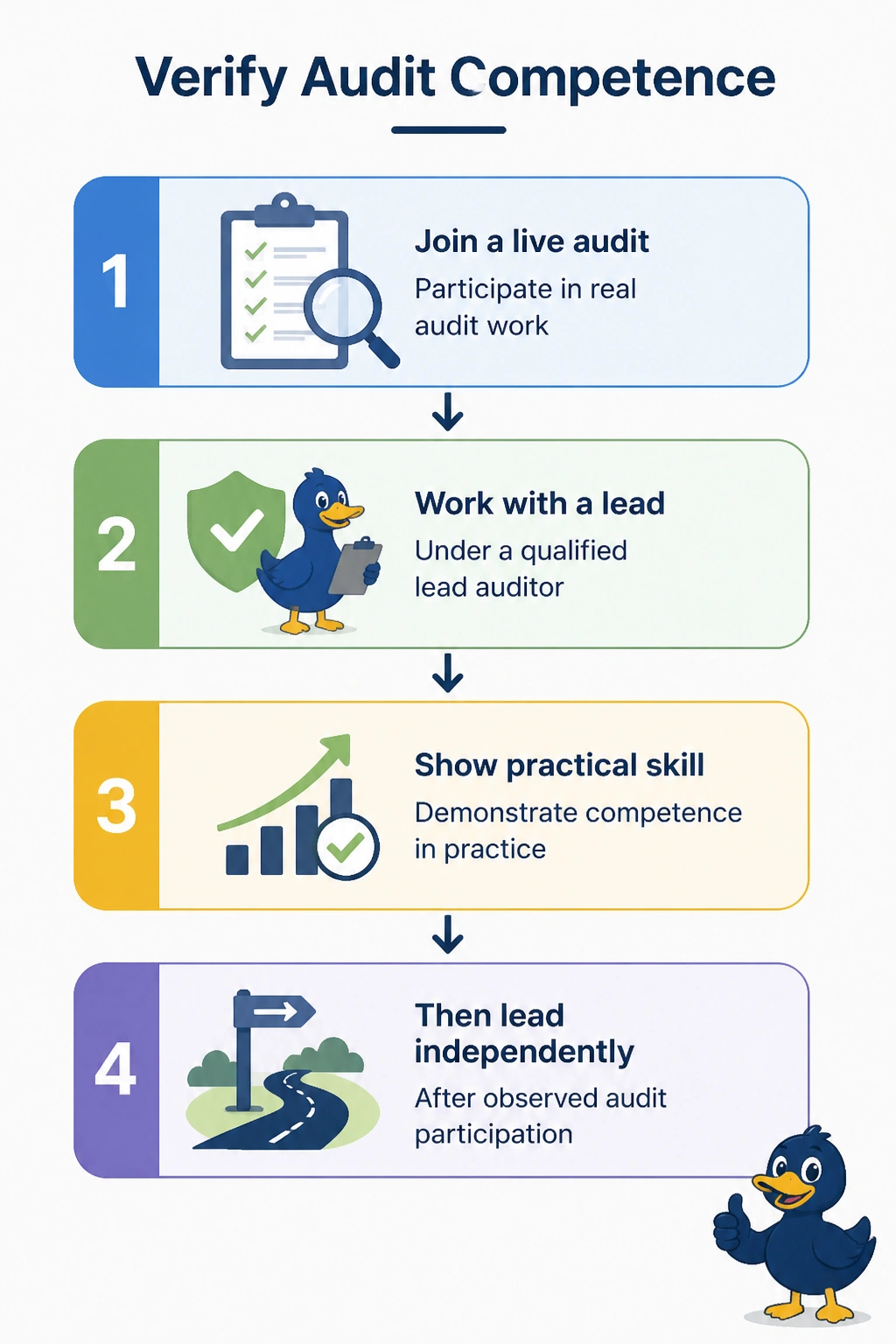
Before authorizing new auditors to work solo, the program manager should require "Observed participation in live audits under a qualified lead auditor". Witnessed audits allow an experienced lead to evaluate real-time interviewing, sampling judgment, note-taking, and professional demeanor under realistic time pressure. While "Completion of a written multiple-choice exam on quality terminology" checks basic recall, it cannot measure how an engineer handles ambiguous evidence or navigates workplace conflict. Relying on "A signed statement from each engineer confirming familiarity with company SOPs" is merely self-attestation and provides no independent verification of skill. Assigning "Six months of solo desk reviews of archived supplier corrective actions" builds document-checking familiarity without testing live observation, interpersonal communication, or opening and closing meeting facilitation. Keep in mind the caveat that technical expertise in manufacturing does not automatically translate into audit objectivity, so mentors must watch for consulting habits or bias. As an operational check, use a structured competency checklist during each witnessed audit to document specific strengths and sign off on independent qualification.
Prefer to study offline? Printable PDF study book + test engine ($7.50, unofficial). These questions stay free here.