
A 45-person precision machine shop has only one quality engineer, who also manages daily incoming inspection and calibration. How should the audit program manager staff internal audits of the inspection and calibration processes?
Select an answer to reveal the explanation.
Short Explanation
Even in a small shop, nobody gets to grade their own homework—you need a fresh pair of eyes from outside the process. The trap is thinking a checklist makes self-auditing okay or skipping the audit entirely because the team is small.
Full Explanation
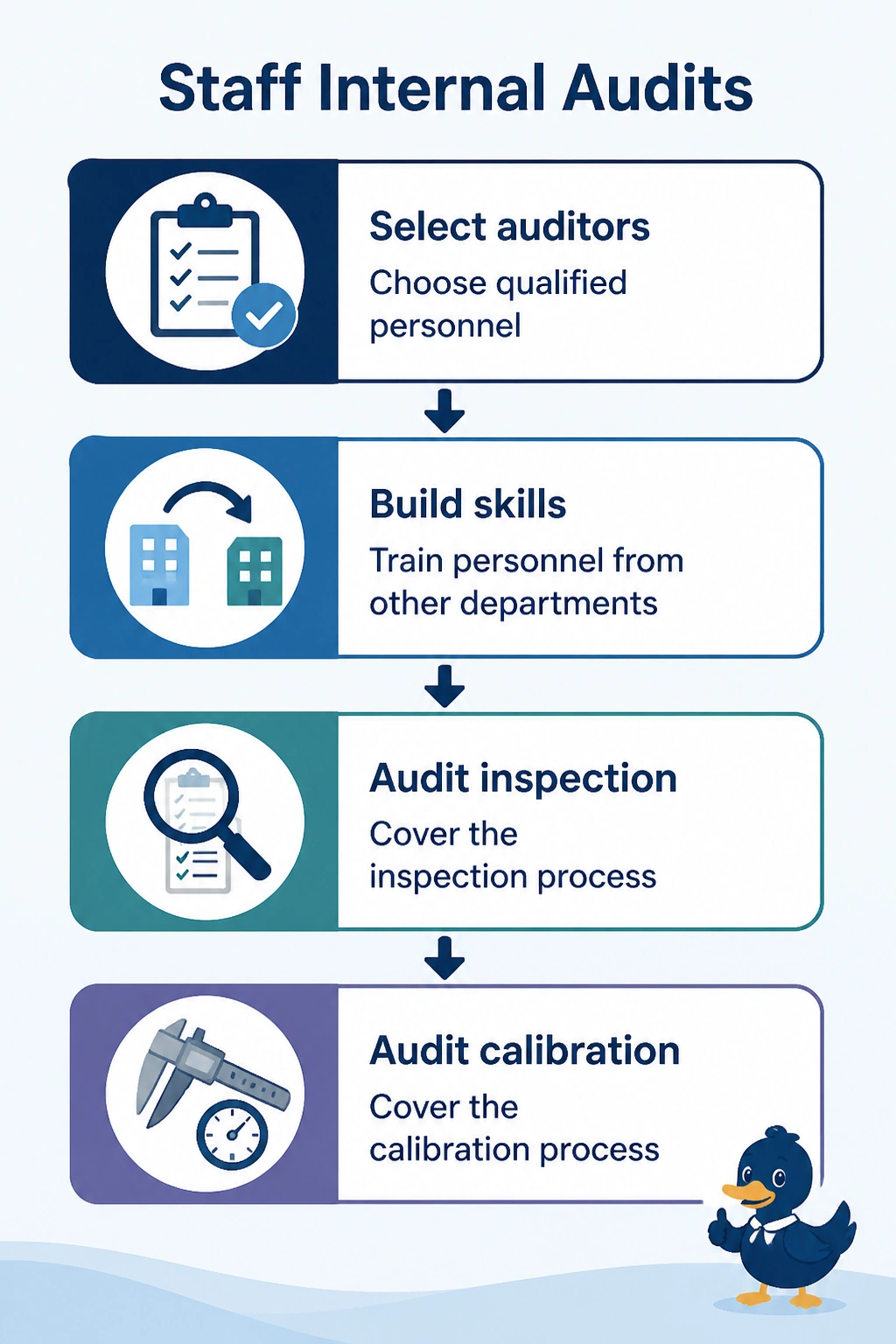
To preserve impartiality when a quality department has only one specialist, the program manager should Train qualified personnel from other departments to audit inspection and calibration. Cross-training staff from production, engineering, or maintenance ensures the reviewer has no direct operational responsibility for the work being evaluated, maintaining objectivity even with a single-person quality team. Assign the quality engineer to audit those areas using a standardized checklist violates auditor independence because a checklist cannot remove confirmation bias or self-review conflict. Skip internal audits of inspection and calibration until a second quality engineer is hired leaves high-risk measurement controls unverified, creating compliance and product-quality exposure. Have the quality engineer review last year's records and sign a self-declaration is a management self-check rather than an independent, objective audit. As a caveat, cross-departmental auditors still need training in auditing principles and enough familiarity with calibration and inspection criteria to evaluate evidence accurately. As an operational check, verify in the annual audit schedule that no auditor is assigned to a process they supervise or execute.
Prefer to study offline? Printable PDF study book + test engine ($7.50, unofficial). These questions stay free here.