
An audit program manager at a multi-plant automotive supplier notices that Plant A's internal auditors classify missing preventive-maintenance sign-offs as major nonconformities, while Plant B's auditors log the same gap as minor observations. Which program-level action best addresses this inconsistency?
Select an answer to reveal the explanation.
Short Explanation
If two referees call the exact same foul a warning on one field and an ejection on another, the players stop trusting the rulebook. You fix inconsistent grading by calibrating your auditors against shared examples, not by hiding the differences.
Full Explanation
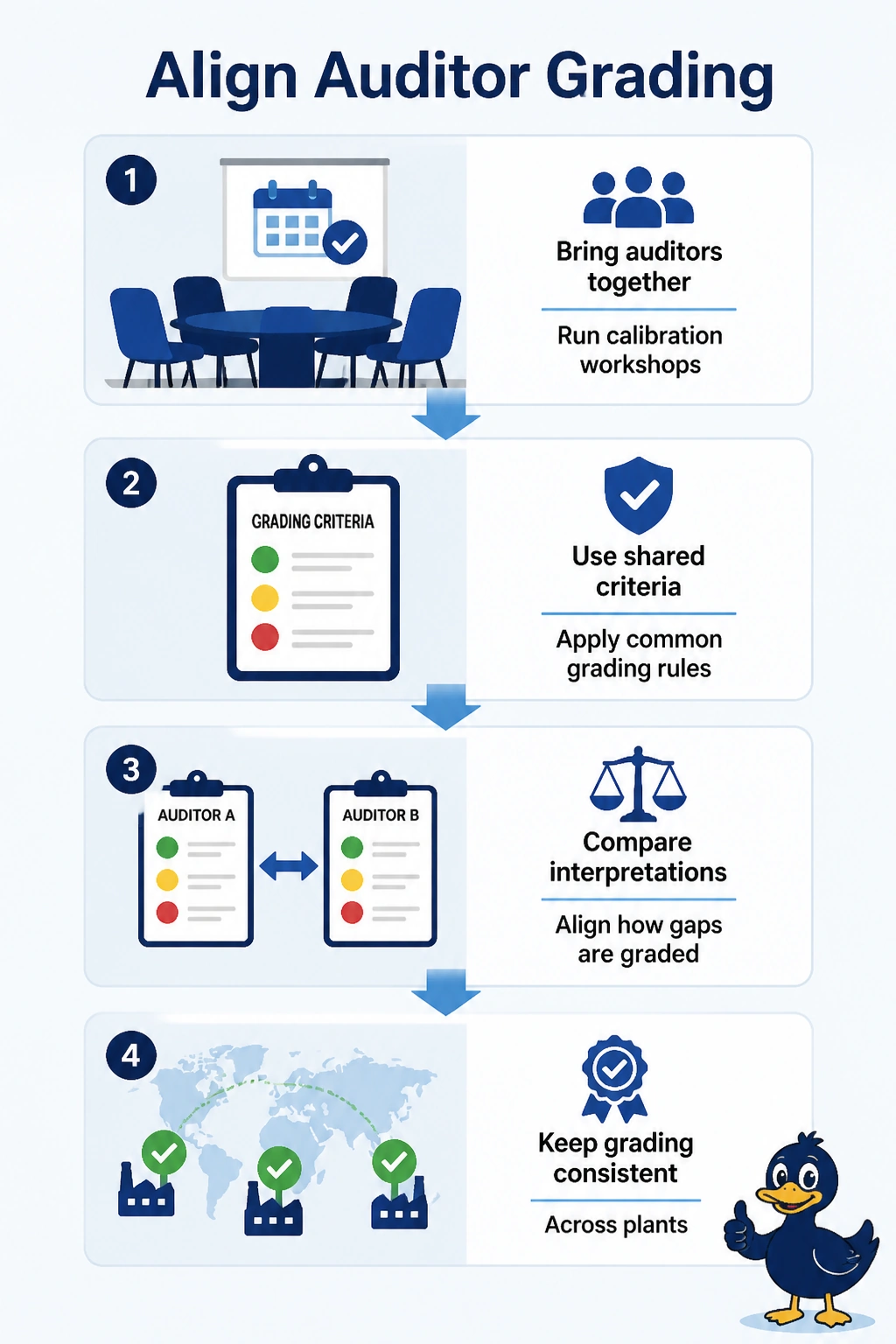
Consistent finding classification across an organization depends on shared interpretation of risk and criteria, so the manager should Conduct auditor calibration workshops using shared grading criteria. Walking auditors from both plants through identical sample scenarios and clear severity definitions aligns how they weigh systemic impact versus isolated slips. Choosing to Require both plants to downgrade all maintenance gaps to informal notes sacrifices rigor for artificial uniformity and masks real equipment-reliability risks. Choosing to Stop sharing audit reports between plants so comparisons cannot occur hides the inconsistency instead of fixing it and blocks cross-plant learning. Choosing to Assign Plant A's auditors to grade all findings without reviewing evidence removes essential context and treats one plant's habits as automatically correct without calibrating against objective program standards. As a caveat, calibration should be reinforced periodically through co-audits or witnessed assessments, because written guidelines alone drift over time. As an operational check, review finding-severity distributions across sites quarterly to spot outlier grading patterns before they skew management metrics.
Prefer to study offline? Printable PDF study book + test engine ($7.50, unofficial). These questions stay free here.