
An internal audit program manager is updating governance procedures for completed audit reports, checklists, and corrective action evidence. Why should the program enforce strict record retention and access controls?
Select an answer to reveal the explanation.
Short Explanation
Audit records are the memory and proof of your quality program, just like locked medical charts in a clinic. Without strict retention and access controls, sensitive findings leak or lose their trail when regulators come knocking.
Full Explanation
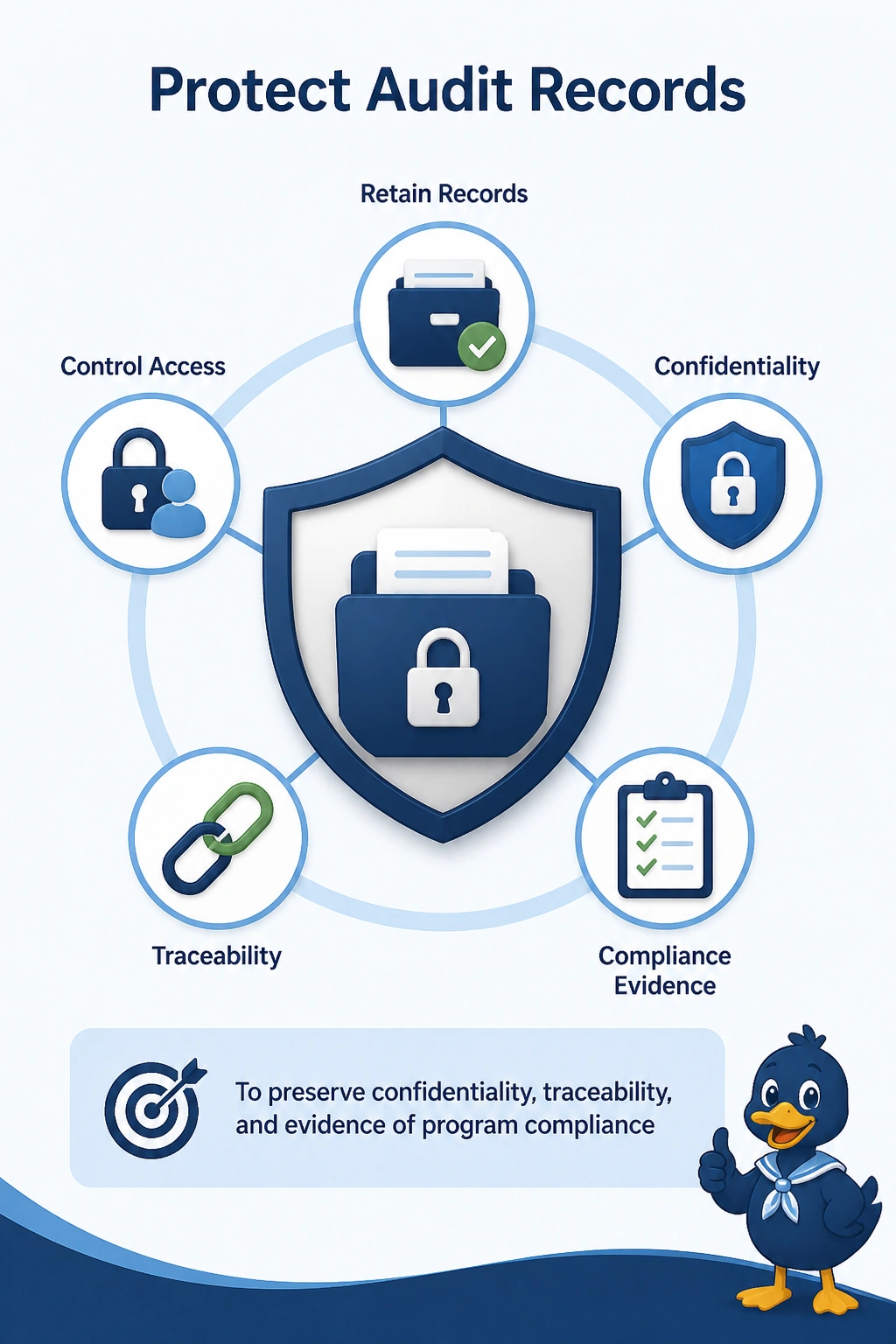
Robust audit record governance exists To preserve confidentiality, traceability, and evidence of program compliance. Controlled retention protects sensitive organizational or supplier data while demonstrating to regulators, customers, and leadership that audits were planned, executed, and followed up consistently. Conversely, maintaining records To allow process owners to edit closed findings later would destroy audit integrity and tamper with historical evidence. Using retention policies To eliminate the need for management review meetings is equally mistaken, because leadership still needs periodic reviews to assess trends and resource needs. Likewise, retaining audit files To let auditors reuse a closed report in place of a new audit confuses archiving evidence with performing current, risk-based assurance work. Caveat: retention schedules must balance regulatory obligations and legal hold rules against unnecessary storage of sensitive personal data. Operational check: verify that completed audit files are read-only, indexed by audit ID, and restricted to authorized roles with documented retention periods.
Prefer to study offline? Printable PDF study book + test engine ($7.50, unofficial). These questions stay free here.