
On the afternoon of day three of a demanding multi-shift audit at a pharmaceutical packaging plant, an auditor notices their concentration slipping while reviewing dense batch-record spreadsheets and begins skimming pages without checking signature dates. What should the auditor do?
Select an answer to reveal the explanation.
Short Explanation
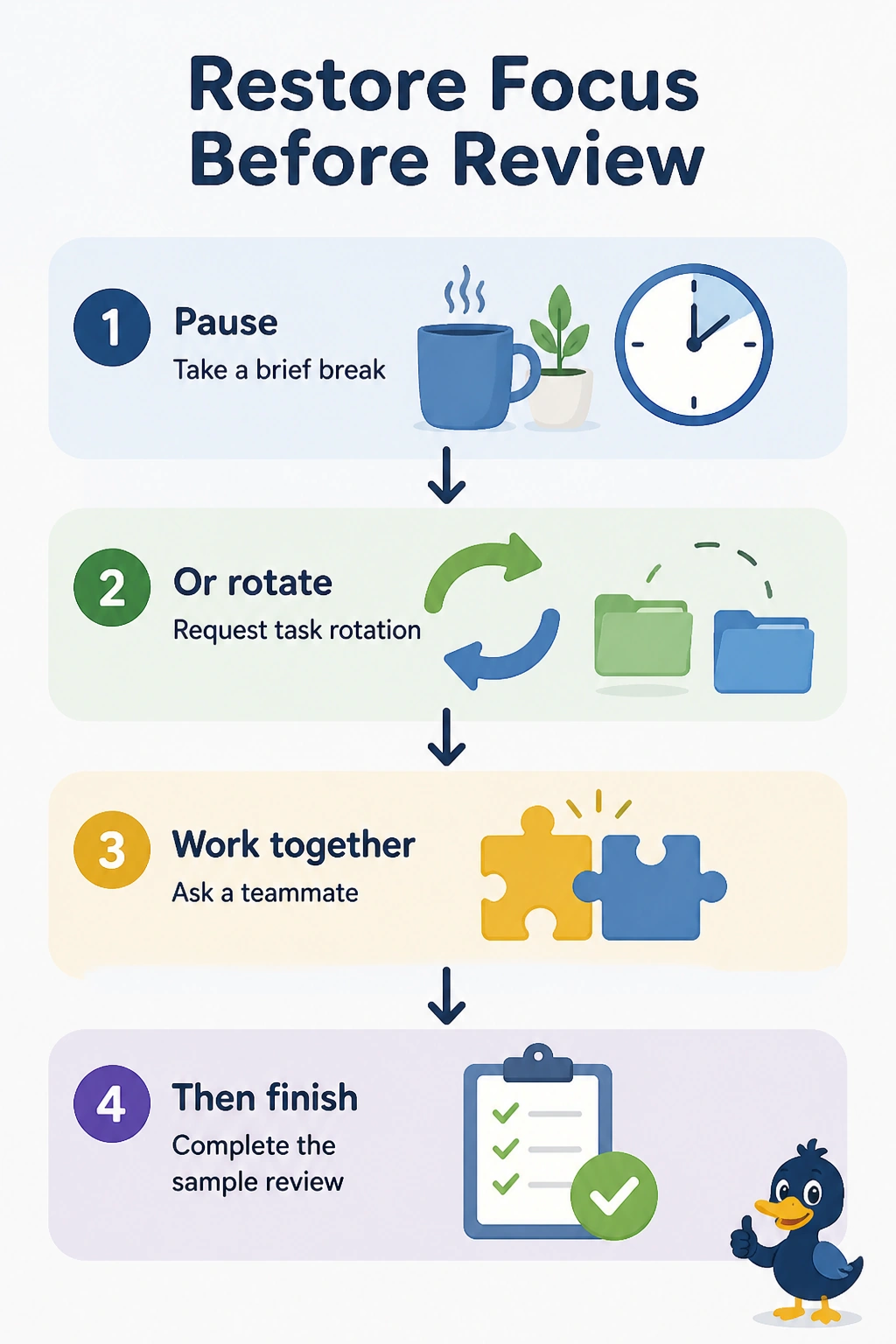
Even a careful auditor can miss red flags when fatigue sets in during a demanding audit. Protect your focus by taking a brief break or asking a teammate to rotate tasks before you finish the sample review. That helps you give every sampled record the attention it needs.
Full Explanation
Due professional care requires you to recognize cognitive limits and protect the integrity of evidence review. Pausing for a brief break or requesting task rotation with a teammate can restore focus and reduce non-sampling error—the risk of missing a genuine discrepancy in a selected record—so you can apply objective judgment. Continuing to skim the remaining batch records at double speed to keep the closing meeting on schedule sacrifices evidence quality for punctuality and undermines audit reliability. Skipping the remaining sample records and marking the entire population compliant based on morning results falsely represents the sample as complete and leaves afternoon shifts unverified. Asking the auditee’s quality clerk to summarize signature dates verbally replaces your independent inspection of the records with uncorroborated testimony. Caveat: if fatigue threatens planned scope coverage near the end of fieldwork, notify the lead auditor promptly to adjust team assignments or document any unreviewed scope. Practical check: build short recovery breaks and cross-team task rotation into multi-day audit schedules, especially before high-concentration record reviews.
Prefer to study offline? Printable PDF study book + test engine ($7.50, unofficial). These questions stay free here.