
While reviewing draft findings from an internal audit of a medical-device assembly line, a lead auditor notices a teammate wrote: 'Many operator training records are poorly maintained and often lack timely supervisor sign-offs.' Why should the lead auditor require the teammate to rewrite this statement?
Select an answer to reveal the explanation.
Short Explanation
Words like 'many' and 'poorly' belong in casual conversation, not in an audit report. Your job is to give the auditee facts they can verify and fix, so avoid the trap of vague labels and instead state exact counts, record identifiers, and the specific requirement that was missed.
Full Explanation
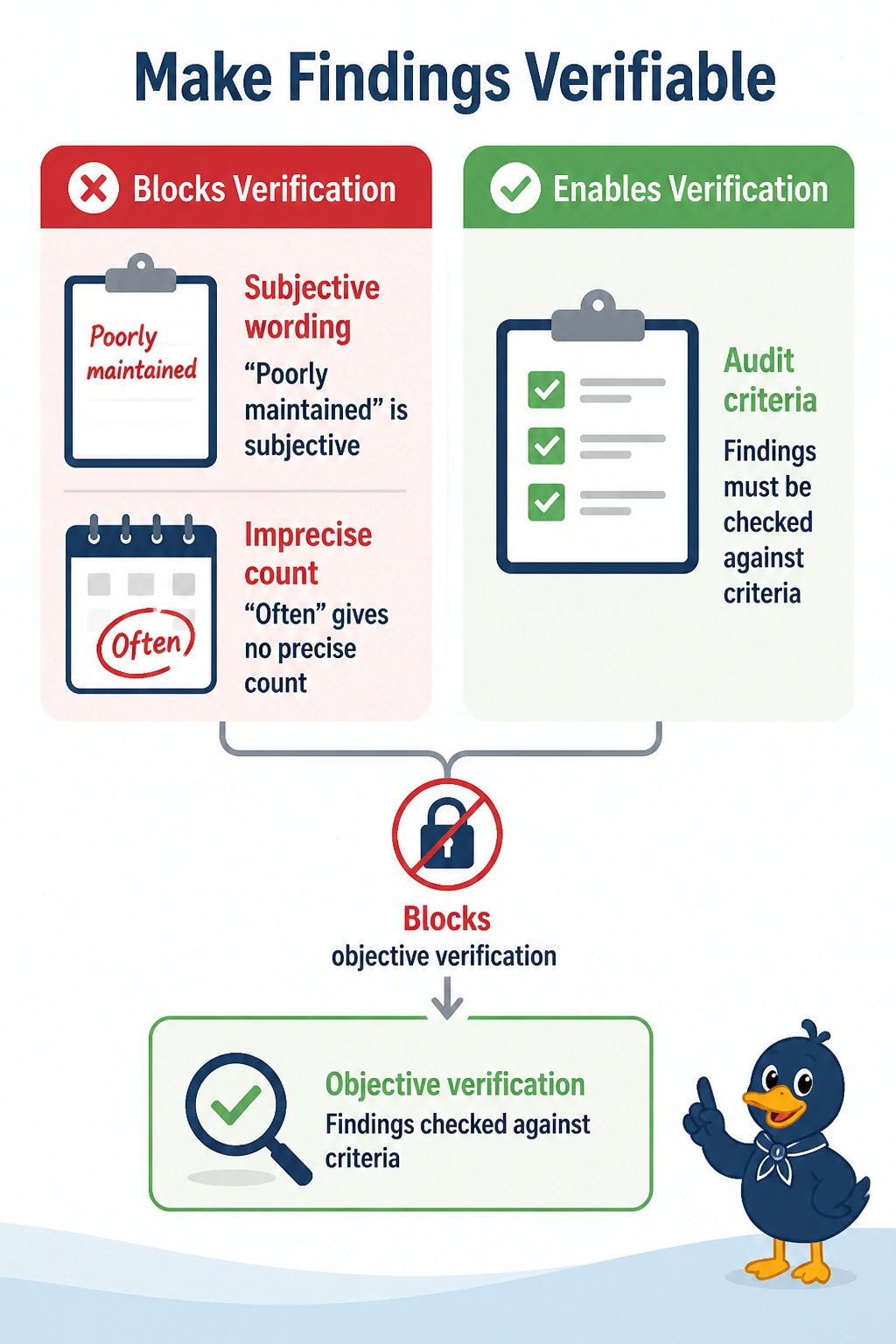
Clear, objective communication is a core auditor competency, and the statement must be rewritten because Subjective adjectives and imprecise counts prevent objective verification against audit criteria. Without exact sample counts, record numbers, and the specific procedural requirement, the auditee cannot reproduce the finding or scope an effective corrective action. Claiming that Vague quantifiers make the finding harder for management to dismiss informally is backwards, because imprecise wording actually invites disputes over severity and scope. Asserting that Audit findings must name the responsible supervisor before corrective action can begin is incorrect because audits evaluate system conformance rather than assigning personal blame. Stating that Draft findings should avoid citing any specific record counts to protect confidentiality confuses protecting proprietary trade secrets with documenting basic traceable evidence. As a caveat, even when sample sizes are small, the finding should state both the number of nonconforming items and the total sample reviewed. For an operational check, test each draft finding by asking whether an independent reviewer could pull the exact same records and reach the same conclusion.
Prefer to study offline? Printable PDF study book + test engine ($7.50, unofficial). These questions stay free here.