
During an interview with a receiving inspector at a food-ingredient warehouse, an auditor asks: 'Do you always check the certificate of analysis against the purchase order, verify truck seal numbers, and log pallet temperatures before unloading?' The inspector simply replies 'Yes.' What is the flaw in the auditor's questioning technique?
Select an answer to reveal the explanation.
Short Explanation
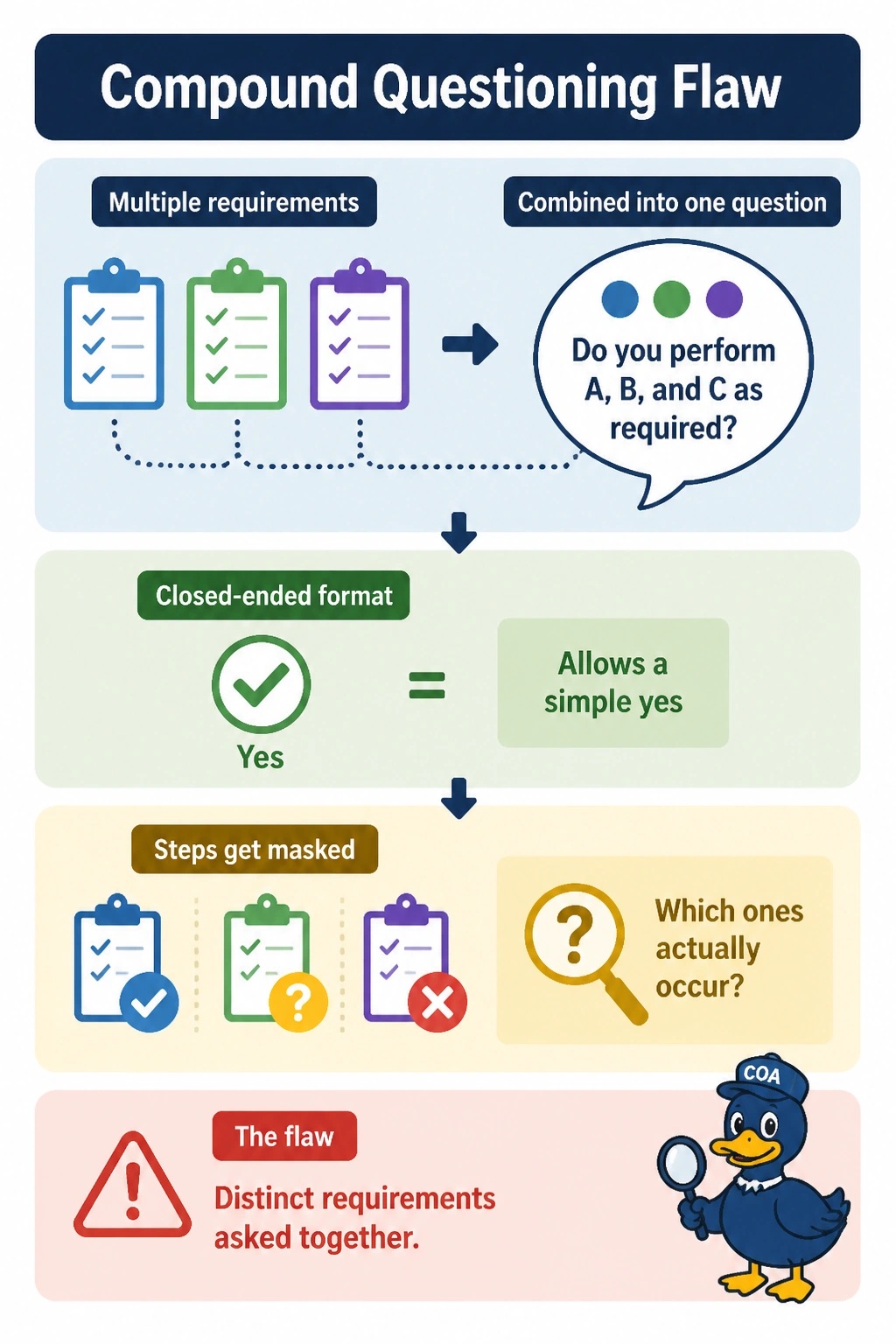
You’re right to notice that asking about the certificate, seal numbers, and pallet temperatures all at once makes a simple “yes” hard to interpret. The compound question masks which steps actually happen, so break the requirements down one at a time.
Full Explanation
Effective audit interviewing isolates one verifiable requirement at a time with clear, open-ended prompts. Asking whether the inspector always checks the certificate of analysis against the purchase order, verifies truck seal numbers, and logs pallet temperatures combines distinct requirements in a closed-ended question; one “yes” does not reveal which steps actually occur. A silent pause that pressures the inspector into rushing is not the flaw: deliberate silence after a question can be a helpful listening technique, but it does not cause the question to combine requirements. An open-ended walkthrough that invites too much irrelevant detail is also not what happened; “Do you always” invites a binary yes-or-no answer, not a detailed walkthrough. Requesting live physical observation rather than relying exclusively on the inspector’s verbal summary describes evidence verification, not an interviewing error. Exam caveat: even a clear verbal answer remains weak evidence until corroborated by records or observation. Practical check: ask the inspector to walk through the last received shipment step by step, then verify each step against the actual receiving logs.
Prefer to study offline? Printable PDF study book + test engine ($7.50, unofficial). These questions stay free here.