
During a three-day internal audit of a food-packaging plant, an auditor finds disorganized quarantine logs in receiving on day one, but observes a spotless, well-controlled packaging line on day three. When drafting overall audit conclusions, how should the auditor guard against recency bias?
Select an answer to reveal the explanation.
Short Explanation
Your memory naturally favors whatever happened last, so a polished final afternoon can easily overshadow messy evidence from day one. The trap is letting fresh impressions outweigh your contemporaneous notes from earlier in the audit.
Full Explanation
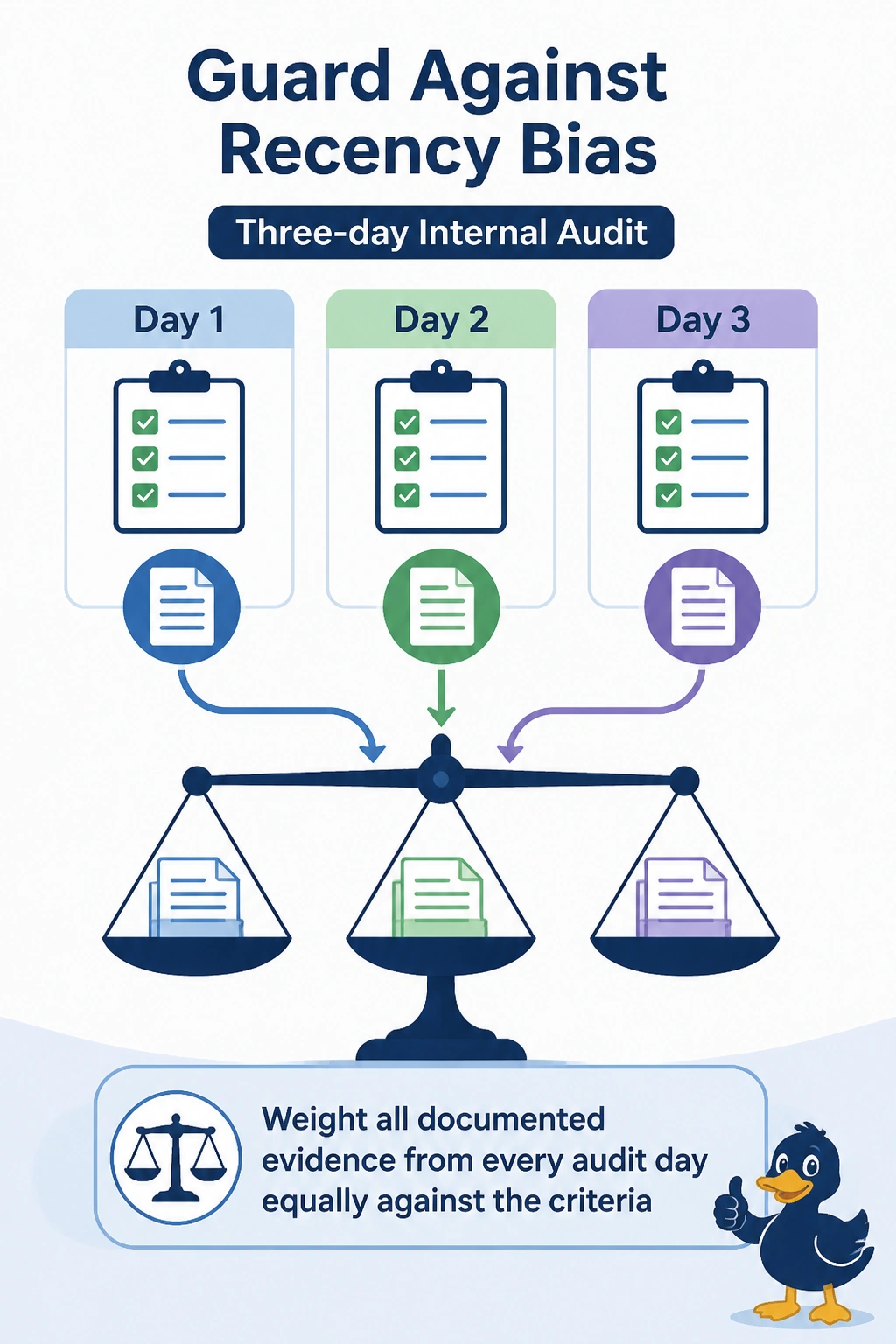
Choosing to Weight all documented evidence from every audit day equally against the criteria directly counters recency bias by anchoring conclusions in the full body of objective evidence collected across the entire audit. Every scheduled process—from receiving through final packaging—carries equal standing against the audit criteria unless a risk-based weighting was defined in the plan. Choosing to Prioritize final-day observations because they reflect the plant's current state distorts the overall conclusion by letting later, unrelated areas mask earlier system failures. Deciding to Re-audit the receiving dock briefly on the last afternoon to confirm earlier notes wastes limited closing-day time on evidence that was already verified and recorded on day one. Choosing to Average the team's general impressions from the closing-day walkthrough replaces objective, record-backed findings with subjective recall. As a caveat, if an earlier finding was corrected before the audit ended, record both the original nonconformity and the immediate correction rather than erasing the day-one evidence. As an operational check, review your day-by-day working papers chronologically before the closing meeting and map every conclusion directly to specific sample identifiers.
Prefer to study offline? Printable PDF study book + test engine ($7.50, unofficial). These questions stay free here.