
During supplier qualification for a critical surgical-implant component, a prospective supplier sends its latest internal audit report showing zero nonconformities and argues that an on-site second-party audit by the medical-device manufacturer is unnecessary. Why should the manufacturer still consider a second-party audit?
Select an answer to reveal the explanation.
Short Explanation
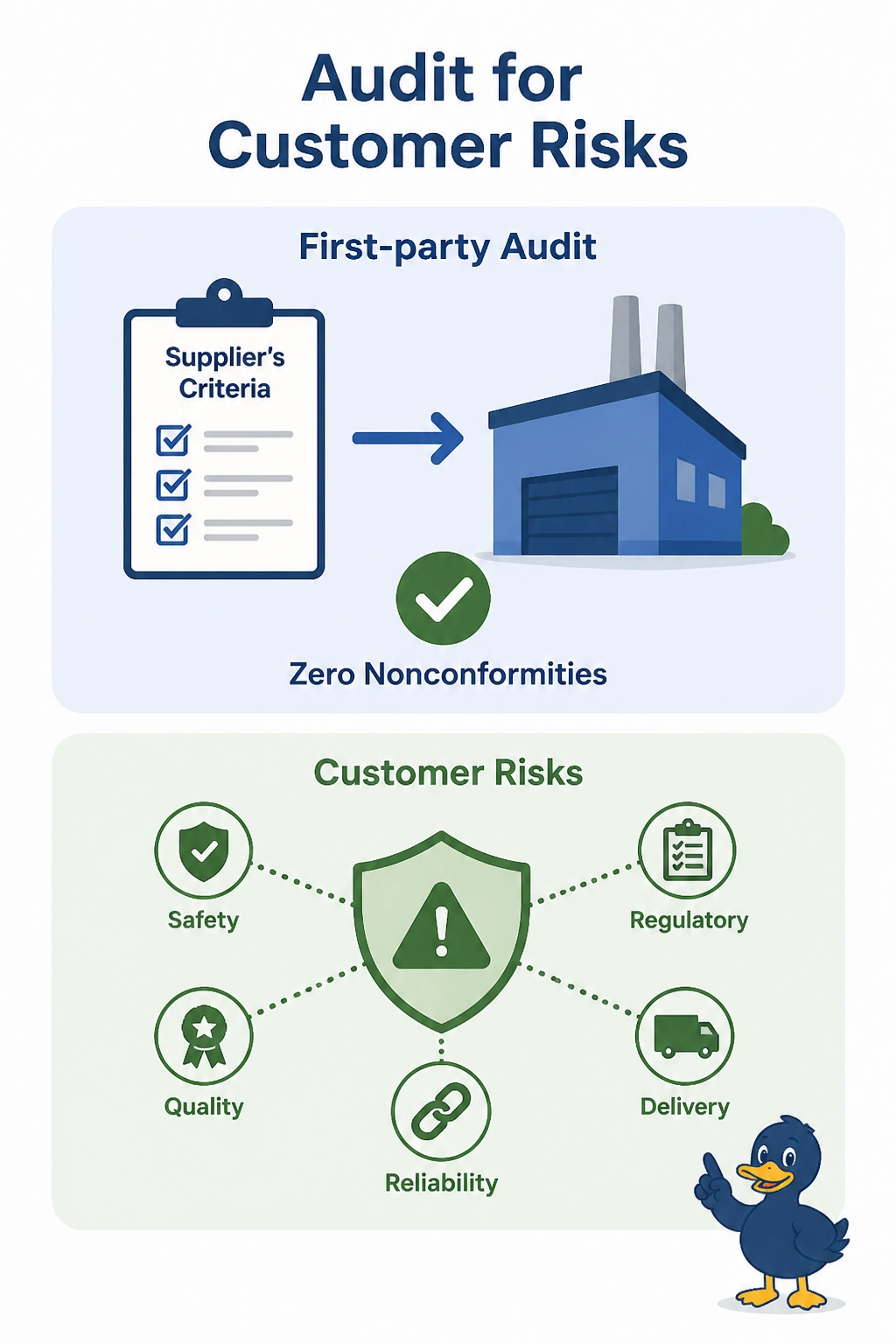
A supplier's clean internal audit report is a good sign, like a seller's own home inspection, but it was written for their standards, not yours. You still need to weigh a second-party audit for critical parts, avoiding the trap of treating a supplier's self-check as proof your specific requirements are met.
Full Explanation
First-party and second-party audits serve different clients and risk profiles, so the manufacturer should still consider an evaluation. A first-party audit judges the supplier against the supplier's own criteria, not against this customer's component risks. A supplier's internal team may not test custom tolerances, specialized cleanliness controls, or contractual traceability rules that matter most to the buyer. Claiming that internal audits are legally invalid unless witnessed by a customer representative during fieldwork misstates how internal quality governance operates. Claiming that second-party audits are required by law for every purchased item regardless of component risk ignores risk-based supplier management, where low-risk commodities may be qualified through other controls. Claiming that internal auditors are prohibited from evaluating manufacturing processes or calibration records is false, as internal audits routinely cover those core operational controls. As a caveat, reviewing a supplier's internal audit results can still inform the scope and depth of the customer's on-site assessment. Operational check: compare the supplier's internal audit scope and criteria against your purchase specification and critical-to-quality characteristics before deciding on-site audit scope.
Prefer to study offline? Printable PDF study book + test engine ($7.50, unofficial). These questions stay free here.