
An internal auditor trained exclusively in mechanical assembly quality systems is asked to conduct an urgent standalone audit of a hospital's sterile-compounding pharmacy cleanroom, with no technical expert available to assist. Under fundamental auditing principles, how should the auditor respond?
Select an answer to reveal the explanation.
Short Explanation
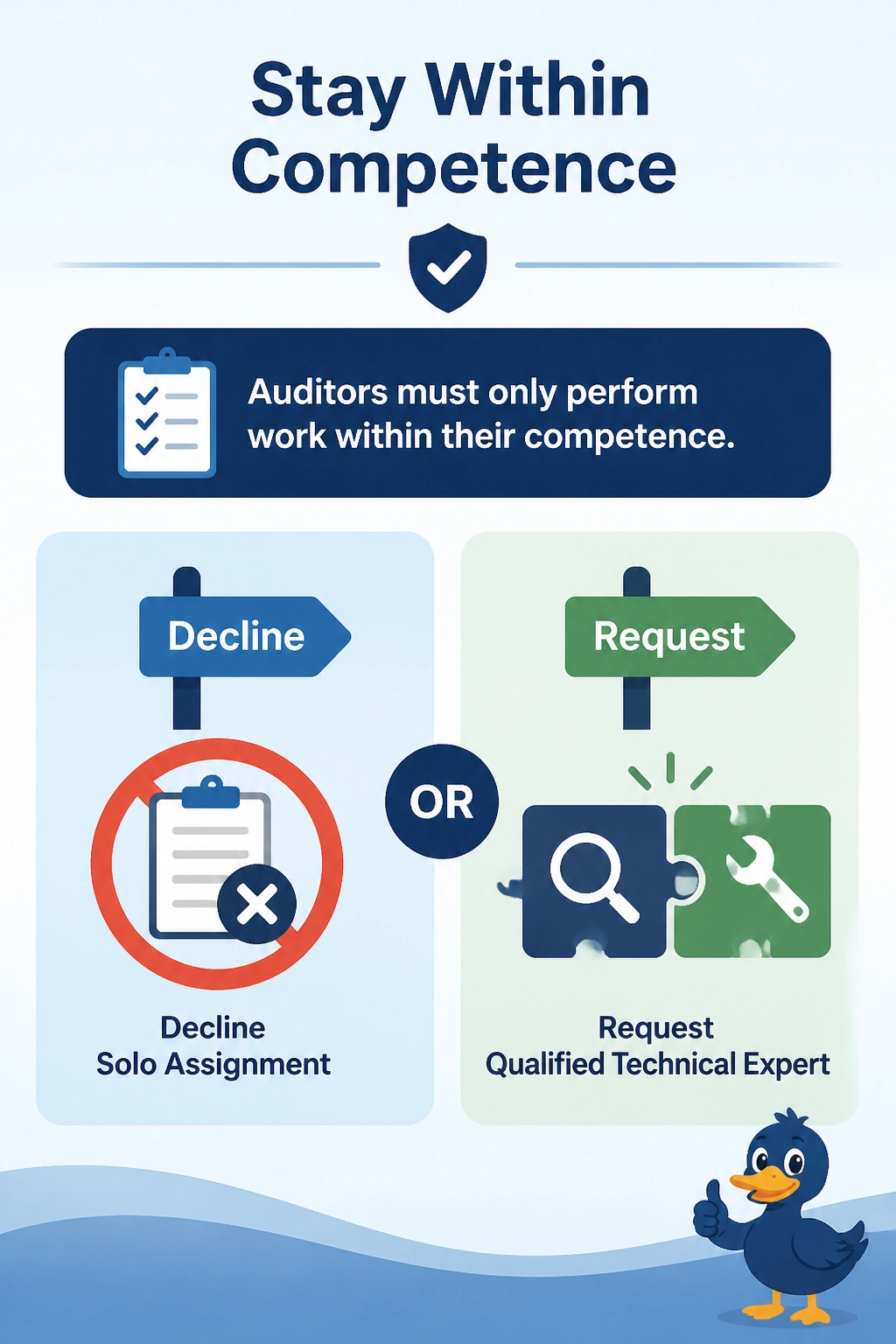
You may want to help by taking on an urgent audit, but mechanical-assembly experience does not prepare you to judge sterile-compounding cleanroom controls. Your competence matters: decline the solo assignment or request a qualified technical expert so patient safety and audit credibility are protected.
Full Explanation
Integrity and due professional care require you to accept only assignments within your competence or supported by appropriate expertise. Declining the solo assignment or requesting a qualified technical expert protects patient safety, preserves audit credibility, and helps prevent false assurance in a high-risk clinical environment. Accepting the assignment and relying solely on the pharmacy technician’s verbal explanations leaves you unable to challenge inaccurate technical claims or identify environmental hazards. Using only generic manufacturing checklists while skipping specialized sterile-compounding environmental controls omits critical criteria for assessing cleanroom operations. Auditing remotely through employee attendance rosters instead of observing cleanroom operations substitutes irrelevant paperwork for operational verification. Caveat: you may lead the engagement if an impartial technical expert advises on cleanroom practices while you retain control of the audit findings. Practical check: verify sector-specific qualification records before confirming that you can conduct any solo audit assignment.
Prefer to study offline? Printable PDF study book + test engine ($7.50, unofficial). These questions stay free here.