
A medical-device manufacturer asks its accredited third-party registrar to also draft the company's new corrective-action procedures ahead of the upcoming certification audit. Why must the registrar decline this consulting request?
Select an answer to reveal the explanation.
Short Explanation
You can't have the same referee coach your team all week and then call the fouls on game day. The trap is thinking a registrar's deep expertise makes them the ideal consultant, when writing the very system they must later certify destroys third-party impartiality.
Full Explanation
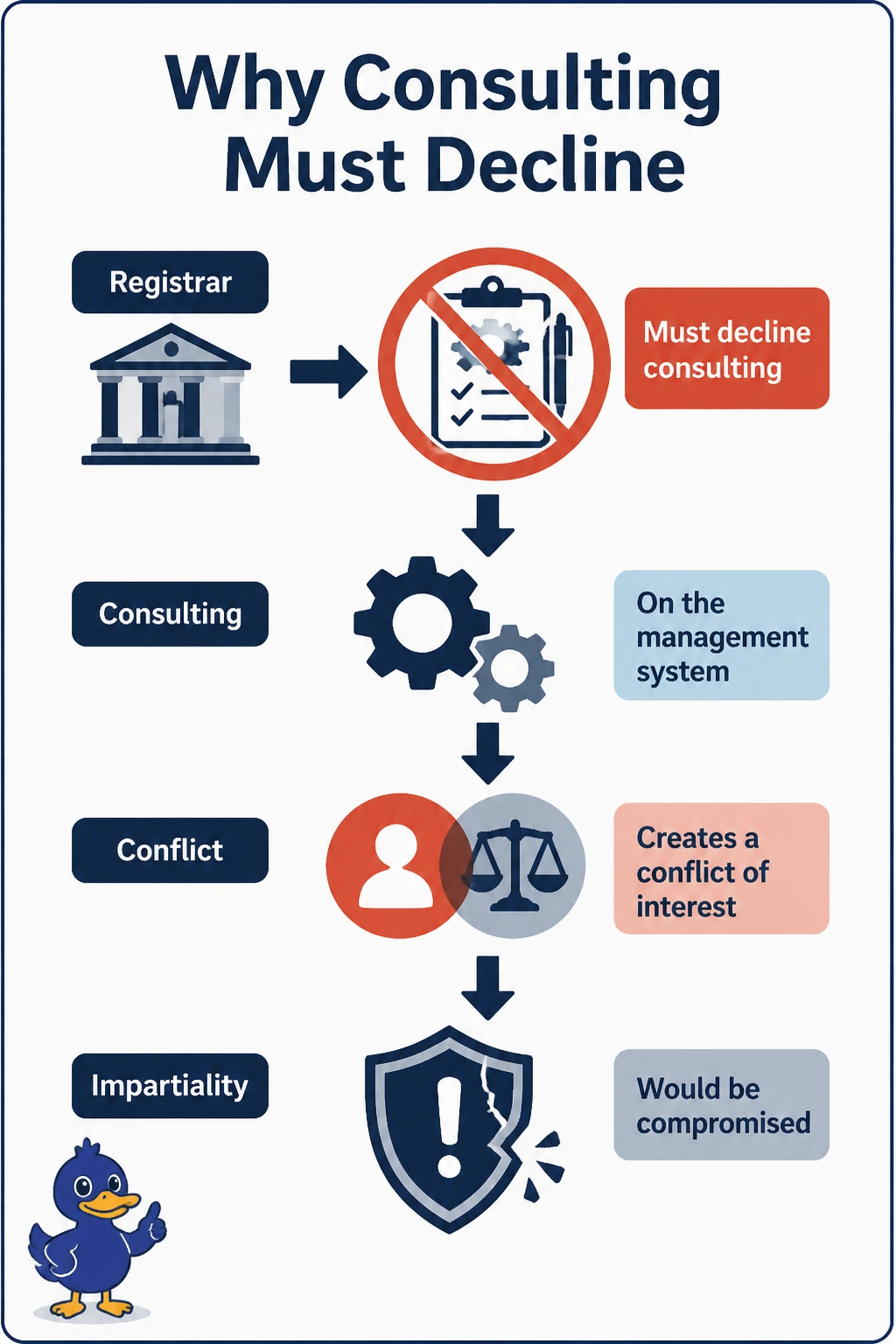
Third-party certification only holds market and regulatory credibility when the registrar acts as an independent judge, which is why Providing consulting on the management system creates a conflict of interest that compromises impartiality. If a certification body drafts the client's procedures, its auditors would effectively be auditing their own work during the certification assessment. The claim that Third-party registrars are barred from reading a client's internal procedures before on-site fieldwork is false; registrars routinely perform pre-audit document reviews to assess system readiness. Stating that Writing internal procedures is exclusively the responsibility of the national accreditation body is incorrect because accreditation bodies oversee registrars, not individual manufacturers' internal SOPs. Finally, Registrars may only draft procedures for clients that have failed two prior surveillance audits is untrue because failing an audit never permits a registrar to cross the line into consulting for its own auditee. Exam caveat: watch for scenarios where an auditee tries to bundle consulting and certification under one vendor—those roles must stay strictly separated. Operational check: if a client needs help writing SOPs, direct them to hire an independent consultant with no ties to the certifying registrar.
Prefer to study offline? Printable PDF study book + test engine ($7.50, unofficial). These questions stay free here.