
Following a product recall and subsequent civil lawsuit at an industrial valve manufacturer, a court issues a valid subpoena for the company's internal quality audit records. A manager suggests withholding the files under the internal audit confidentiality policy. Which legal principle applies to these audit records?
Select an answer to reveal the explanation.
Short Explanation
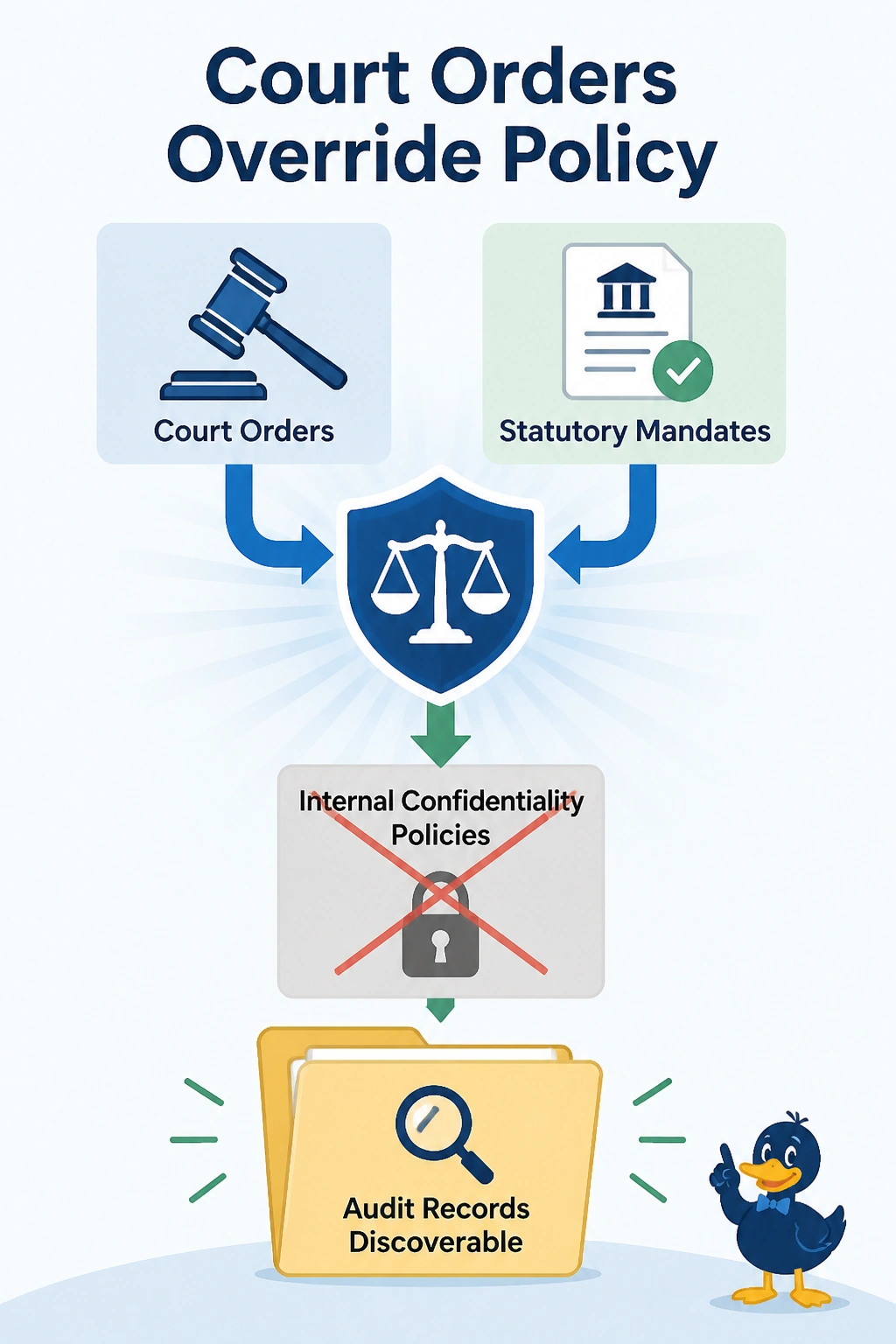
Confidentiality is a cornerstone of auditing, but it is not a magic cloak that hides records from a judge. The trap is assuming you can block a valid court order with your company's internal privacy policy or a confidential stamp. Once litigation begins, lawful court orders and statutory mandates override internal confidentiality rules, making audit records discoverable.
Full Explanation
Professional auditing ethics require protecting sensitive information, but that duty has clear legal boundaries. Under established principles, Lawful court orders and statutory mandates override internal confidentiality policies, making audit records discoverable. When a court issues a valid subpoena, the organization and its auditors must follow legal counsel and comply. Claiming that Internal audit confidentiality policies legally override civil court subpoenas unless the audit client waives privilege confuses a corporate rule with statutory legal privilege. Asserting that Only third-party certification audit reports are discoverable in court, while internal audit working papers remain exempt is incorrect because internal records are routinely subject to civil discovery absent a specific privilege. Thinking that A self-critical-analysis privilege automatically shields internal quality-audit working papers from every civil subpoena once the report is marked confidential overstates a narrow doctrine that courts apply only in limited jurisdictions and never as automatic protection from a confidential stamp. Auditors should escalate subpoenas immediately to legal counsel rather than interpreting privilege themselves.
Prefer to study offline? Printable PDF study book + test engine ($7.50, unofficial). These questions stay free here.