
During a second-party audit of a tier-1 electronics supplier, an auditor learns that conformal coating is outsourced to an independent sub-tier shop that refuses entry because it has no direct contract with the customer. What establishes a customer's authority to audit a sub-tier supplier's facility?
Select an answer to reveal the explanation.
Short Explanation
Think of a second-party audit like a house visit—you cannot walk into a neighbor's garage just because your contractor stores tools there. Unless contractual right-of-access and flow-down clauses are written into the supply chain agreements, you have no legal footing to inspect an independent sub-tier shop. The trap is assuming an internal audit charter or third-party registrar rules automatically open every vendor's doors.
Full Explanation
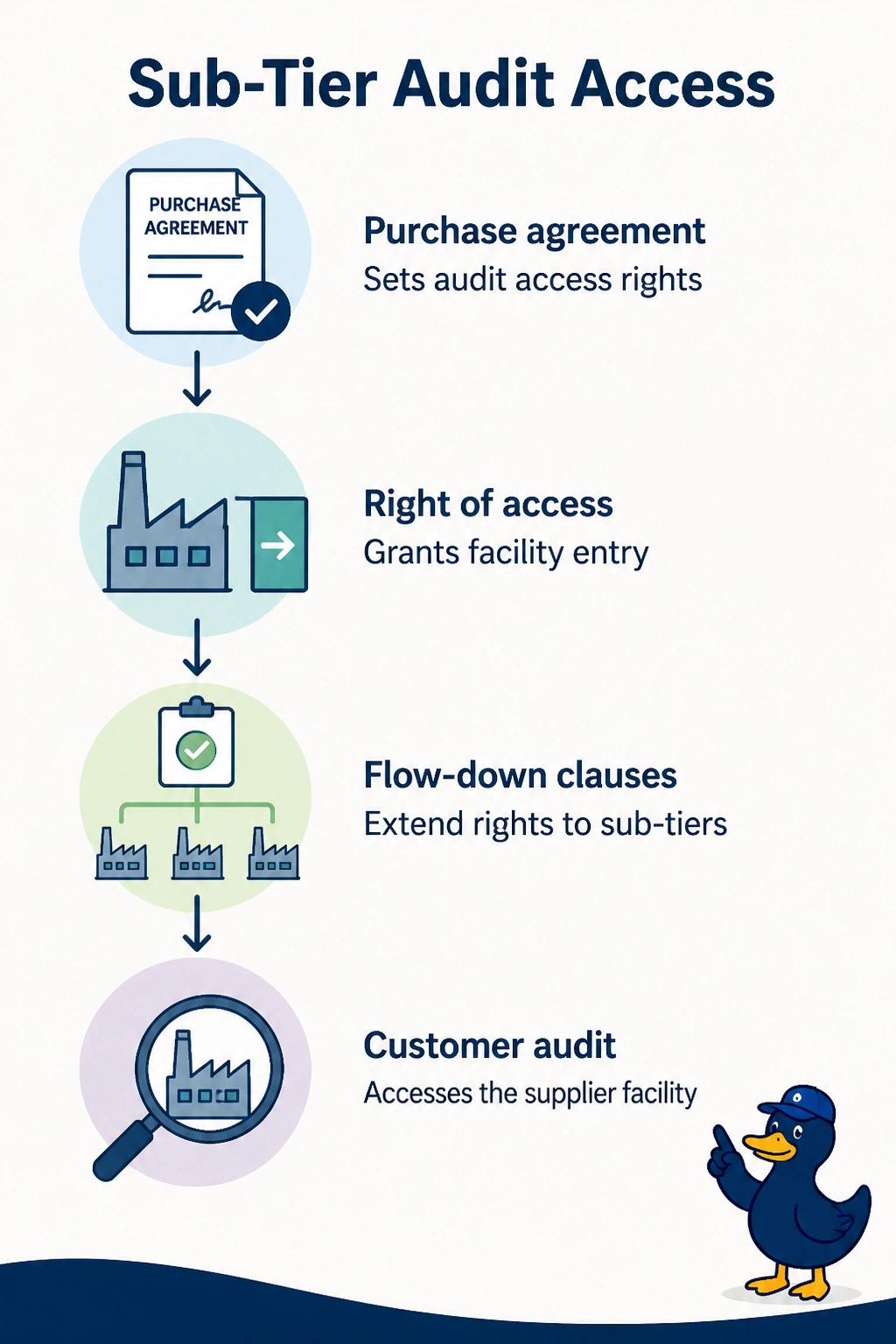
Second-party audits are governed by private commercial agreements rather than statutory authority, so Contractual right-of-access and flow-down clauses in the purchase agreement are what establish a customer's legal ability to inspect a sub-tier vendor. When the customer requires its tier-1 supplier to flow down quality and audit-access obligations to critical subcontractors, the sub-tier shop agrees to those terms as a condition of doing business. By contrast, Accredited third-party registrar rules automatically grant any certified customer access to sub-tier sites is false because third-party certification bodies operate under their own client contracts and cannot extend inspection rights to outside buyers. Internal audit charters written by the manufacturer legally bind all independent sub-tier vendors fails because an internal charter only governs employees and processes within the manufacturer's own organization. Likewise, Verbal permission from the tier-1 supplier's quality manager overrides sub-tier confidentiality is ineffective because a tier-1 manager cannot waive an independent vendor's property and trade-secret rights without prior written agreement. As a caveat, even with flow-down clauses in place, auditors must respect proprietary boundaries unrelated to the contracted process. For an operational check, review supplier quality agreements before scheduling fieldwork to confirm sub-tier audit access and advance notice terms are explicitly documented.
Prefer to study offline? Printable PDF study book + test engine ($7.50, unofficial). These questions stay free here.