
At the end of a two-day internal audit of a cold-chain logistics provider, a junior auditor writes 'Receiving dock missed two temperature logs' in the report section titled 'Overall Audit Conclusion.' Why must the lead auditor revise this section?
Select an answer to reveal the explanation.
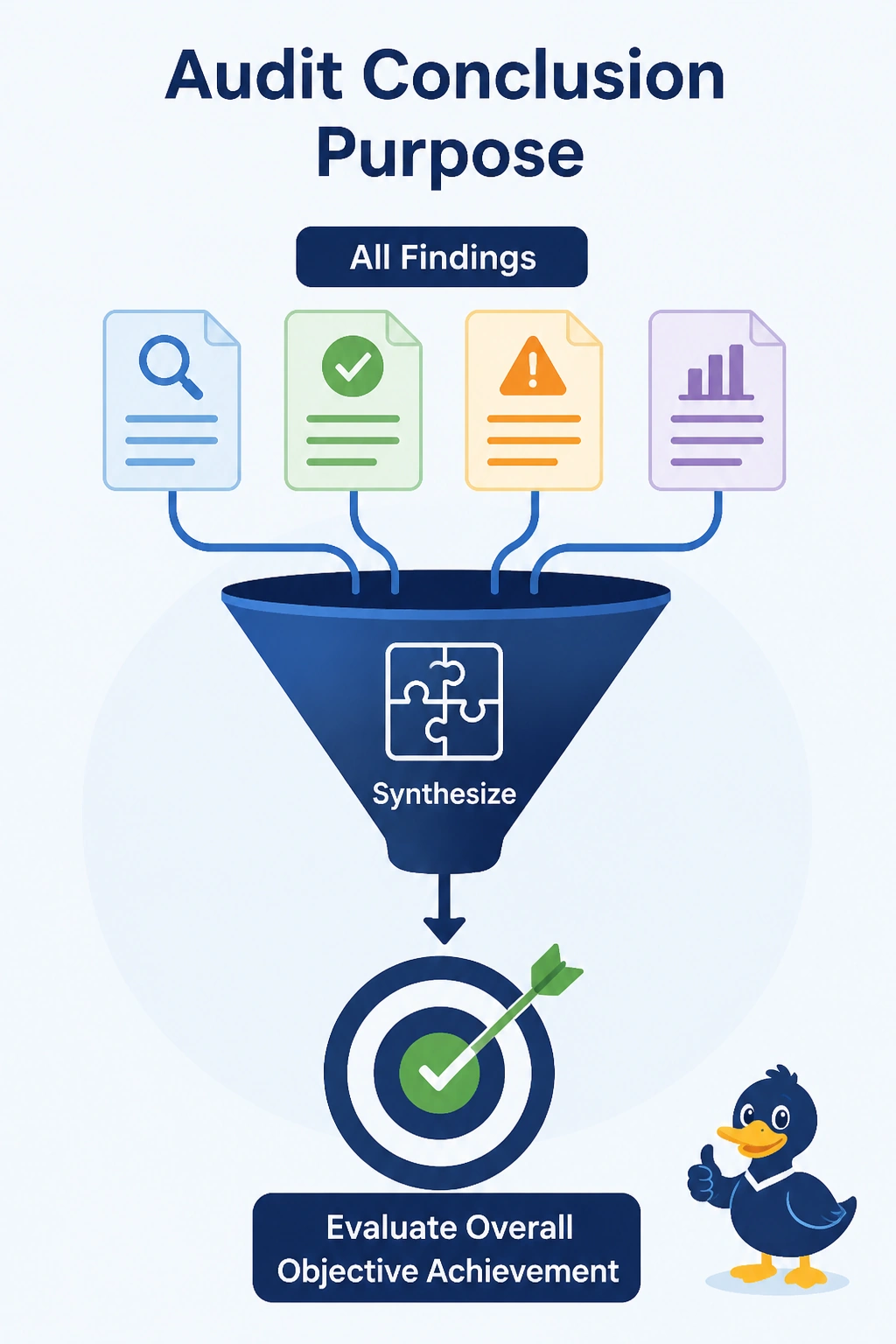
Short Explanation
Reading one restaurant review about cold soup doesn't tell you whether the whole catering company can handle a wedding. The trap is pasting a single finding into the conclusion box, when your conclusion must step back and judge the entire system against the audit objectives.
Full Explanation
In audit reporting, individual findings document specific gaps or conformities against criteria, whereas An audit conclusion synthesizes all findings to evaluate overall objective achievement. Leadership relies on the conclusion to understand whether the audited system as a whole is effective, compliant, and capable of meeting its goals—not to re-read a single isolated log entry. The idea that An audit conclusion should only list positive observations so leadership supports the program violates fair presentation by hiding material weaknesses. Claiming that Individual nonconformities belong only in the corrective action log and never in audit reports is incorrect because verified nonconformities are a core component of the formal audit report. Similarly, Overall audit conclusions may only be written by the audit client after reviewing working papers reverses audit roles; the lead auditor and audit team formulate the conclusions, while the client receives the report. Exam caveat: keep the hierarchy straight—evidence supports findings, and findings together inform the overall audit conclusion. Operational check: before issuing a report, verify that the conclusion explicitly addresses every objective listed in the approved audit plan.
Prefer to study offline? Printable PDF study book + test engine ($7.50, unofficial). These questions stay free here.