
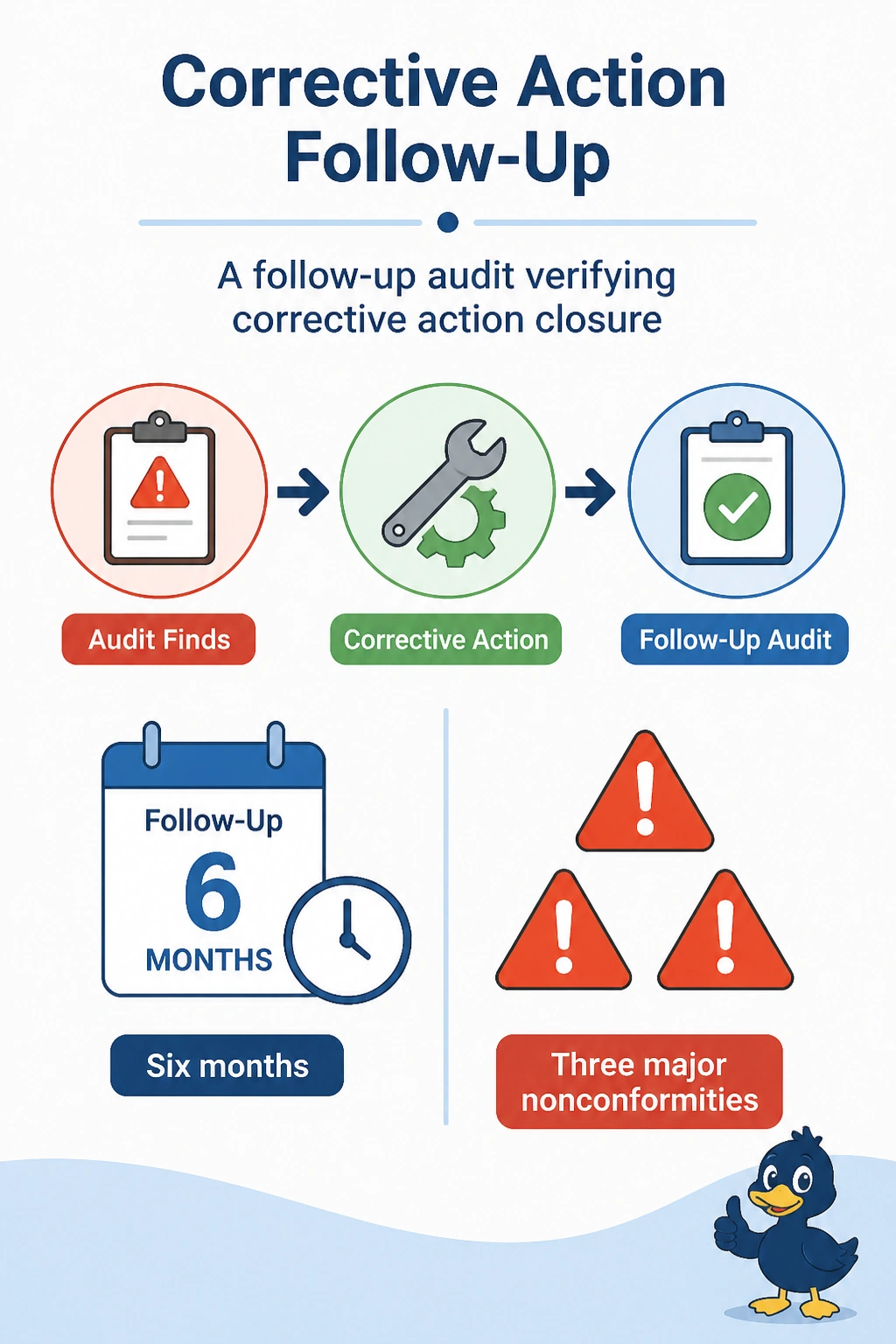
Six months after an external quality audit identified three major nonconformities in a food processor's sanitation program, the audit team returns specifically to verify that the corrective actions were implemented and are working effectively. How is this assessment classified?
Select an answer to reveal the explanation.
Short Explanation
Returning after a nonconformity is like a building inspector coming back to check that faulty wiring was actually fixed. You might be tempted to call any return visit a surveillance or for-cause audit, but an assessment dedicated to verifying prior corrective actions is a follow-up audit.
Full Explanation
Classifying this visit as A follow-up audit verifying corrective action closure is correct because its sole purpose is to confirm that previously issued nonconformities have been properly addressed and that the implemented fixes remain effective in practice. By contrast, A routine surveillance audit of the full system is a scheduled periodic check of ongoing system conformance rather than a dedicated verification of closed findings. A pre-assessment gap audit before certification is conducted prior to an initial certification audit to identify readiness gaps, not to verify post-audit corrective actions. A for-cause audit triggered by a customer recall or sudden failure investigates an unexpected operational crisis or field incident rather than scheduled verification of prior audit closures. Caveat: depending on the nature of the nonconformity, some follow-up verifications can be completed through documented evidence review, whereas physical or process changes generally require on-site observation. As an operational check, review the original nonconformity statements and root-cause records before arriving so your verification tests both implementation and sustained effectiveness.
Prefer to study offline? Printable PDF study book + test engine ($7.50, unofficial). These questions stay free here.